
In Italy, every region, every city has its own typical pasta dish to defend with pride and passion.
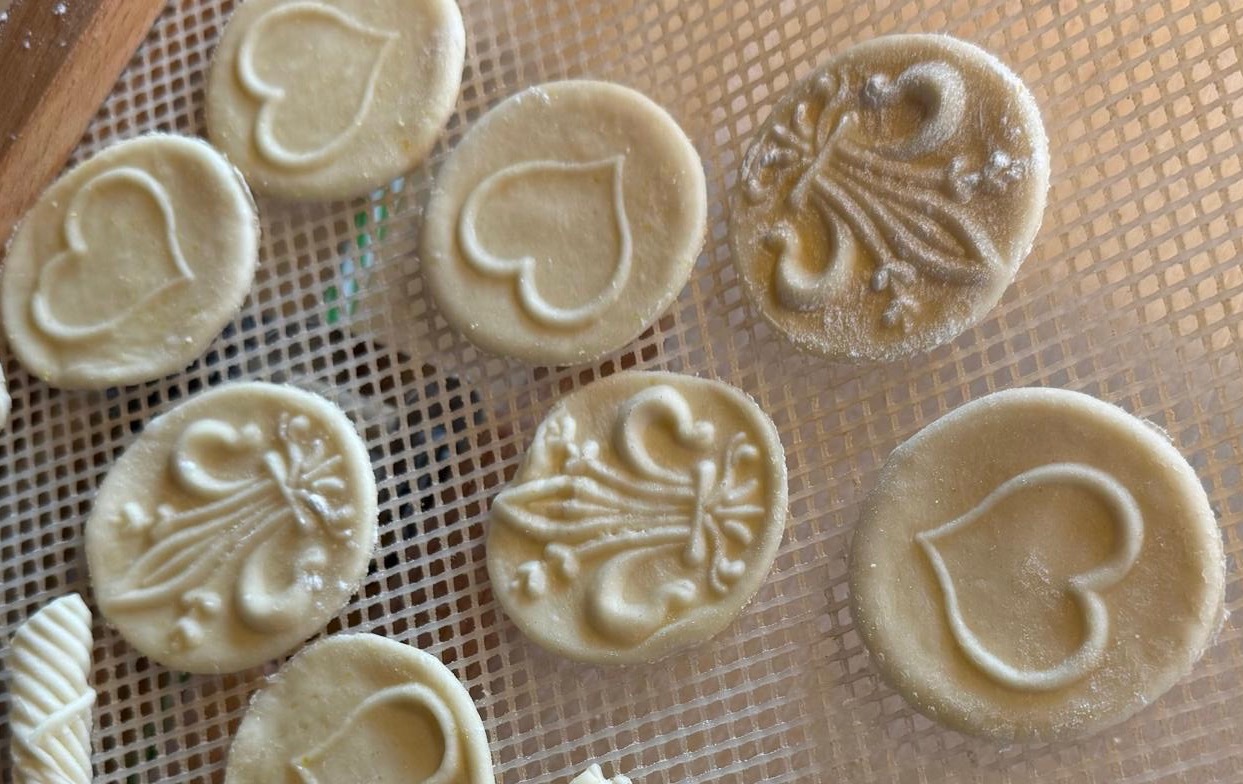
And after many tagliatelle, ravioli, lasagne, penne and spaghetti today we are talking about molded corzetti. They are called molded because the decoration of these small circles of pasta is obtained using a wooden mold which decorates the pasta in order to “prepare” it to better accept the sauce.

In some artisan shops in the historic center of Genoa you can still find those who make these molds which are so useful for preparing this typical pasta. Parallel to the artisanal production, there is also an industrial production of corzetti which is normally carried out with ravioli machines.
History
The molded corzetti (“cruxetti”) appear in the Middle Ages, in the Renaissance time.The noble families of the time apparently ordered their cooks to make a type of pasta that bore their coat of arms, all this with the aim of reminding diners of the importance of one’s family and reaffirm one’s dominion over the territory. The engravings were usually different on the two sides.
Name Origin
The name derives from the stylized image of a small cross, a small cross (“cruxetta”) with which one side of these medallions was originally decorated, hence the name “cruxettu”.
The word “corzetto” refers to both the wooden mold and the pasta thus engraved.
Technically, the corzetti appear as wooden molds composed of two parts: one which has the function of a stamp and the other of a cylindrical shape with an engraved and concave part, which is used to cut the dough.
The types of wood generally used are pear, apple, beech or maple. Although the majority of corzetti molds today are produced industrially, the most valuable are those carved entirely by hand
Ingredients
Water, wheat flour and salt.
Or water, eggs, salt and flour
So the normal pasta doughs
How are corzetti made?
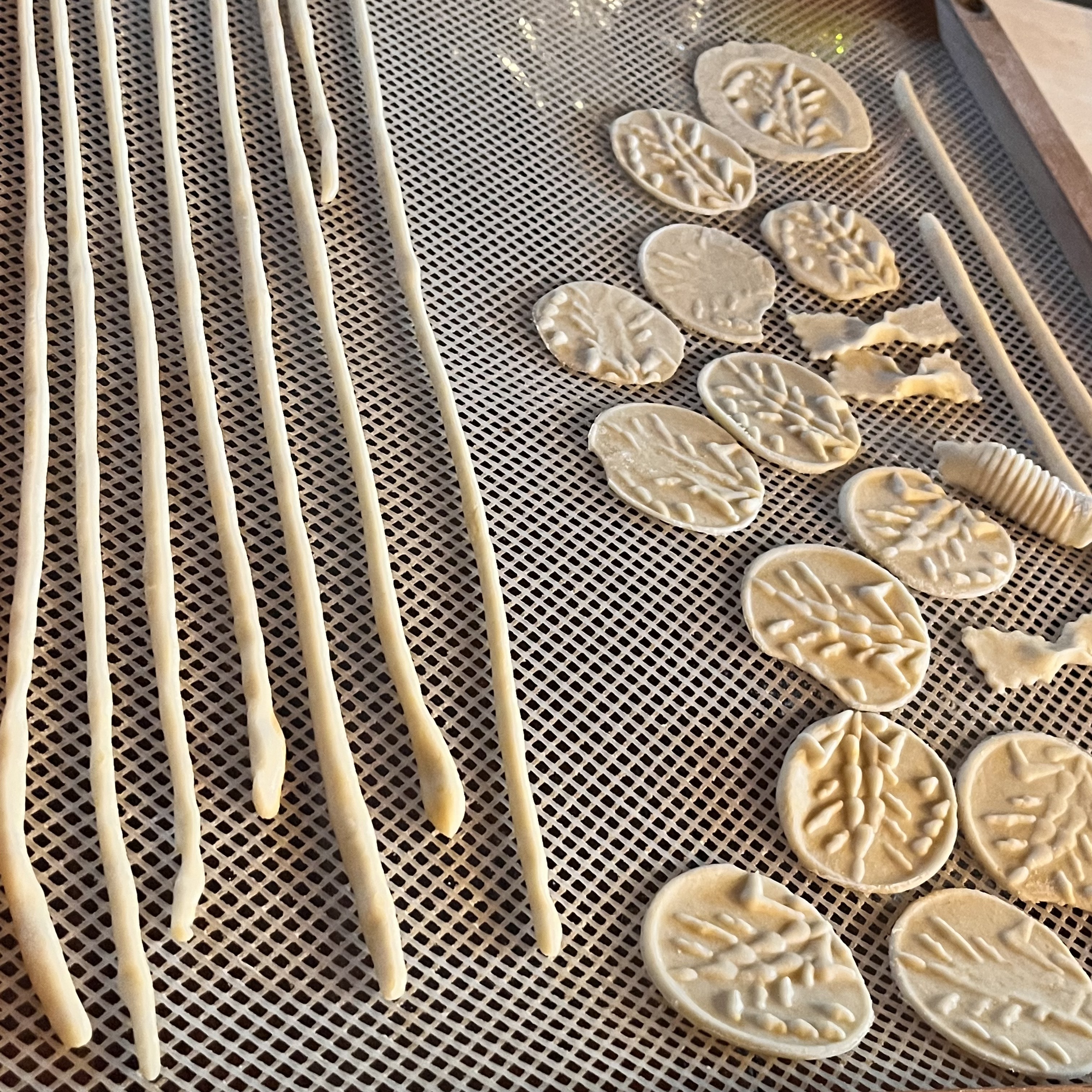
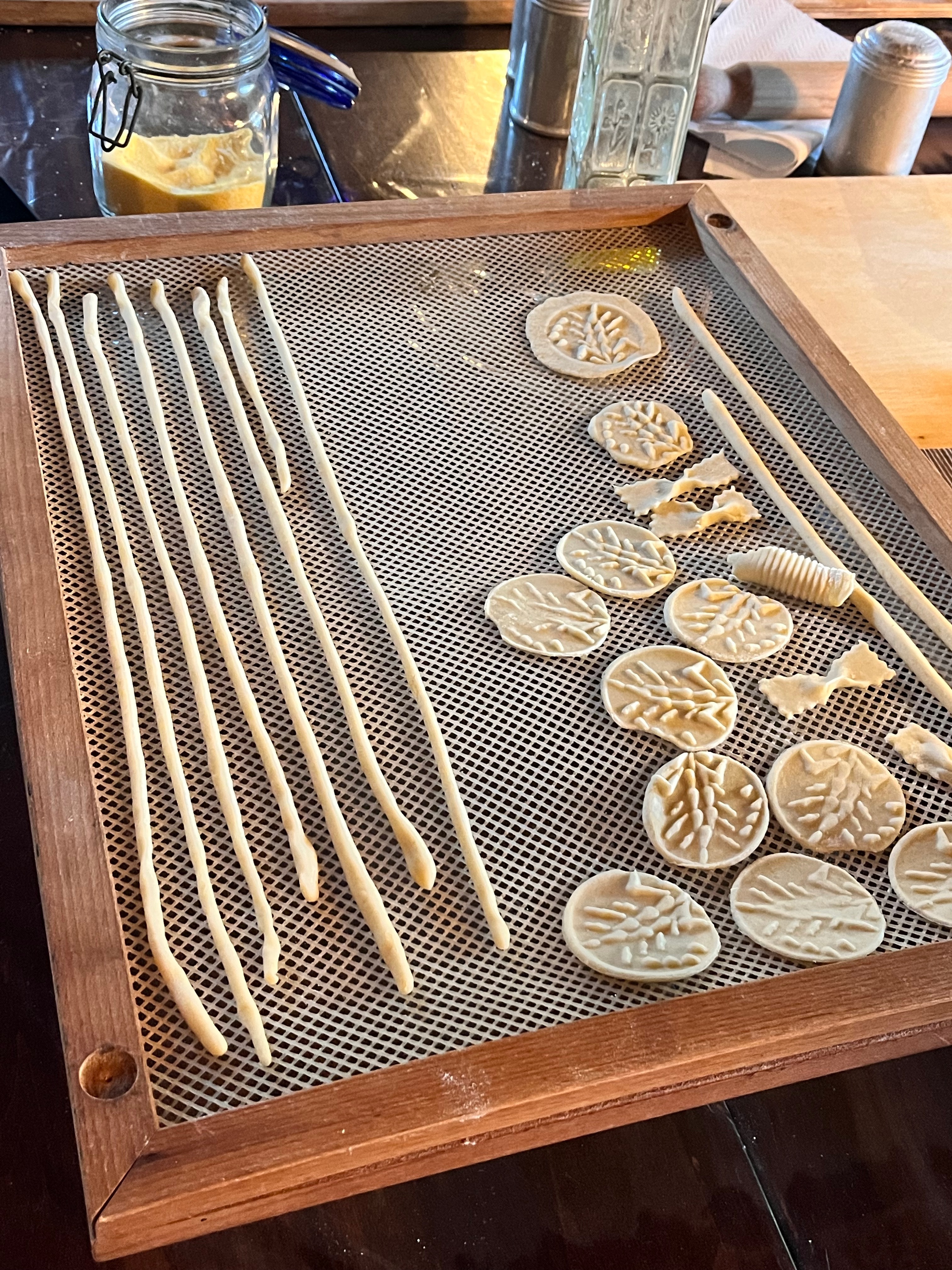
The dough is prepared, roll out the dough, then cut into circles on which the design of the mold is printed.
Once made, they are left to dry a little and then cooked.
They are excellent seasoned with walnut sauce, mushroom sauce or with pesto or pine nut sauce, with cooked meat sauce but also with vegetable or nut sauces.
The basic dough can also vary with the addition of spinach, which gives the pasta a green colour, or with the use of chestnut flour which makes the corzetti even yellower and more similar to gold medallions.

More about the Corzetti
The same mold is used first to cut the dough, then to imprint the two images found in the presser and at the base of the mold on the faces of the circle.
This technique, as well as giving the corzetti their uniqueness, also serves to better retain the seasoning and make the dish even tastier.
According to popular tradition, it also seems that the wooden molds for the corzetti were given as gifts to the newlyweds with their initials engraved on them. Another legend however tells that in eastern Liguria it was the father-in-law who gave the mold to his daughter-in-law as a sign of esteem and to be able to represent the family at lunches dedicated to special occasions.

Here served with Garganelli and a meat sauce.
Corzetti today
Although today the corzetti are a dish known only by the Ligurians and strictly prepared in places linked to tradition, their importance for the local culture remains strong so much so that they have been recognized by the Ministry of Agricultural, Food and Forestry Policies as traditional Ligurian agri-food products
Ever tasted this pasta?
Great World Past Day to you !
 Toscana Mia Blog