
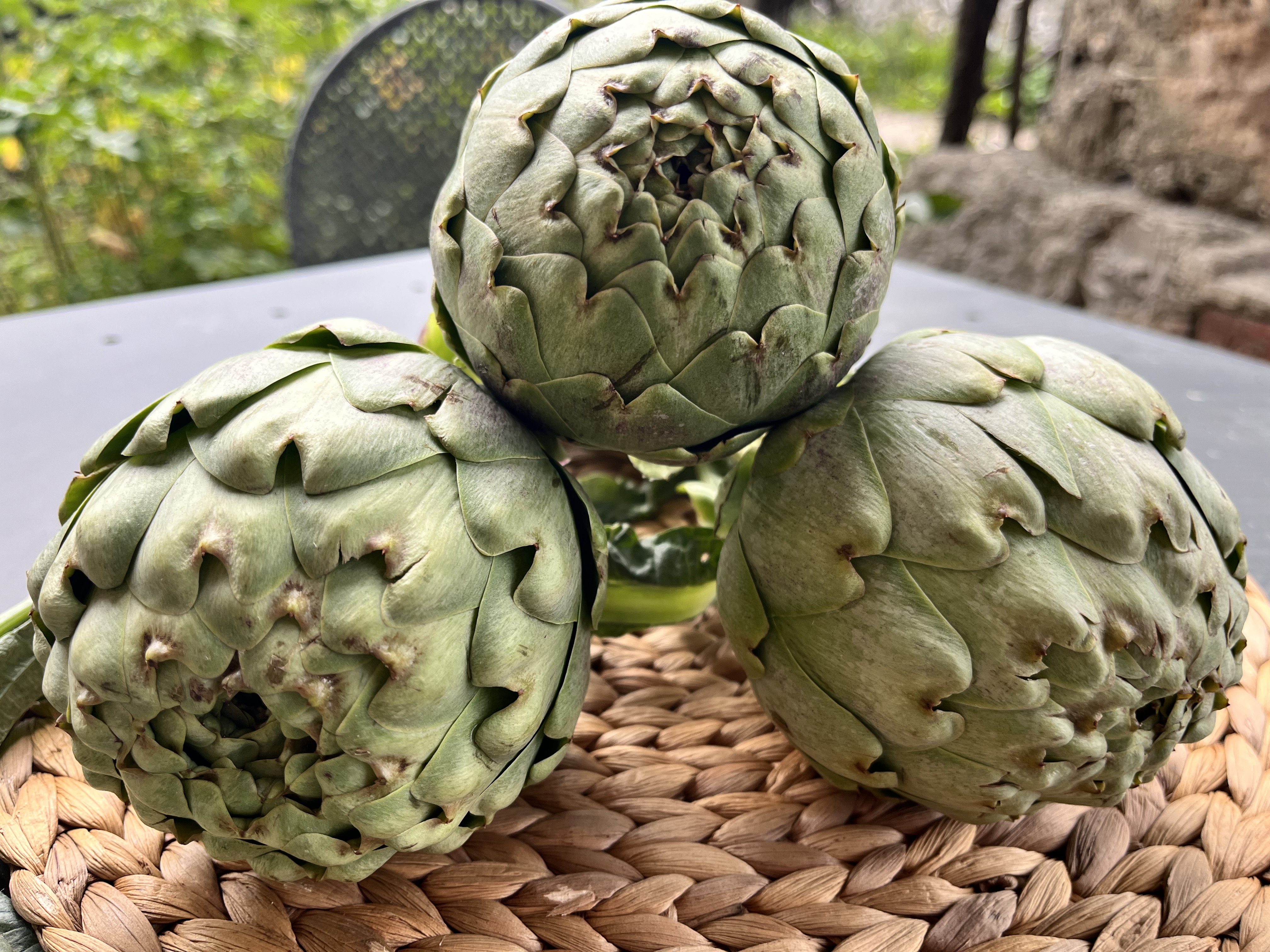
The artichoke is a typical Mediterranean plant. Its scientific name is Cynara scolymus. Cynara comes from the Latin “cinis”, (“from ash”). It is called this way precisely because it is with the ash that the soil is fertilized for the cultivation of artichokes. Or because of the legend related to artichokes.
The legend of the birth of the artichoke
According to a Greek legend, Cynara was a beautiful nymph with a luminous face, pink skin, an elegant bearing, green eyes with purple specks and ash-colored hair. It was because of her hair that she was given the name Cynara. One day Zeus, while he was walking to visit his brother Poseidon, saw the nymph on a beach in Sicily and fell madly in love with her. After this fact, we find two different versions of the story with the same ending. According to the first version, the god seduced Cynara, who he transformed into a goddess to take her to Olympus with him, but, after some time, the nymph, sad for missing her family, ran away.In the second case, the nymph refused Zeus’ attentions from the beginning. However, in both versions, the god, in a moment of anger caused by the “betrayal”, transformed the nymph into a vegetable: a green artichoke, with purple shades and flowers, like the girl’s eyes, thorny and hard on the outside – due to her rejection of the father of the gods – but tender on the inside, like the gentle character of the goddesses.
The artichoke was known in ancient times by the Egyptians and Greeks, it was considered a “gift of the sun” This plant was put aside for some time due to the length of the initial preparation, and then rediscovered thanks to the high production of buds to eat, the long productive life of the plant and the ease of cultivation
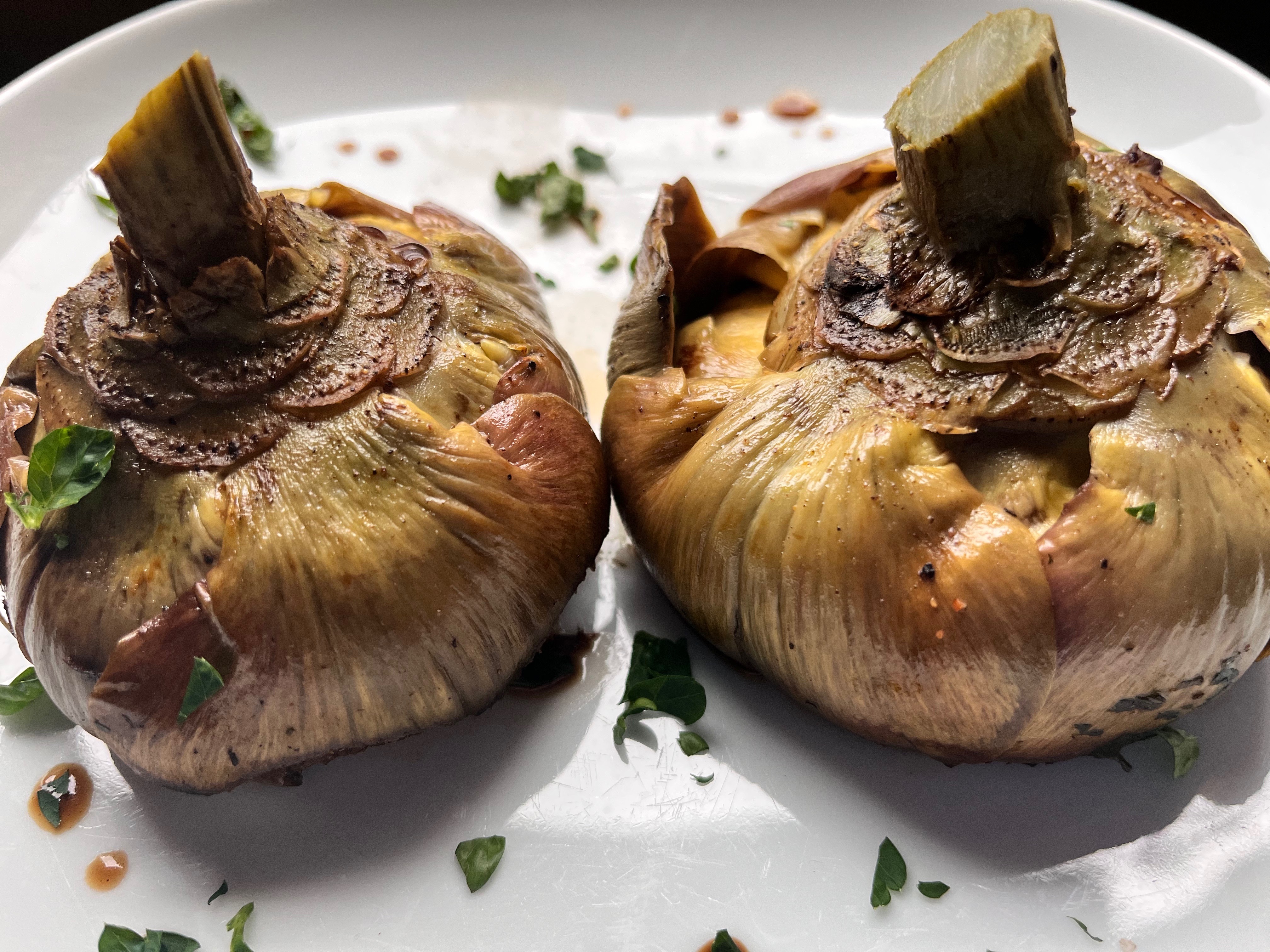
Roman style
The benefits of artichokes
This food, whether fresh or preserved, should be consumed all year round. In fact, the artichoke has a high antioxidant power and is rich in vitamins, especially A, B, C and E. The benefits of the artichoke are truly many: for example, it lowers cholesterol, benefits the heart, helps in the treatment of diabetes, promotes health of the brain and bones.
In short, the artichoke is truly a “magical” food, which must never be missing from our tablesArtichoke seasonality
Italy is the largest producer of artichokes and crops are found mainly in Sardinia, Lazio, Tuscany, Puglia and Liguria.
Artichokes are present on the market in two types of varieties: autumn and spring. For this reason it is available both in October-November and from January to May-June.
There are different varieties of artichoke on the market, there are around 90 of those cultivated in the world. They can be rounded or elongated, with or without thorns, with a green color of different shades and can also have shades of purple.

Artichokes and Meat
An initial classification of artichokes involves their division into spiny varieties and unarmed varieties, i.e. without thorns. Both types also include different varieties with a violet colour, a characteristic emphasized by each denomination. The small and spring-like Violetto di Toscana is part of the first group
The Artichoke Romanesco del Lazio PGI (acronym for Protected Geographical Indication), also known as “cimarolo” or “mammola”, belongs to the second group. It is a spring variety characterized by its large size and the absence of thorns.
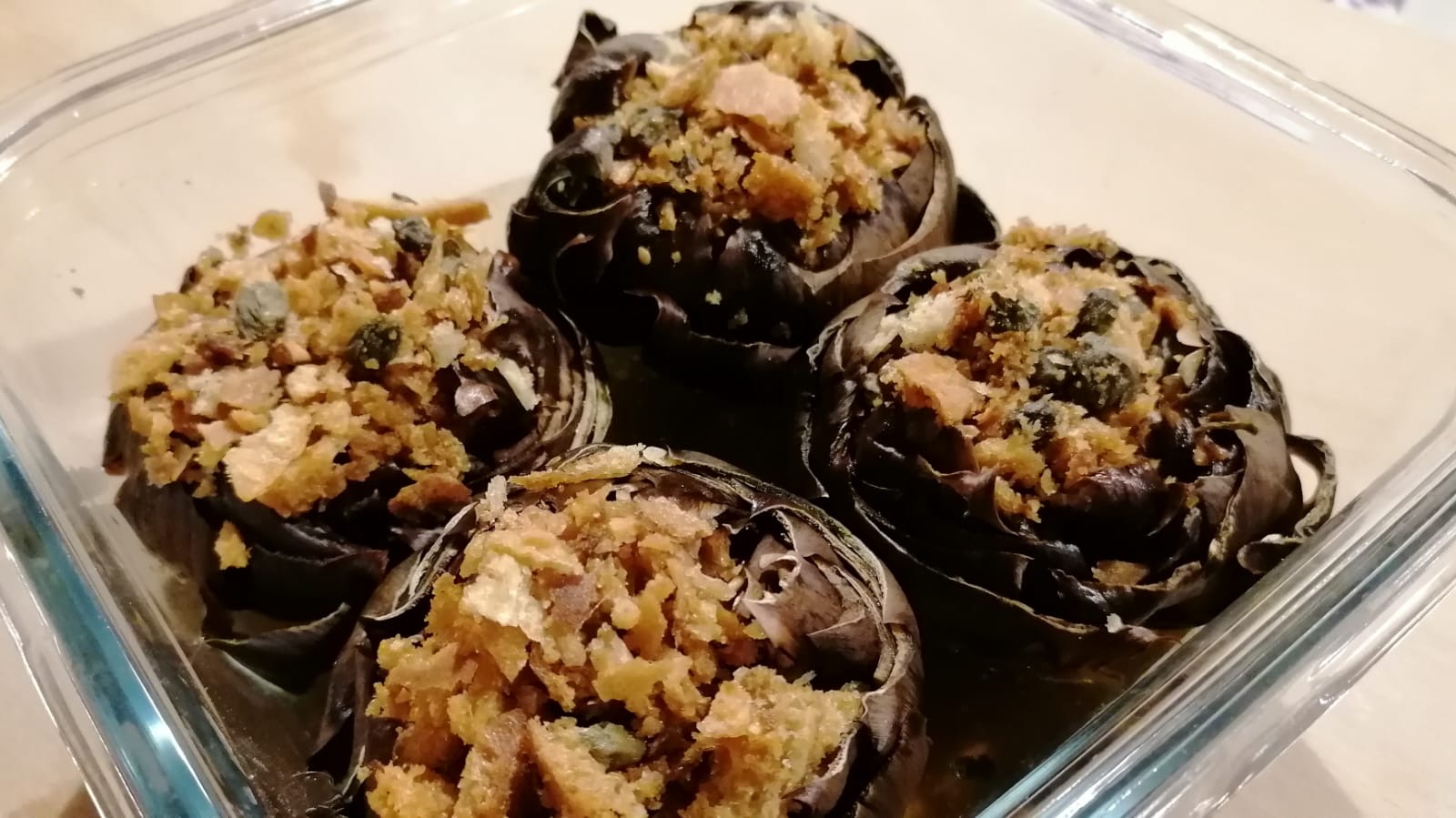
Stuffed Artichokes
Artichokes: how to use and consume them
Let’s now look at some advice on how to choose and use artichokes. First of all, it is best to choose them that are compact and heavy, with closed tips and little beard inside. The external leaves must have a beautiful dark green color, without spots, while the internal ones must be tender and light green. The stem should be firm to the touch, but tender and not bruised. Before consuming them, you must remove the hardest external leaves, cut the tip with the thorns and clean the stem.
How to clean artichokes: step by step guide for preparation( blog and video)

Marinetti Pasta Sauce
The best way to consume artichokes is to eat them raw, to fully benefit from their antioxidant and hepatoprotective properties. You can consume the tender artichoke leaves in a salad seasoned with lemon juice, extra virgin olive oil, salt and pepper. For those who wish, you can add flakes of parmesan. We can make a herbal tea with artichokes or preserve them in oil.
How to cook artichokes?
Here are some recipes
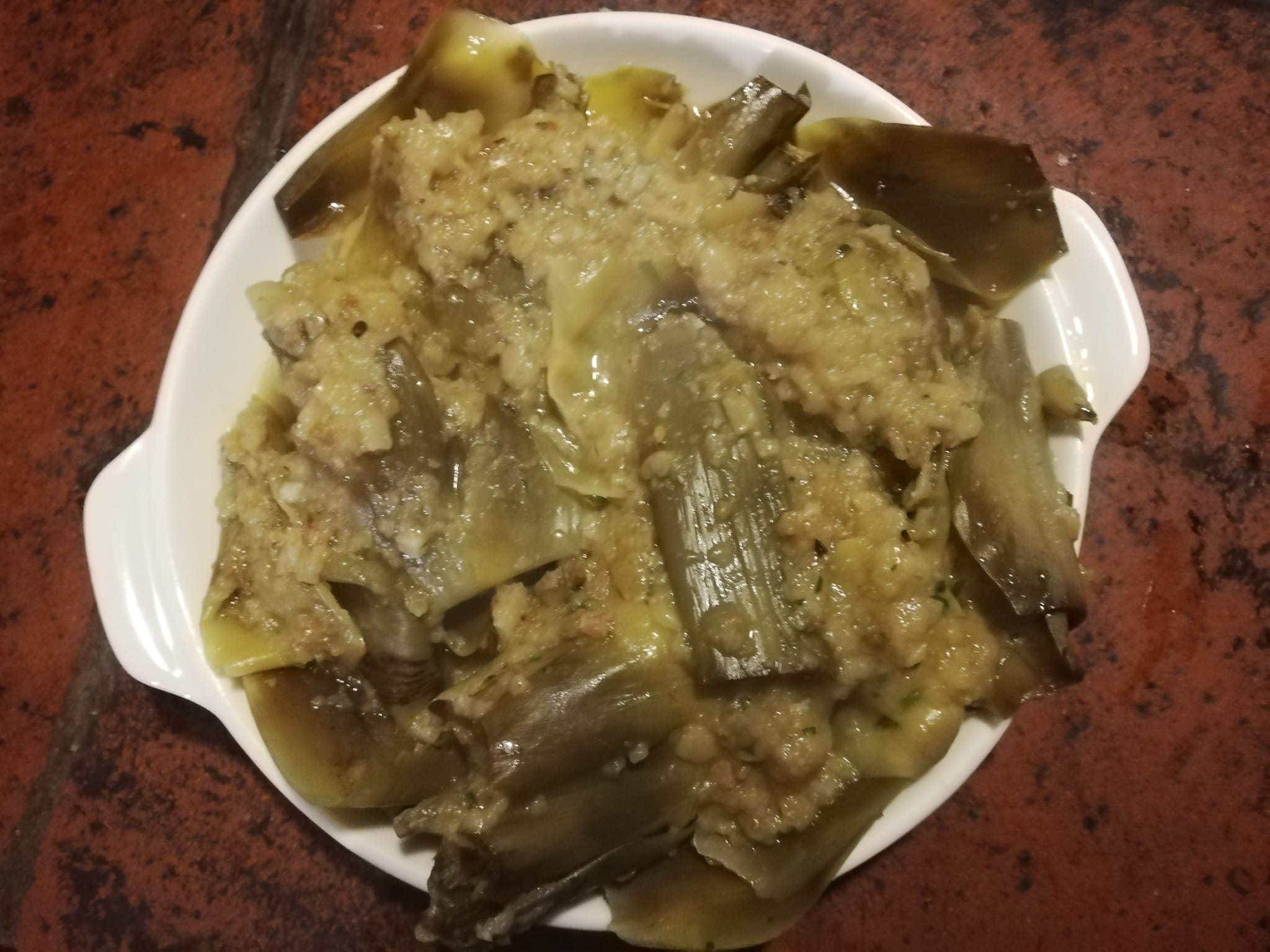
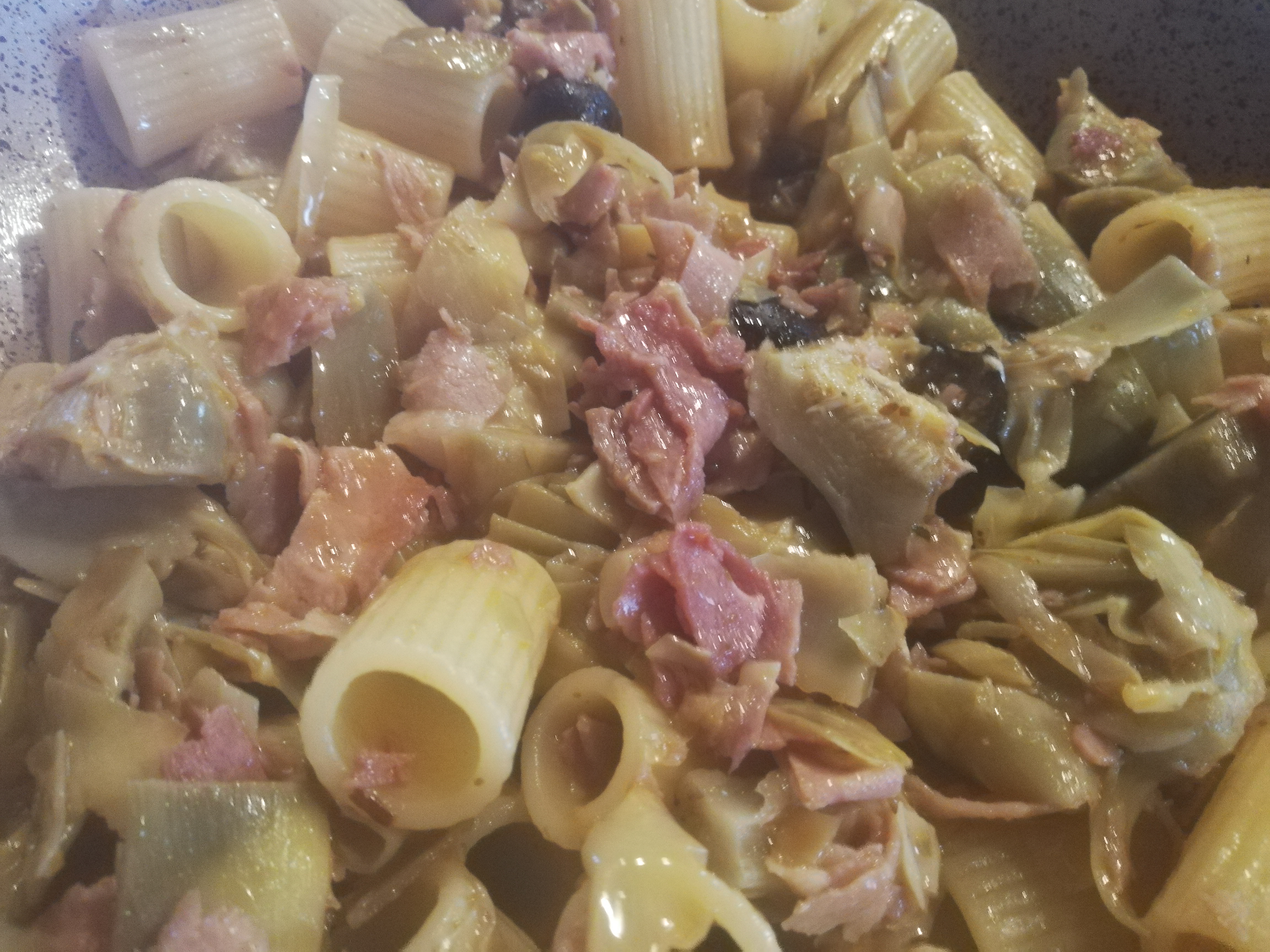
How to store artichokes?
Artichokes can be preserved in different ways. If you have just bought them you can keep them raw in the refrigerator for 5 or 6 days, inside a food bag and stored on the lower shelves. Alternatively, you can cook them and keep them already cooked in the fridge for 2 or 3 days at most. If you want to keep them for a long time, you can do them in oil, vinegar or freeze them.
Frozen artichokes can be stored for a few months.
ITALIAN VERSION
Il carciofo e la sua storia
Il carciofo è una pianta tipica del Mediterraneo Il suo nome scientifico è Cynara scolymus. Cynara proviene dal latino “cinis”, (“dalla cenere”). Viene chiamato così proprio perché è con la cenere che si concima il terreno per la coltivazione del carciofo.Oppure per la leggenda correlata ai carciofi.
La leggenda della nascita del carciofo
Secondo una leggenda greca, Cynara era una bellissima ninfa con un volto luminoso, la pelle rosata, un portamento elegante, gli occhi verdi con delle pagliuzze viola e dai capelli color cenere. Era proprio per i suoi capelli che le era stato dato il nome Cynara. Un giorno Zeus, mentre stava passeggiando per andare a far visita a suo fratello Poseidone, vide la ninfa su una spiaggia della Sicilia e se ne innamorò perdutamente. Dopo questo fatto, troviamo due diverse versioni della storia con lo stesso finale. Secondo la prima versione, il dio sedusse Cynara, che trasformò in dea per portarla sull’Olimpo con lui, ma, trascorso un po’ di tempo, la ninfa, triste per la mancanza dei propri familiari, scappò
Nel secondo caso, la ninfa rifiutò fin dall’inizio le attenzioni di Zeus. Comunque, in entrambe le versioni, il dio, in un momento d’ira causato dal “tradimento”, trasformò la ninfa in un ortaggio: un carciofo dal colore verde, con sfumature e fiori viola, come gli occhi della ragazza, spinoso e duro all’esterno – a causa del suo rifiuto al padre degli dei – ma tenero all’interno, come il carattere gentile delle dee.
Il carciofo era conosciuto nell’’antichità dagli Egizi e dai Greci, esso veniva considerato un “dono del sole”
Questa pianta venne messa da parte per un po’ di tempo per la lunghezza della preparazione iniziale, e poi riscoperta grazie alla elevata produzione di boccioli da mangiare, alla lunga vita produttiva della pianta e alla facilità di
I benefici dei carciofi
Questo alimento, sia fresco che conservato, dovrebbe essere consumato tutto l’anno. Infatti il carciofo ha un elevato potere antiossidante è ricco di vitamine, specialmente A, B, C ed E. I benefici del carciofo sono davvero tanti: ad esempio abbassa il colesterolo, dà benefici al cuore, aiuta nella cura del diabete, favorisce la salute del cervello e delle ossa.
Insomma, il carciofo è proprio un alimento “magico”, che non deve mancare mai sulle nostre tavole coltivazione.
Stagionalità del carciofo
L’Italia è il maggior produttore di carciofi e le coltivazioni si trovano soprattutto in Sardegna, Lazio, Toscana, Puglia e Liguria.
I carciofi sono presenti sul mercato in due tipi di varietà: autunnali e primaverili. Per questo è reperibile sia a ottobre-novembre che da gennaio fino a maggio-giugno.
Esistono sul mercato diverse varietà di carciofo, quelle coltivate nel mondo sono circa 90. Possono essere tondeggianti o allungati, con o senza spine, con un colore verde di diverse tonalità e possono presentare anche sfumature di viola
Una prima classificazione dei carciofi ne prevede la suddivisione in varietà spinose e varietà inermi, ovvero senza spine. Entrambe le tipologie comprendono, inoltre, diverse varietà dalla colorazione violetta, caratteristica enfatizzata da ciascuna denominazione. Fanno parte del primo gruppo il piccolo e primaverile Violetto di Toscana
Appartiene al secondo gruppo il Carciofo Romanesco del Lazio IGP (acronimo di Indicazione Geografica Protetta), conosciuto anche come “cimarolo” o “mammola”. Si tratta di una varietà primaverile che si caratterizza per le dimensioni importanti e l’assenza di spine.
Carciofi: come utilizzarli e consumarli
Vediamo ora qualche consiglio su come scegliere e utilizzare i carciofi. Innanzitutto è bene sceglierli compatti e pesanti, con le punte chiuse e poca barba all’interno. Le foglie esterne devono avere un bel colore verde scuro , senza macchie, mentre quelle interne devono essere tenere e di un colore verde chiaro. Il gambo deve essere sodo al tatto, ma tenero e non ammaccato. Prima di consumarli, bisogna eliminare le foglie esterne più dure, tagliare la punta con le spine e pulire il gambo.
Come pulire i carciofi: guida passo passo per la preparazione e il taglio.(video)
Il miglior modo per consumare i carciofi è mangiarli crudi, per beneficiare a pieno delle proprietà antiossidanti ed epatoprotettrici. Potete consumare le foglie tenere del carciofo in insalata condita con succo di limone, olio extravergine d’oliva, sale e pepe. Per chi volesse, si possono aggiungere scagliette di parmigiano. Possiamo fare una tisana con i carciofi o conservarli sottolio.
Come cucinare i carciofi ?
Ecco qualche ricetta .(Trovate tutti i link sopra in inglese)
Come conservare i carciofi?
I carciofi possono essere conservati in diversi modi. Se li avete appena comprati potete tenerli crudi in frigorifero per 5 o 6 giorni, dentro un sacchetto per alimenti e riposti nei piani più bassi. In alternativa si possono cucinare e tenere già cotti in frigo per 2 o 3 giorni al massimo. Se invece volete conservali a lungo potete farli sott’olio,sott’aceto o congelarli.
I carciofi congelati possono essere conservati per alcuni mesi.
 Toscana Mia Blog