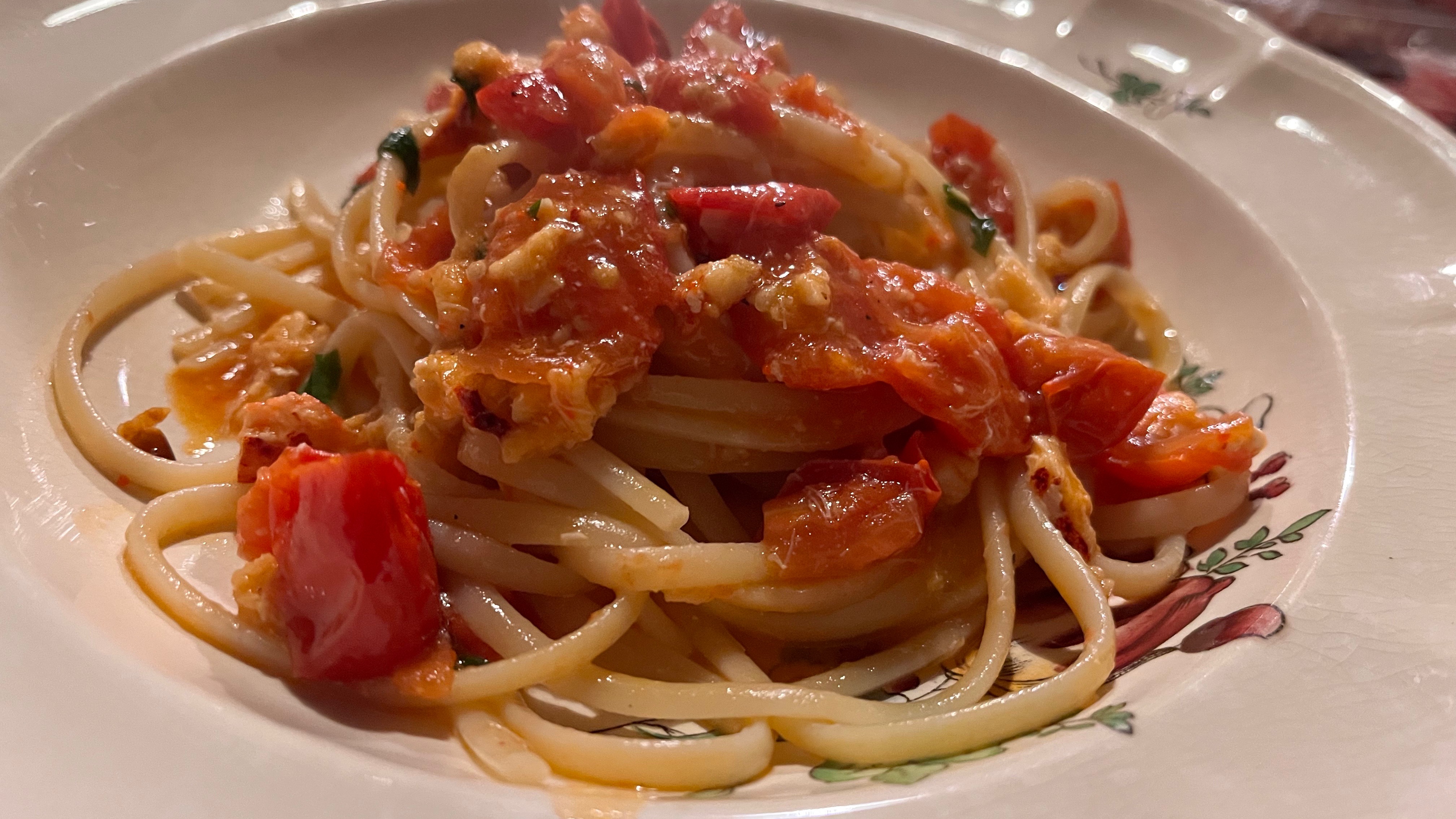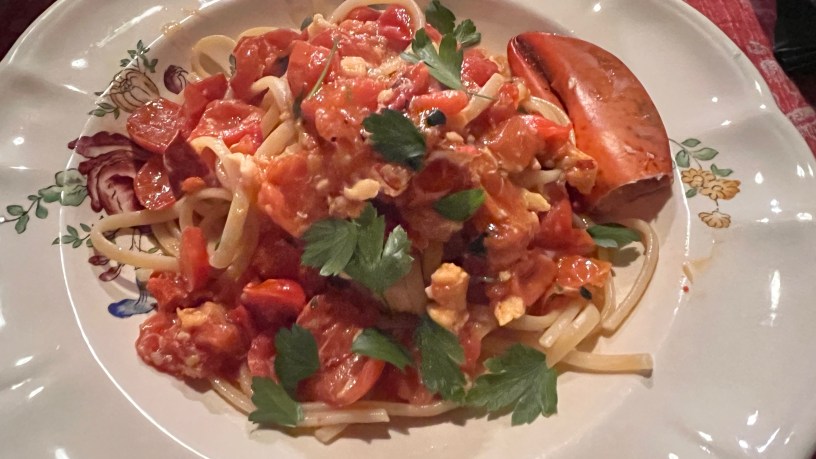
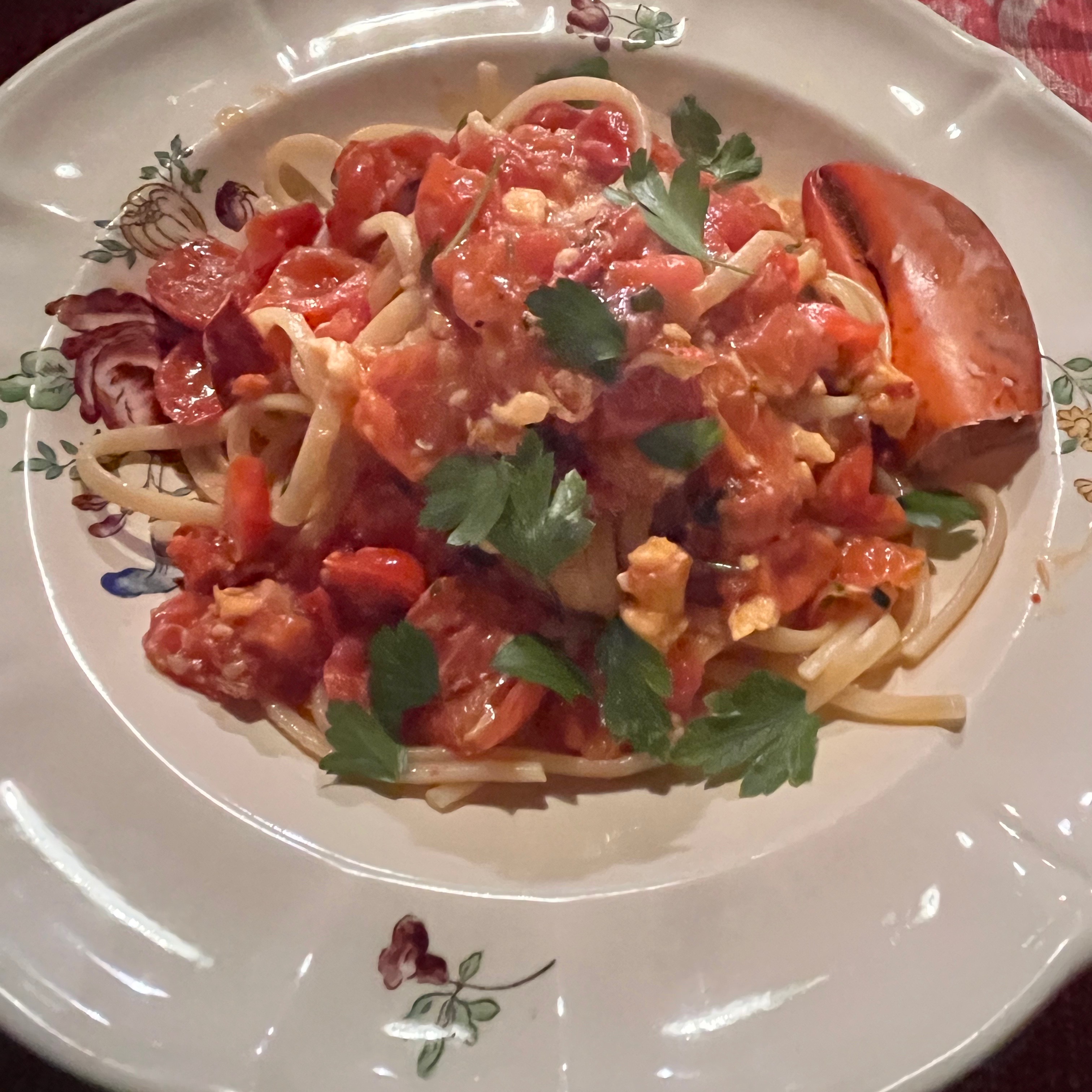
Lobster Linguine with Tomatoes are ideal especially for special occasions such as New Year’s Eve dinner, Christmas Eve and perfect to prepare for a romantic dinner or simply for a slightly special dinner with friends.
We ‘ve chosen this dish for New Year’s Eve dinner but it was not possible to find fresh lobster so we opted for a frozen and already slightly cooked lobster. That’s why it’s red in the photo. Honestly, the result was tasty, anyway.
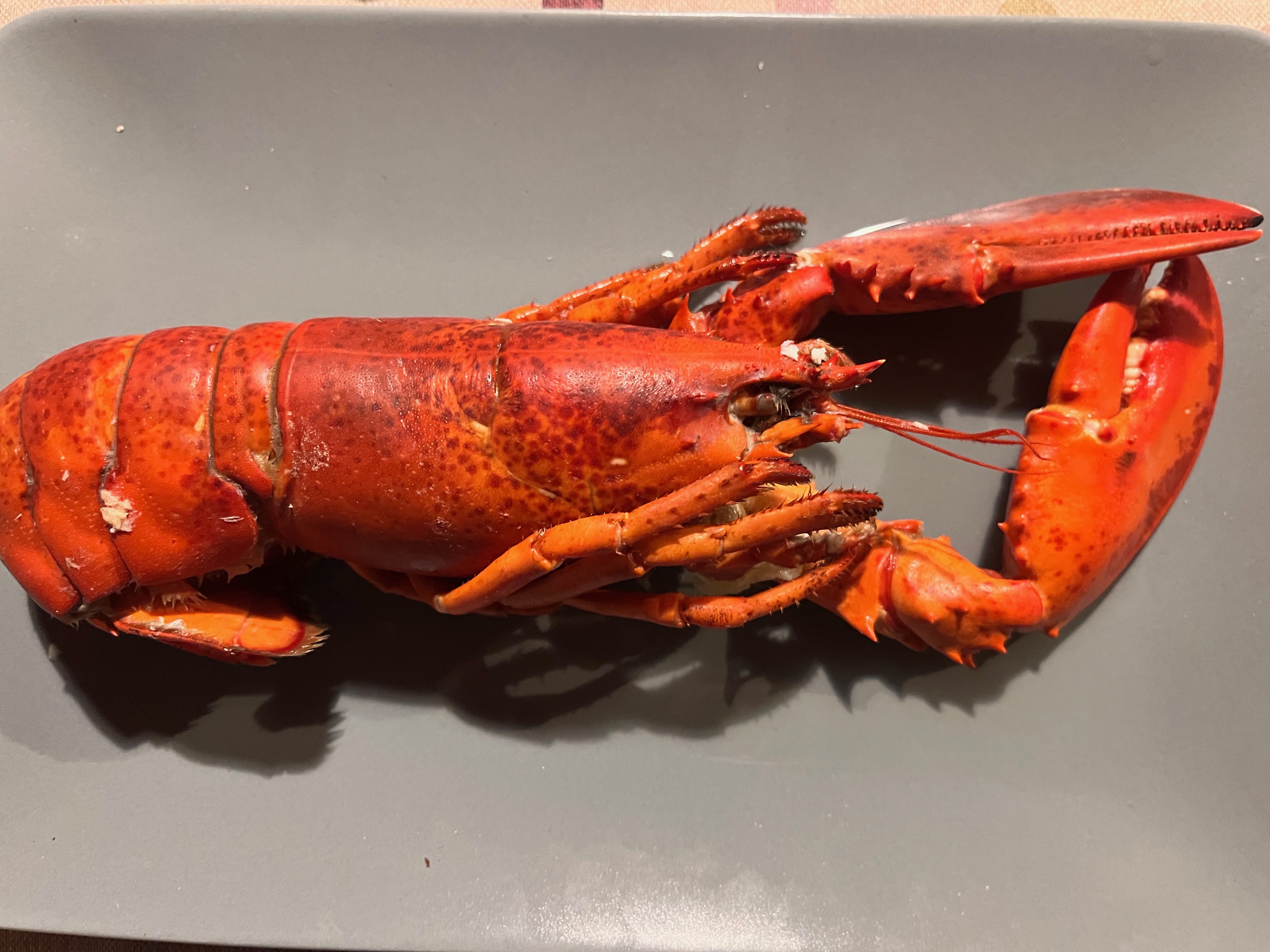
Ingredients for 4 people
• 400 g =ca.3 ½ cups of Linguine
• 1 lobster
• 400 g = ca. 3 ½ cups of small cherry tomatoes
• 1 clove of garlic
• 1 sprig of parsley
• White Wine to taste
• Extra Virgin Olive Oil to taste
• Fine Salt to taste
• Black Pepper to taste
Preparation
To prepare the lobster linguine, start by cleaning the crustacean. Cut the lobsters in half. If it is still present, remove the black filament of the intestine.
Place a little oil and the garlic clove in a large pan and brown.
Add the lobster and blend over high heat with the white wine.
When the wine has evaporated, add the cherry tomatoes cut into quarters, salt and pepper and cook for about ten minutes or at least until the lobster is cooked.
Once cooked, remove the lobster and continue cooking the cherry tomatoes. If the sauce dries out too much, add a little pasta cooking water from time to time. While your linguine is cooking, carefully remove the pulp from the lobsters and keep the pulp aside.
Once ready, drain your linguine al dente and place them in the pan with the sauce and finish cooking for a few moments. Add the lobster pulp and, if necessary, a little of the pasta cooking water, so as to mix all the flavors well.
Sprinkle the pasta with a nice handful of chopped fresh parsley, mix everything together and serve your lobster linguine piping hot.
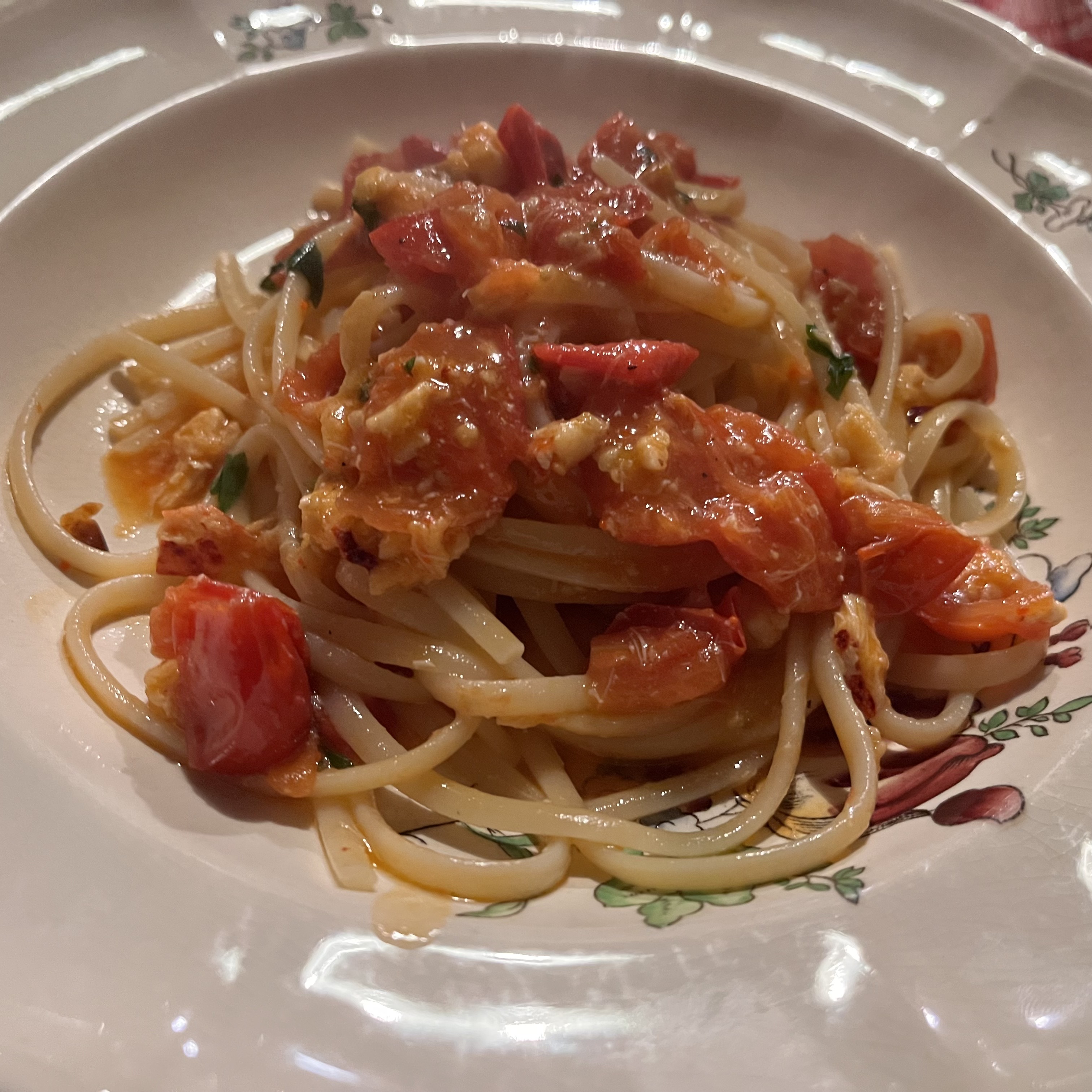
This is a very traditional dish served in Italy with linguine pasta shape, but you can serve it also with other shapes or just use the sauce on top of a slice of bread and call them crostini all’ astice.
When in Italy remember we use the word astice for a clawed lobster,or European lobster and aragosta for spiny lobster.To tell the truth there is always some confusion on the names but,if you have the occasion, let’s try this dish.