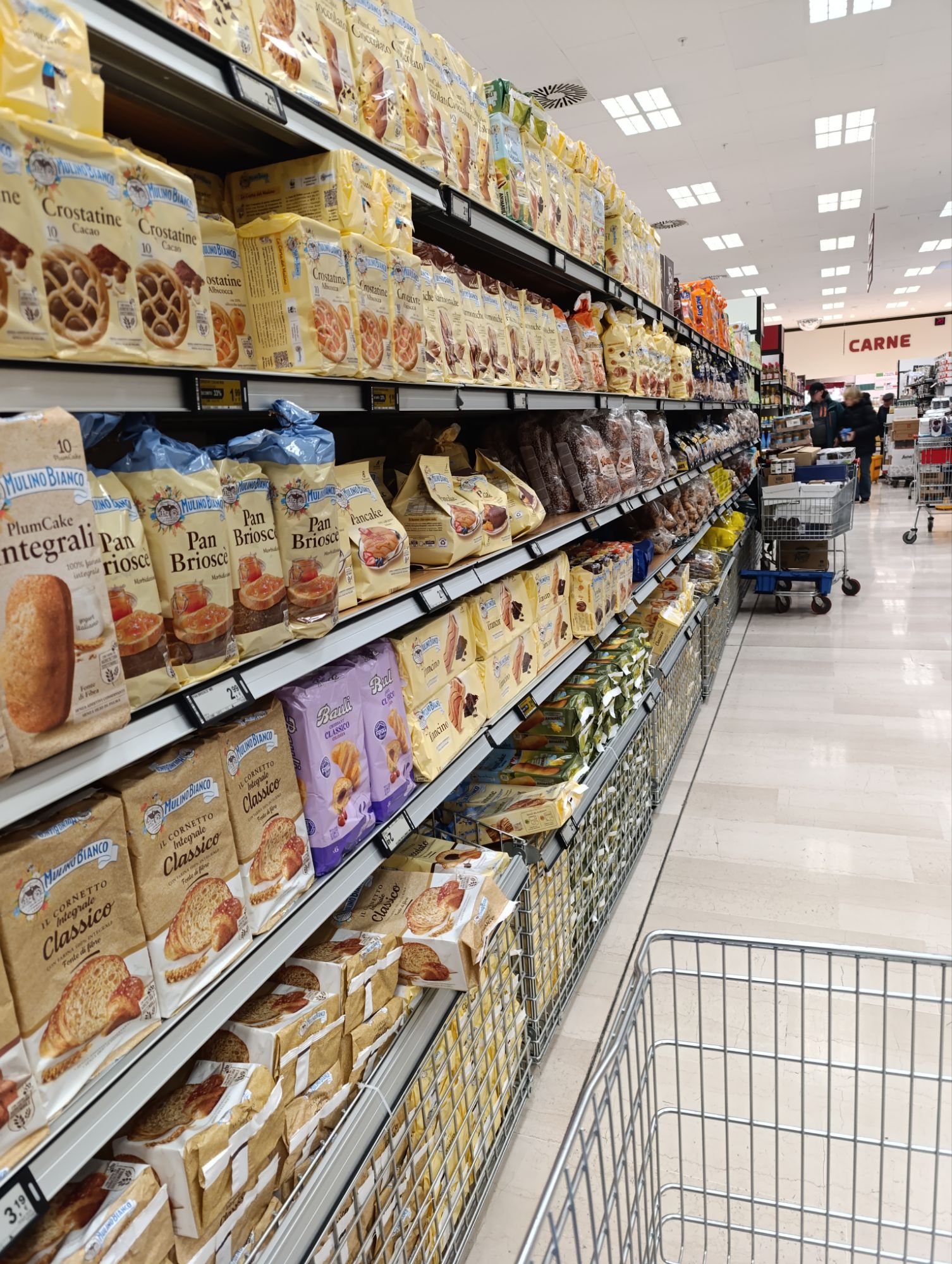
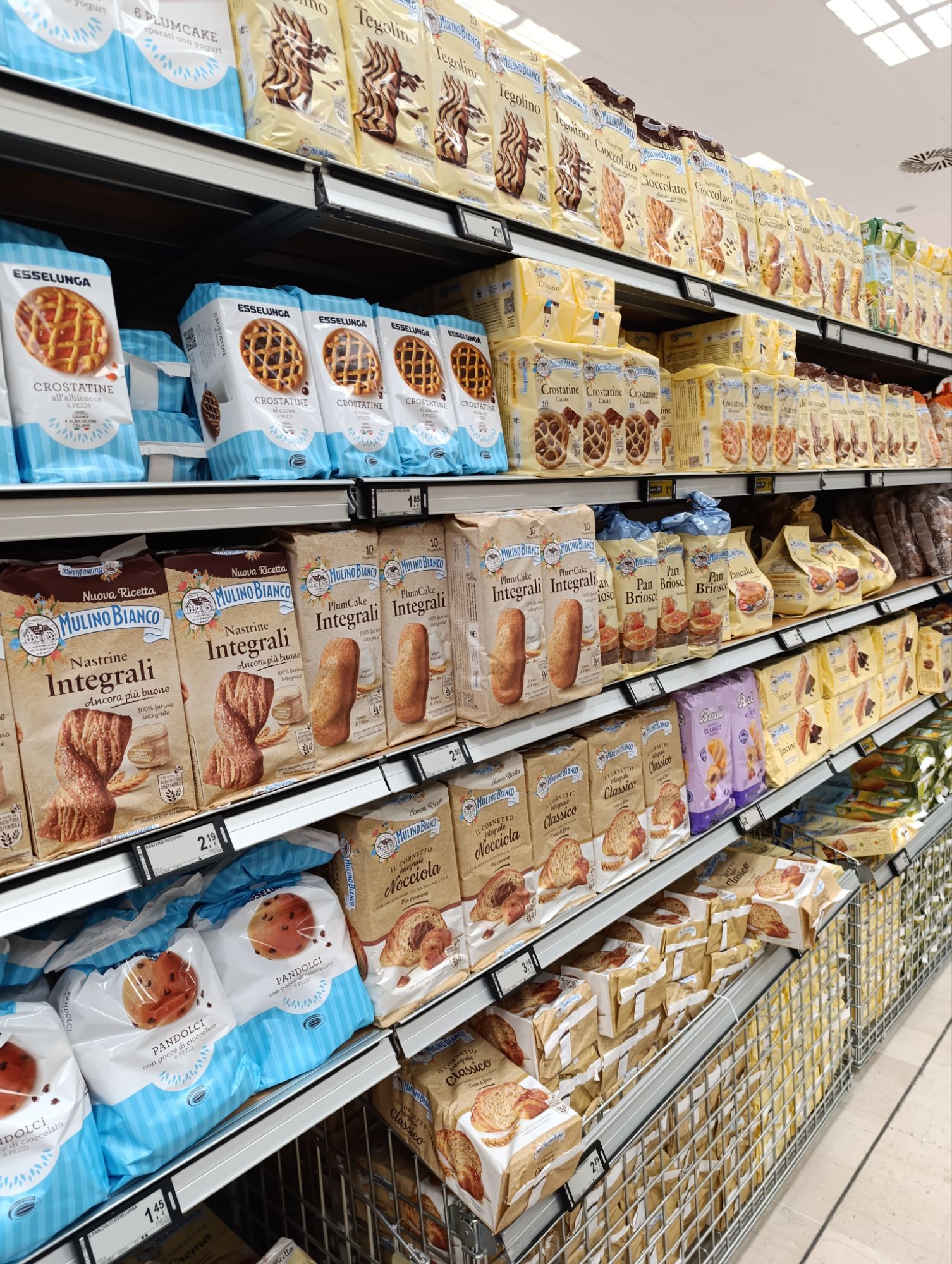
I love visiting supermarkets anywhere in the world because they reveal so much about people’s habits, their favorite colors, their most appealing fonts, and the products that are most closely tied to the country’s culture. And look how much space is left for snacks, pasta, or breakfast.
Have you ever noticed how large the breakfast section is in Italian supermarkets?
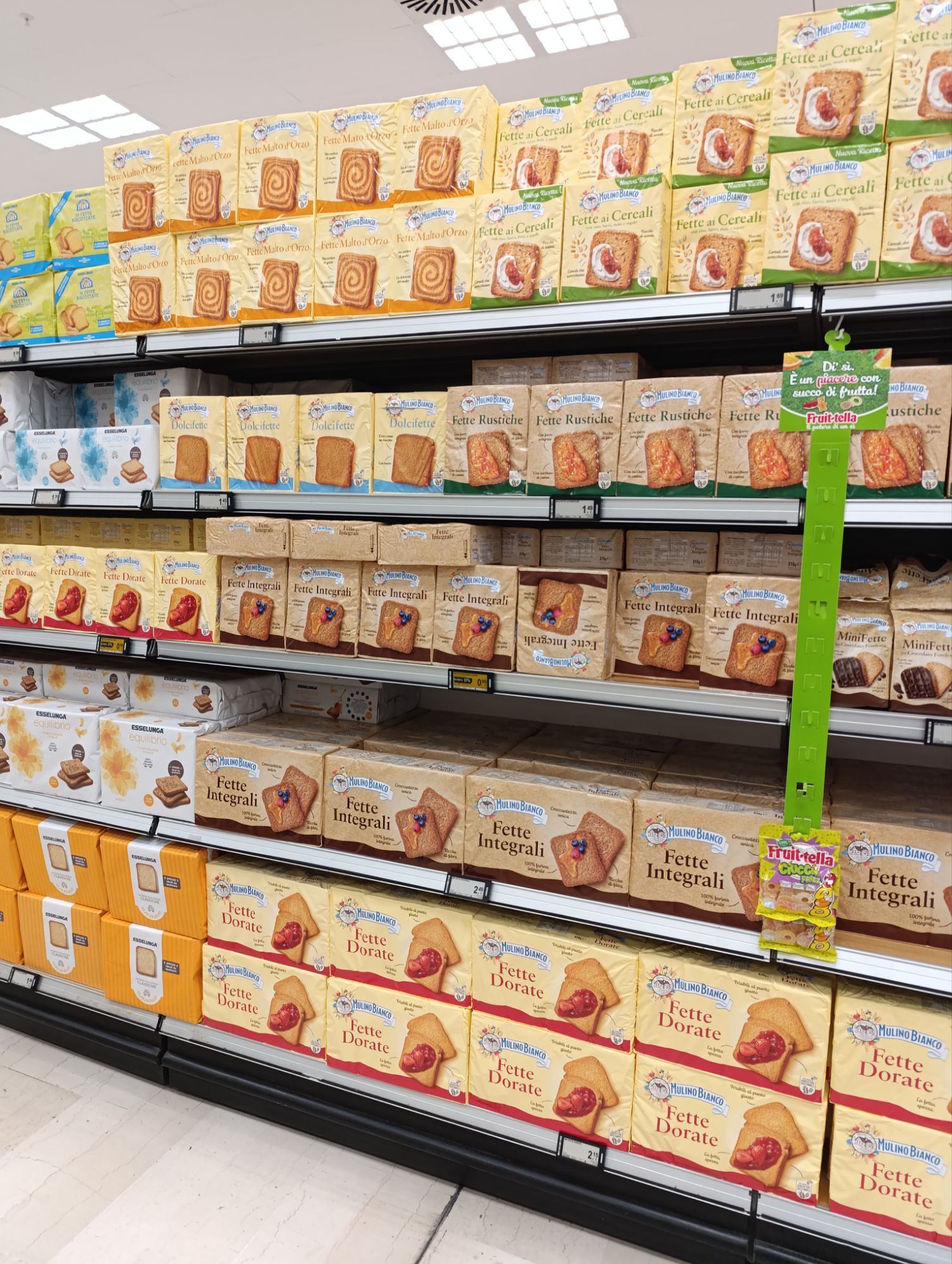
It may not be such a long-standing tradition, but in Italy, at least for the past fifty years, it’s been normal to have a coffee, a latte, or a cappuccino for breakfast, followed by bread, butter, and jam, toast, or a cookie/biscuit. Of course, it’s now common to eat cornflakes, cereal, or a smoothie, but these cookies /biscuits are a staple in the family spirit, and in the 1980s, they truly became a special occasion for the typical Italian family.
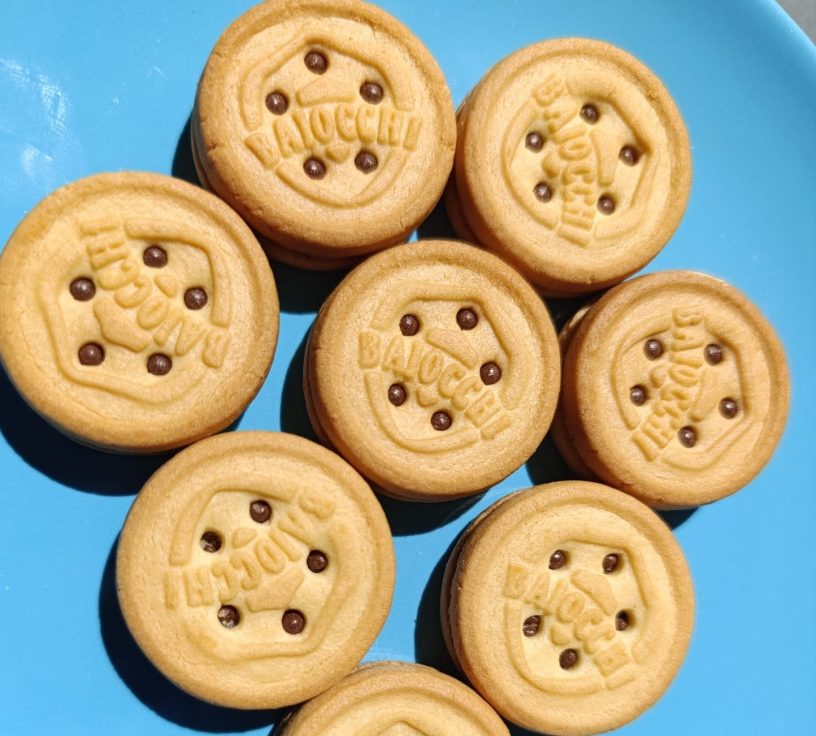
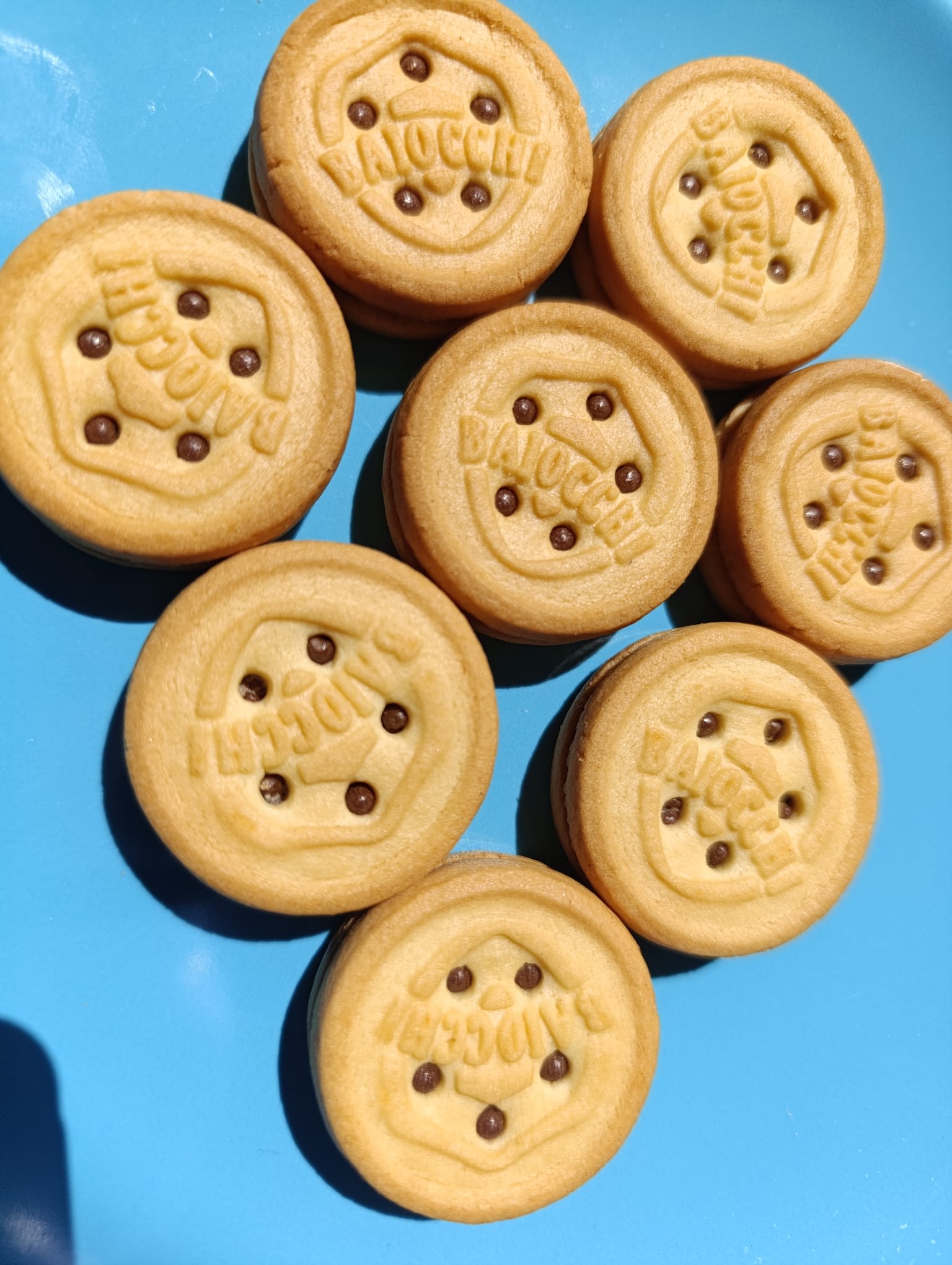
For example, let’s take a cookie/biscuit named Baiocco.
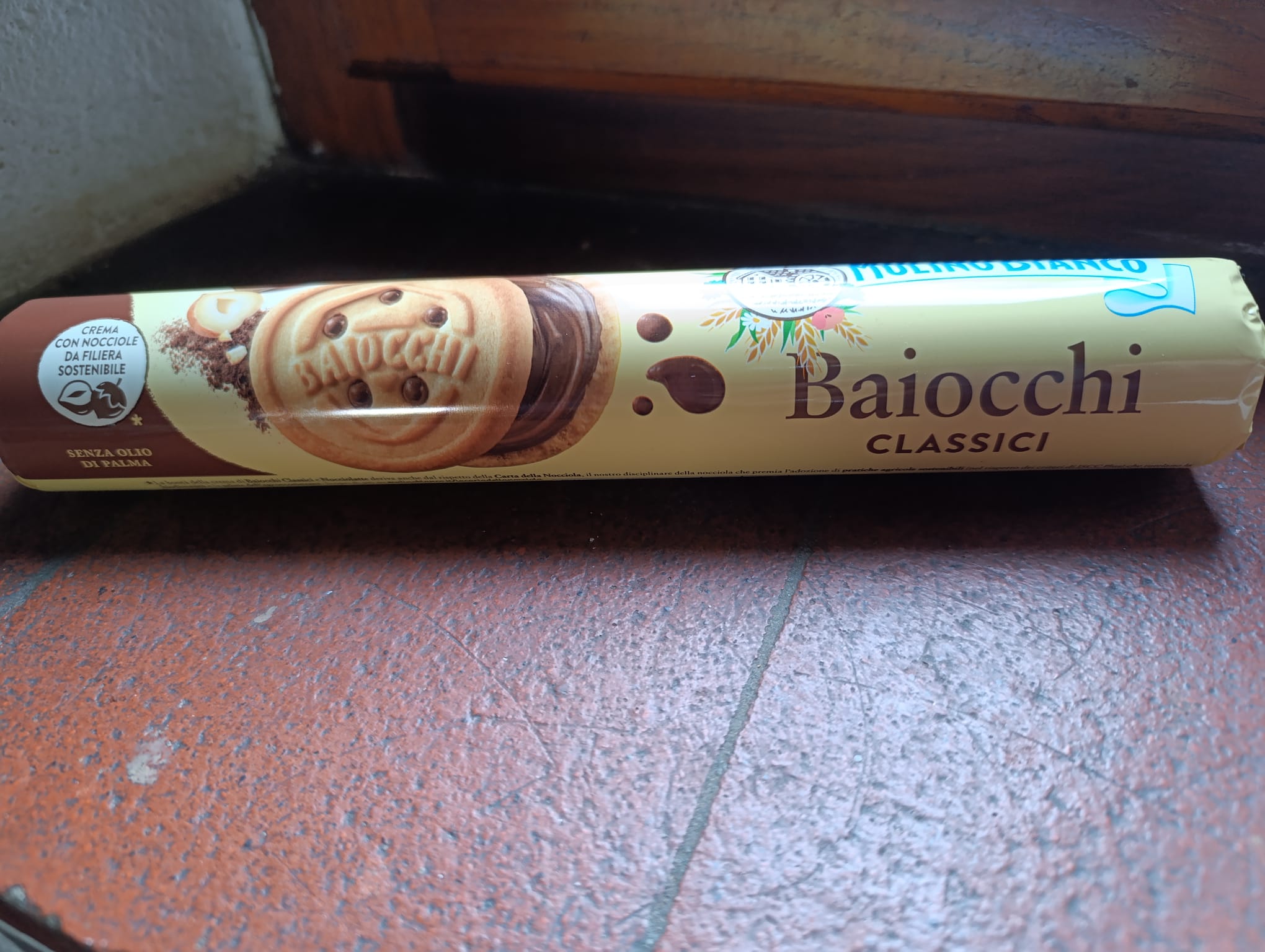
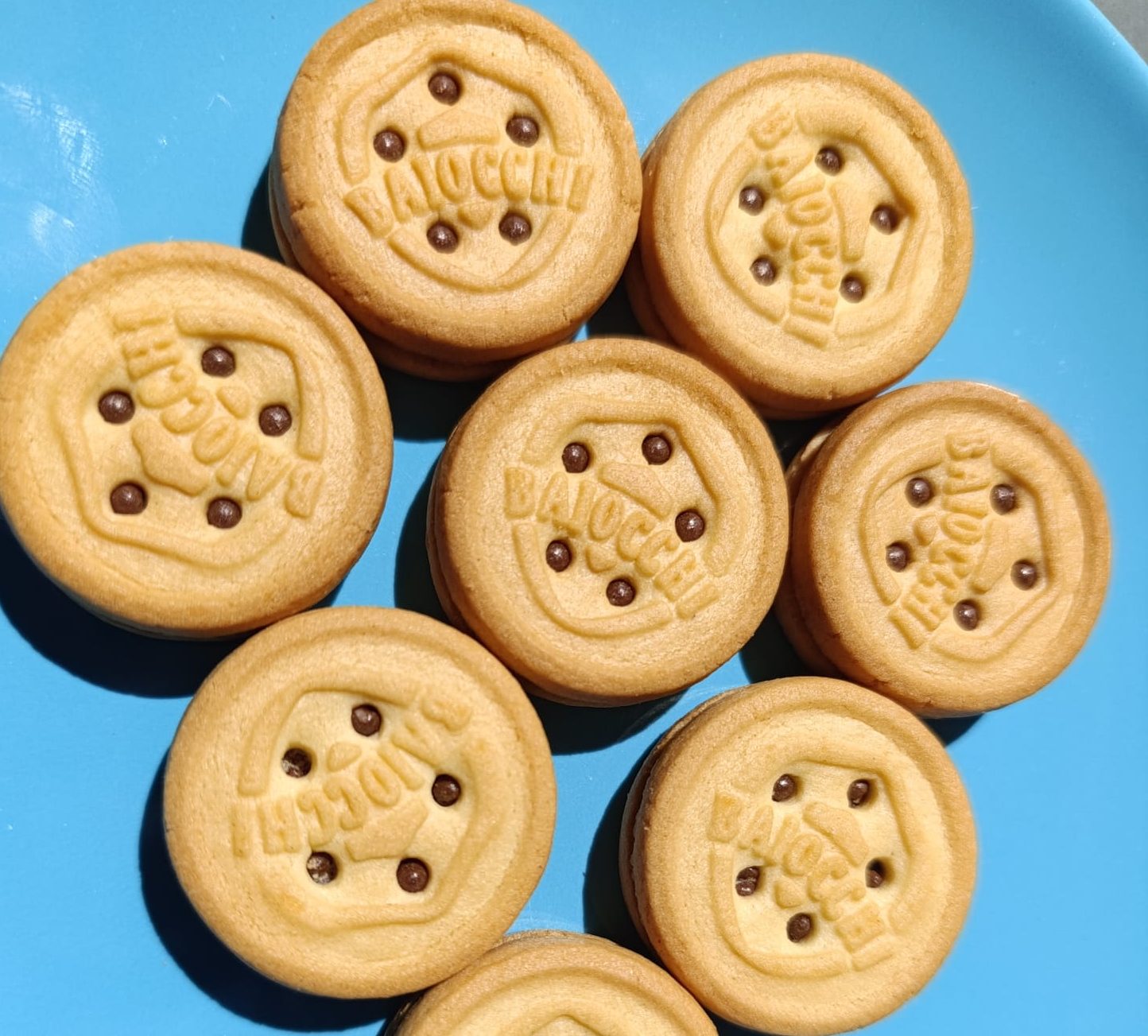
In the Italian confectionery scene, Mulino Bianco’s Baiocchi cookies/biscuits hold a special place in the hearts and pantry of millions of people. They’re more than just cookies/biscuits: they represent a symbol of familiarity, authentic flavor, and a uniquely Italian history.
Imagine holding a Baiocco in your fingers: the crumbly, light shortcrust pastry exudes a delicate aroma of butter and wheat. Its speckled, golden surface promises crunchiness. And then, the signature element: the cream, a filling of Italian hazelnuts and cocoa. Over the years, Baiocchi have also been enriched with other special fillings, such as vanilla cream, cocoa cream, milk cream,and now, pistachio cream.
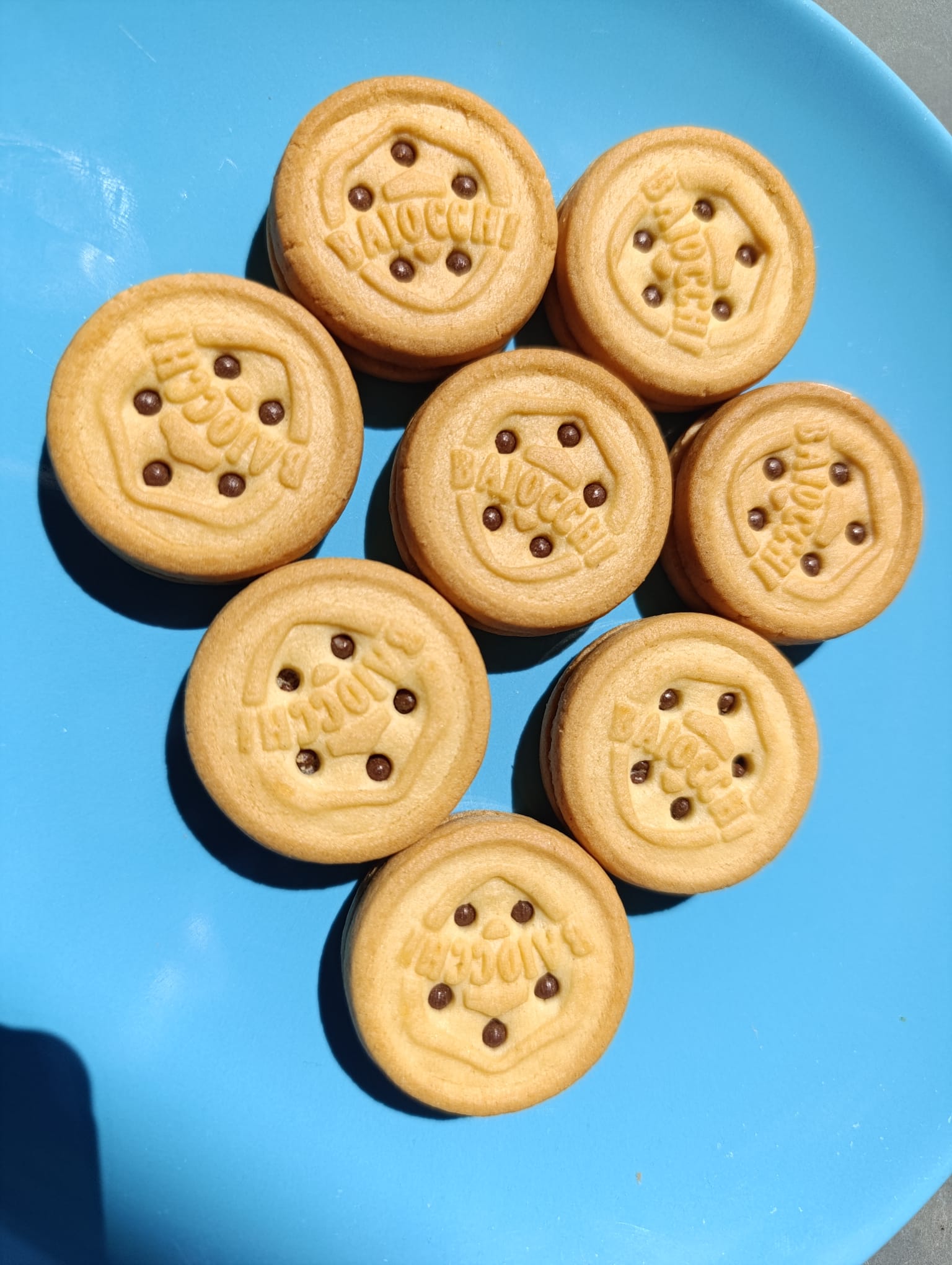
History and Origins of Baiocchi:
The history of Baiocchi has its roots in the 1980s, a period of great creative excitement and innovation in the Italian food industry. Created in 1983, Baiocchi are the fruit of the ingenuity and passion of Mara Cesari and Signorina Solzi, key figures in the Mulino Bianco creative team.
The name “Baiocchi” is a tribute to Italian tradition and culture. It derives from the Baiocchi, ancient copper papal coins minted in the Papal States until 1866.
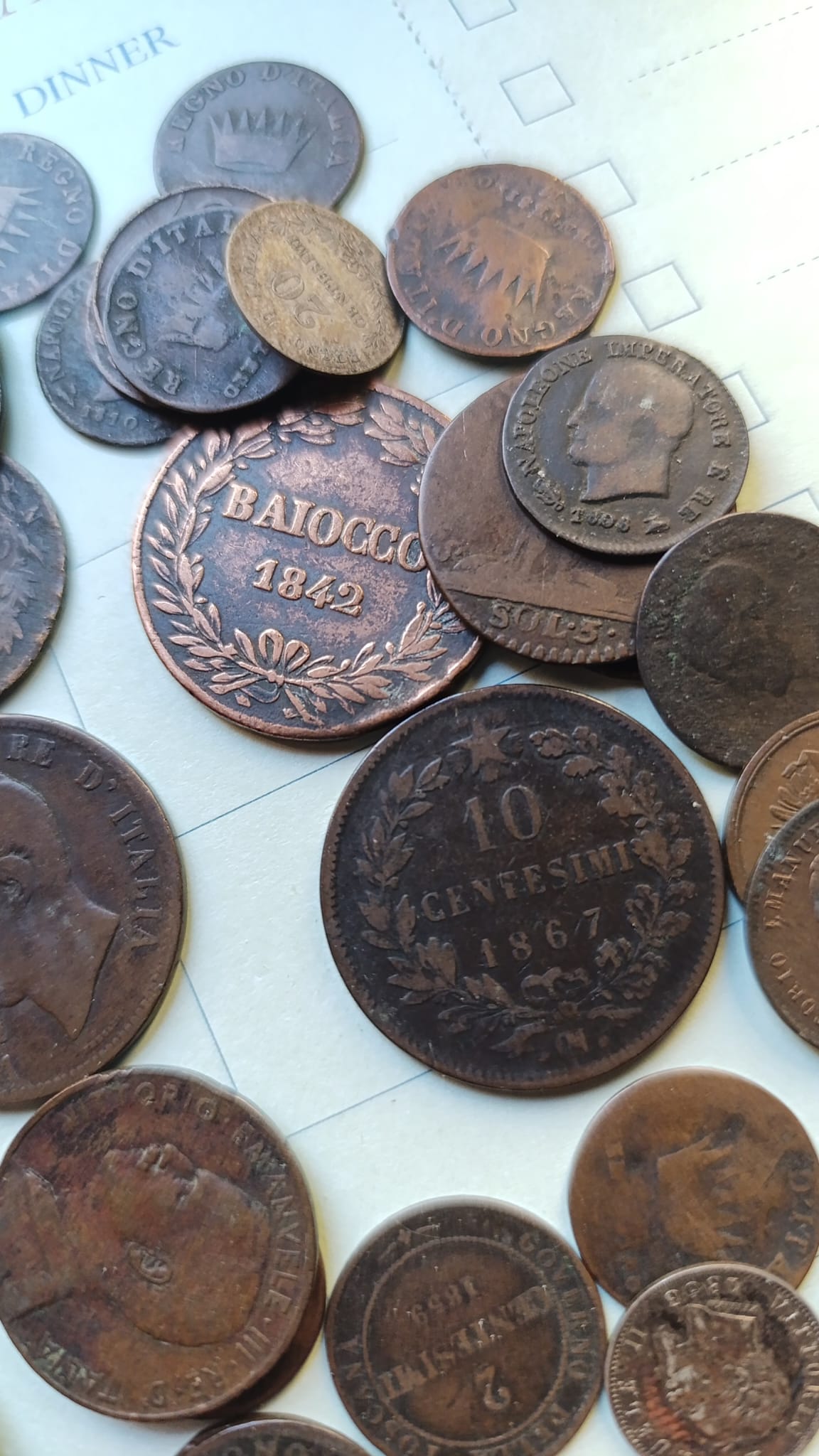
These coins were widespread in various Italian regions and represented a symbol of value and familiarity. The choice of this name evokes a sense of authenticity, Italianness, and a connection to the territory.
Since their debut, Baiocchi have been an immediate success. Their unique flavor, eye-catching packaging, and evocative advertising campaigns have helped them quickly become an icon of the Mulino Bianco brand and a benchmark in the biscuit market. Their popularity has grown steadily over the years, establishing them as one of Mulino Bianco’s best-selling and most beloved products.
Baiocchi are more than just cookies/biscuits: many Italians remember eating them as children, as a snack or for breakfast, and their taste is linked to feelings of family warmth and affection. And even those who haven’t eaten them are familiar with their packaging and shape; it’s a name they know and are associated with a constant and cross-generational presence in Italian homes, uniting different generations in taste and memory.
Isn’t interesting to see how the name of an ancient coin is today associated with childhood memories?
 Toscana Mia Blog
A wonderful post. I love the Italian cookie / biscuits. My Italian grandmother, when I would visit her in Florence, always had the Atene cookies. I get in moods for them and as I am in Chicago have to hunt them down. Thank you for making me smile… AND NOW… want the Atene cookies! 😉💕 The Biaocchi’s are good too.
LikeLike
Thank you. I like the Atene,too.Glad to make you smile. Ciao from Florence💐
LikeLiked by 1 person