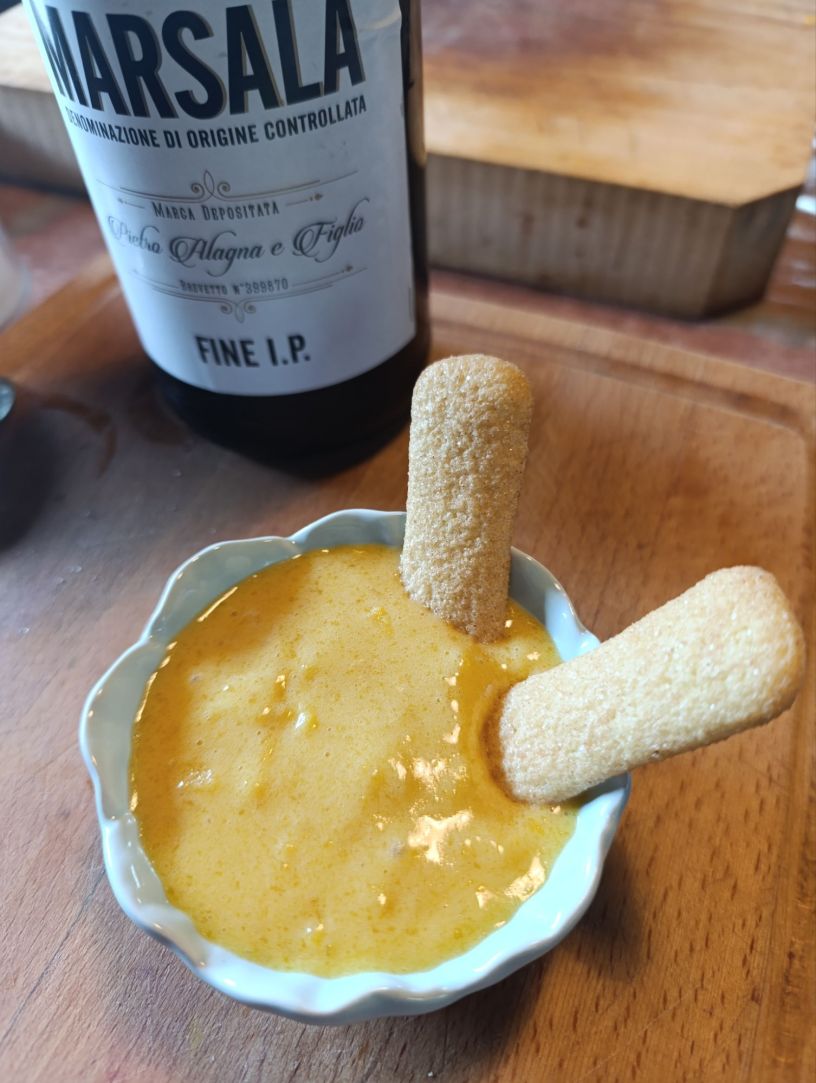
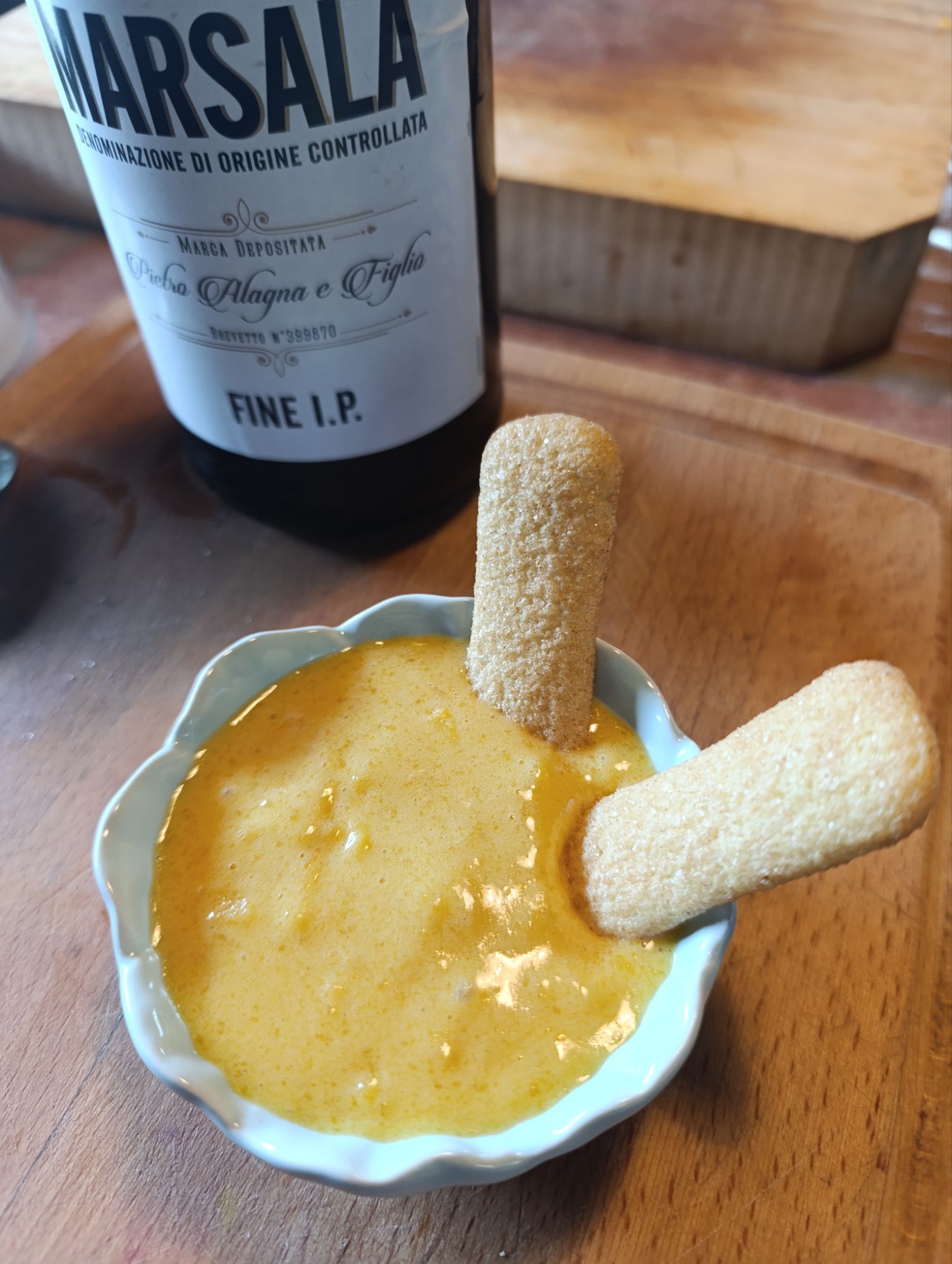
Today we have the recipe for zabaglione, the frothy and velvety dessert made from eggs, sugar Marsala, perfect for filling desserts or to enjoy in a cup
How to make Zabaione well ,isn’t really that simple. Although it has always been the most homely of spoon desserts – mothers or grandmothers always prepared beaten eggs for a snack.And zabaione is such a versatile cream.
Zabaione, or zabajone or zabaglione, is a sweet and versatile cream that can be used to accompany or fill cakes, as a filling for cream puffs and cannoli or you can enjoy it right in the cup like a hot chocolate.
The history of zabaione
There are many stories and legends about the origin of zabaione
Among the most accredited legends, there is one which claims that this cream was born in Turin in the 16th century, a period in which a community of Franciscans lived in the city, among these there was a monk, Pasquale de Baylon, who invented the cream, initially known as San Baylon cream, in homage to the friar, protector of cooks and pastry chefs.The same term, zabaione ,derives from the Piedmontese term “sambajon” which takes the name of Pasquale de Baylon. In fact, it seems that at that time the friar was well known among the women of Turin precisely for the invention of a cream based on egg yolk, sugar and Marsala with aphrodisiac powers, the recipe obtained such fame that the women passed it down from mother to daughter, as a remedy for a good marriage.
Among the other legends about its birth, one would place this cream in 1471, attributing it to the mercenary captain Giovan Paolo Baglioni, lord of Perugia, count of Spello and Bettona, who camped near Reggio Emilia with his troops, after sending his men in search of food, he found himself only with wine, eggs and sugar and invented this cream with an invigorating and energetic power. The cream was so successful that they decided to give it the name Zabaglione, in honor of the captain’s surname.
And then there are similar traditions in other areas of the country from Venice to Naples with variations on the use of liqueurs or vanilla.
Whatever its origins, this cream, considered invigorating as well as delicious, spread throughout Europe, where it was prepared with different “alcohols” (Moscato, Porto, Marsala), and found its way into the great manuals of classical cuisine.
Time
Preparation time: 5 minutes
Cooking time: 10 minutes
Total time: 15 minutes
Doses for cups for 2 people
Ingredients
• 4 Egg Yolks
• 4 tablespoons Sugar
• 4 tablespoons Marsala
Preparation
To prepare the zabaione recipe, combine the egg yolks and sugar in a metal bowl with a rounded bottom or saucepan, mix with a whisk until the ingredients are well blended.
Add the liqueur and mix until you obtain a frothy mixture.
Start cooking in a bain-marie, making sure that the water boils slightly and that the saucepan containing the zabaione mixture is not in contact with the water.
Cook for about 10 minutes, stirring constantly with a whisk, until the zabaglione is thick and creamy.
Pour it into cups and serve, accompanying it with dry biscuits if desired.
3 Tips for making zabaione well

Beat the egg yolks immediately after adding the sugar, and proceed with the subsequent preparation phases. Do not leave the sugar in the egg yolks for a long time otherwise it will not dissolve well
– Keep the container in contact with non-turbulent boiling water: keep the flame low and, if the cream threatens to boil, remove the pan from the heat. Important: during cooking, never stop whipping the cream with the whisk.
– Use a hand whisk with thin wires and whip the cream with large and energetic movements, even from bottom to top as well as circular, so as to incorporate as much air as possible into the egg yolk mass and obtain a frothy cream.The electric whisk concentrates the movement on a small surface
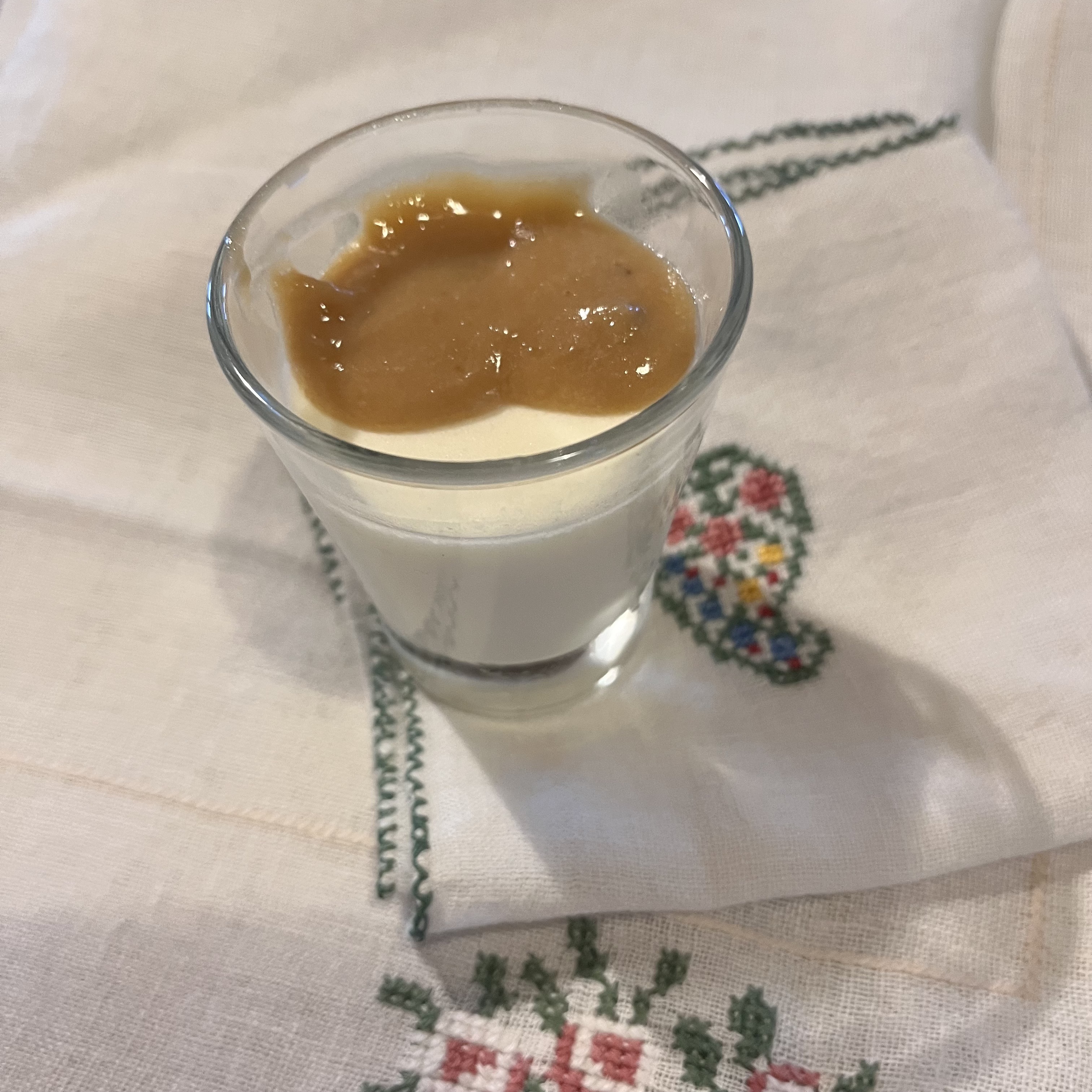
It is not a complex recipe, but it needs care and attention, cooked in a bain-marie it must be whipped continuously until it reaches a soft and frothy consistency. It is often accompanied by a slice of cake, panettone at Christmas but it is not unusual to find it in a cup with a couple of lingue di gatto, on gelato, on panna cotta or on cooked fruit as in this variant with pears cooked in wine.

Enjoy your cream, and next time we’ll talk about liqueurs that are very similar to zabaglione.
 Toscana Mia Blog