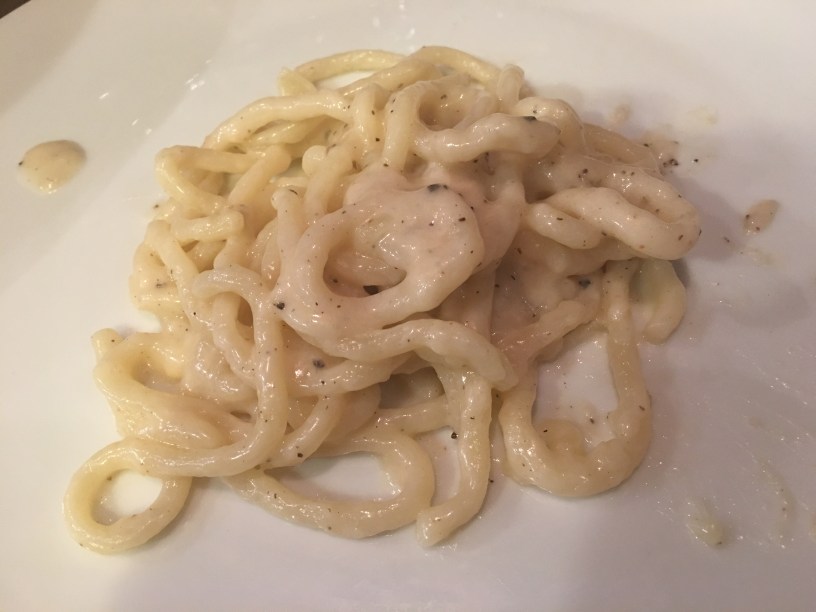

Pasta cacio e pepe is one of the most iconic and beloved dishes of Italian cuisine. Its simplicity is both fascinating and delicious, yet behind this apparent simplicity lies a history and technique.
Origins of the recipe
The origins of pasta cacio e pepe are a bit debated:
Some experts date back to the culinary tradition of Lazio, in particular Rome. It is one of the oldest recipes of Roman cuisine, which has its roots in the past and in the habits of farmers and shepherds of the time. Let’s think of transhumance, when shepherds had the need to move the flock for long distances and carried with them products that perish slowly, such as cheese and peppercorns.
For others, the recipe comes from the very popular method of using cheese with pasta, but the addition of pepper introduces another story, parallel to the first. Cheese has long been perceived as a popular food. Therefore, the noble and rich to distinguish themselves, “ennobled” it with very expensive oriental spices, the symbol par excellence of social privilege. That touch was enough to mark the difference. The pecorino pepe variant took root in central Italy, while in the North parmigiano, cinnamon and sugar (another exclusive product, long assimilated to spices) prevailed.. The humble cheese meets the noble spice.
An other possibility is that the innkeepers of the time served the cacio e pepe “dry” because they had to make sure that the customers needed the wine to wash down the pasta, so the more cacio e pepe they ate the more wine they drank.

Ingredients
Serving 2 persons
Ingredients for 200 gr. = 7 oz. pasta (tonnarelli, spaghetti, pici, penne)
Aged pecorino/sheep cheese 200 gr.=7 oz.
Black Peppercorns or coarsely grated black pepper 2tbs
Equipment Needed
Mortar and pestel
Pot to cook the pasta in
1 pan large enough to contain all the pasta to finish cooking
1 fork
1 spoon
cheese grater
1 ladle
Preparation
The Secret of the sauce
One of the most fascinating aspects of this recipe is the velvety and smooth cream that envelops the pasta. The technique to achieve this perfect consistency is anything but simple and requires skill and practice. Typically, a combination of the pasta cooking water and grated pecorino cheese is used to create a thick and creamy sauce. The pasta is sautéed in the pan with this cream, until it is perfectly blended.
The Art of Emulsifying
A common mistake when preparing this dish is to let the cream thicken or form lumps. The art consists of mixing the cream with the hot pasta cooking water vigorously and constantly, allowing the two elements to blend into a delicious cream without forming lumps.
The preparation
Given the scarcity and simplicity of the ingredients, the key to an excellent cacio e pepe pasta is its preparation, which must follow strict timing to avoid the result being too dry and unappealing.
The first step to take is to grate the pecorino cheese finely and set it aside in a bowl.
While you do this, you can already boil the water, because in reality the preparation times are quite quick and rhythmic, so pay extreme attention to the cooking of the pasta.
The suggestion is to use water for half the pot, so that the starch concentration is at the highest levels and the result is decidedly creamier.
Salt the water but not excessively, since the cheese is decidedly salty.
The peppercorns must be crushed ,better in a mortar with a pestle
In a pan, place half of the crushed pepper, toast it for a few minutes and then add some pasta water with the ladle, so as to mix it together with the starch.
After tasting the pasta and seeing that they are al dente, pour them into the same pan and continue cooking together with the pepper.
Moving the pasta with tongs, continue to mix and add more cooking water to make a first cream using only the starch in the pot.
Respecting the timing just indicated, to prevent the cream from thickening too much, start preparing the cheese mixture by pouring the pecorino into a large bowl.
Using only cooking water and a whisk to mix, proceed to dissolve the cheese making sure to eliminate the lumps and adding all the pecorino until the dose is finished.
At this point, a cream of the right consistency should have formed, so add it to the pasta that has finished cooking, using a few more ladles of starch-rich water in case it seems too dry.
While pouring the mixture, move the spaghetti with the tongs, to prevent them from sticking together and not maintaining the right consistency.
If you are a cheese lover, you can add a sprinkling of grated pecorino cheese
To fully enjoy an excellent cacio e pepe, eat it freshly made and still hot, since over time it could become excessively sticky.
Not so simple but with a few ingredients and a little attention you’ll have a great ,creamy pasta dish.
Buon appetito !
 Toscana Mia Blog