

Catalogna -Catalonia
A lesser-known vegetable. Honestly, it was a surprise for me because, being a chicory, I feared it would be too bitter.
Unlike common chicory, Catalonia chicory is popular due to its more delicate and less bitter taste, very suitable for dishes with a sweeter and less intense flavour. From a nutritional point of view, Catalonia shares many of the properties of chicory.
Asparagus chicory generally refers to a set of local varieties characterized by the edible flower scape, which resembles the asparagus shoot, and by the typical amarognolo(bitterish) flavour.
The term “asparagus chicory” is actually sparsely used in favor of local terms such as puntarelle or catalogna(catalonia).
There are two types: one taller, erect and bitter, usually consumed after cooking without the characteristic head at the base produced in summer with constant irrigation; the second, lower and with a wide rib, has shoots that develop on the surface of a central basal tuft.
The crunchy sprouts, also eaten raw (often with the addition of garlic and salted anchovies), are also known as puntarelle and considered a typical dish of Roman cuisine, also widespread in Campania cuisine.
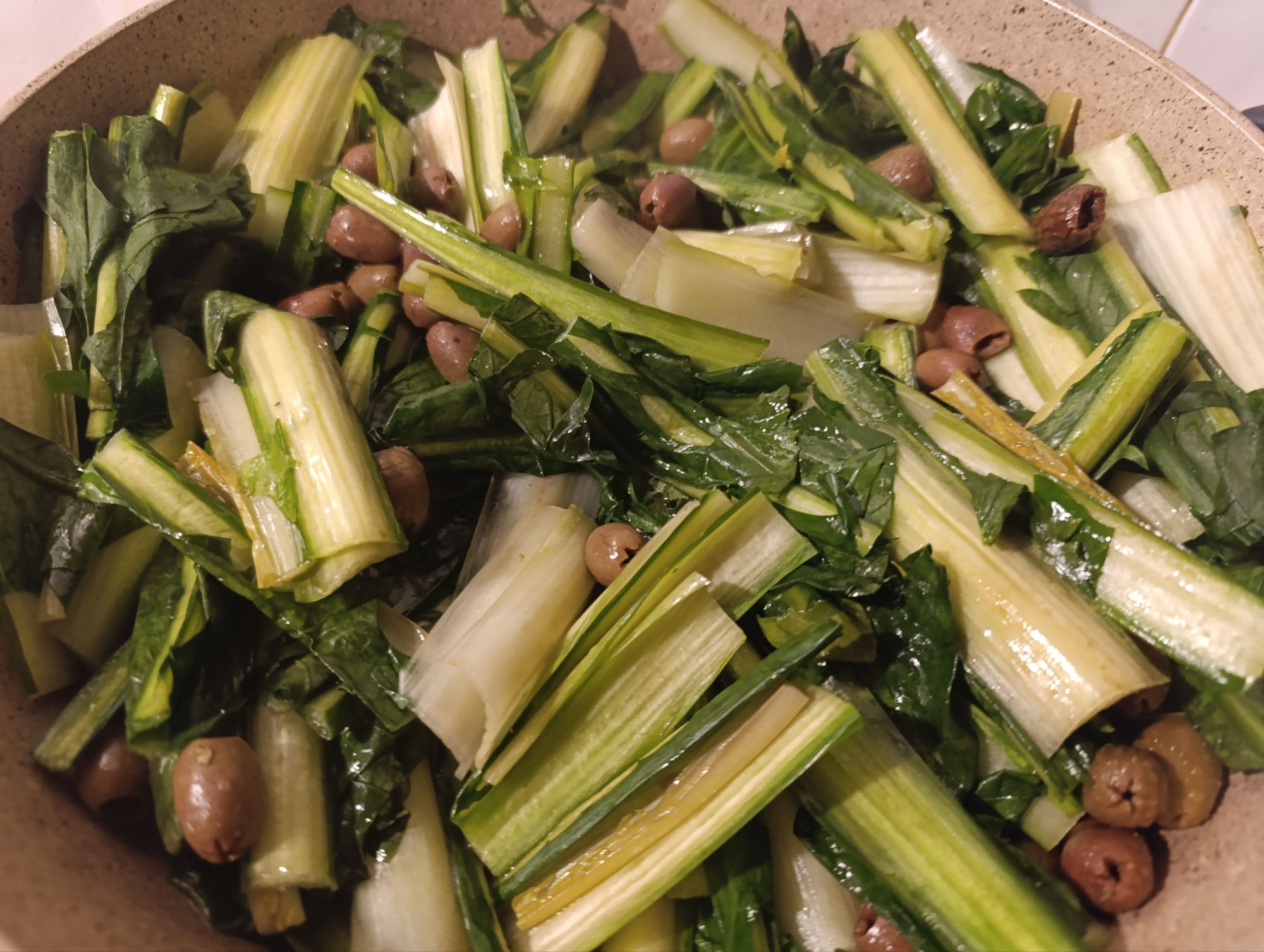
The tuft can be boiled and eaten with a little oil, sautéed in oil (see Pan- Fed Catalonia recipe) or be an ingredient in a mix with cheese and pork. Cut into pieces and seasoned with oil, vinegar and salt, it replaces the classic green side salad with meat or fish dishes.
In Puglia there are two important local varieties known as Molfetta and Galatina puntarelle chicory, of the Catalonia variety with a very developed head, and one of summer production of water or Otrantine chicory, without head, with a bitterish flavour.
History
Chicory was born in Greece, like the olive tree, broad beans and another part of our plants. The ancients called it “kìchora” and considered it not so much a food as a medicine.
The first uses in the kitchen date back to the 17th century, when the first cultivated varieties, such as Catalonia chicory, also arrived in our country. And it came right from Catalonia,that’s the reason for its name.
Called the shepherds’ clock, because when its flowers close at around 4pm, the time for milking arrives in the high mountains.
Today Catalonia is also used in cosmetics as well as in the kitchen, where it boasts a transversal use: from soups to side dishes, through delicious appetizers and traditional recipes, such as Apulian fava (broad bean) purée, to which it is added as a flavor booster.
Healthy Food
The bitter substances contained are precious for digestion and blood circulation. Catalonia also contains many vitamins and minerals. Visually, catalonia closely resembles dandelion and can be used both as a salad and as a vegetable.
It is rich in mineral salts and vitamins, in particular: vitamin A, vitamin C, calcium, potassium and phosphorus. It has a digestive and diuretic action and a rather limited caloric value.

A vegetable that must be tried, it is a great surprise.
 Toscana Mia Blog