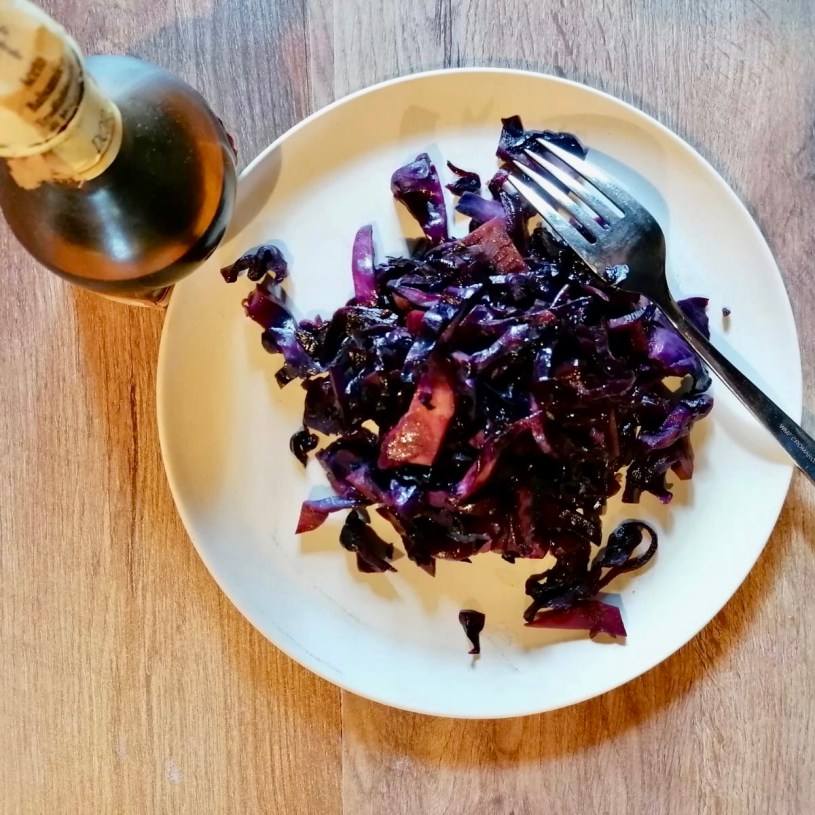
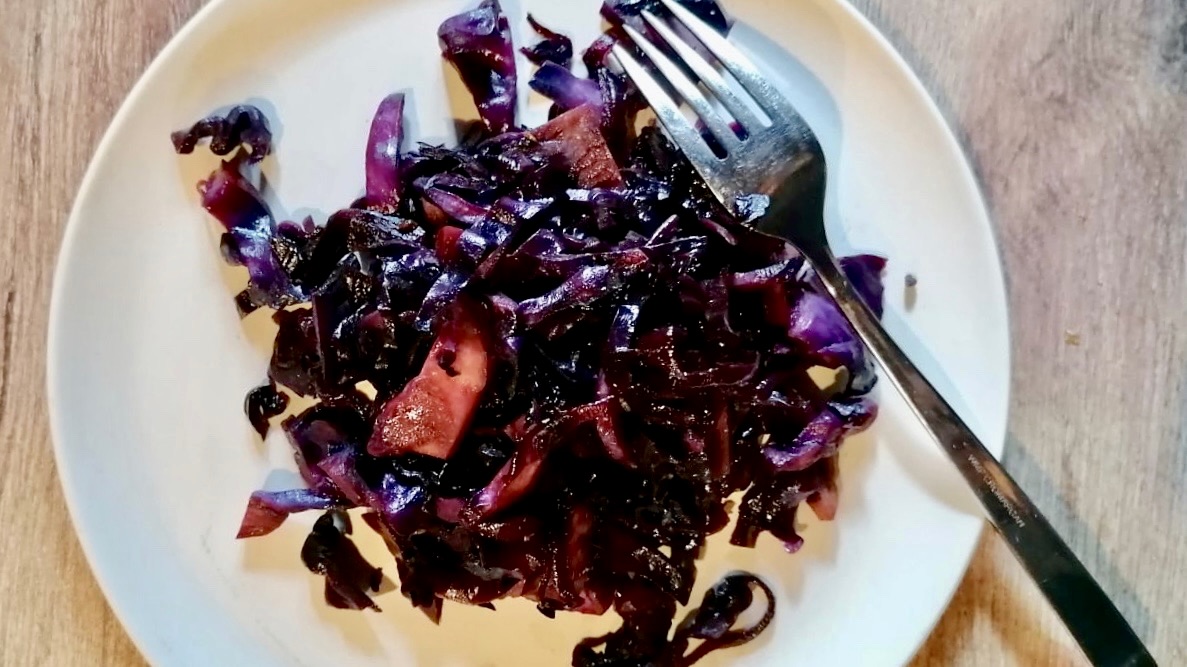
Red Cabbage with Balsamic Vinegar
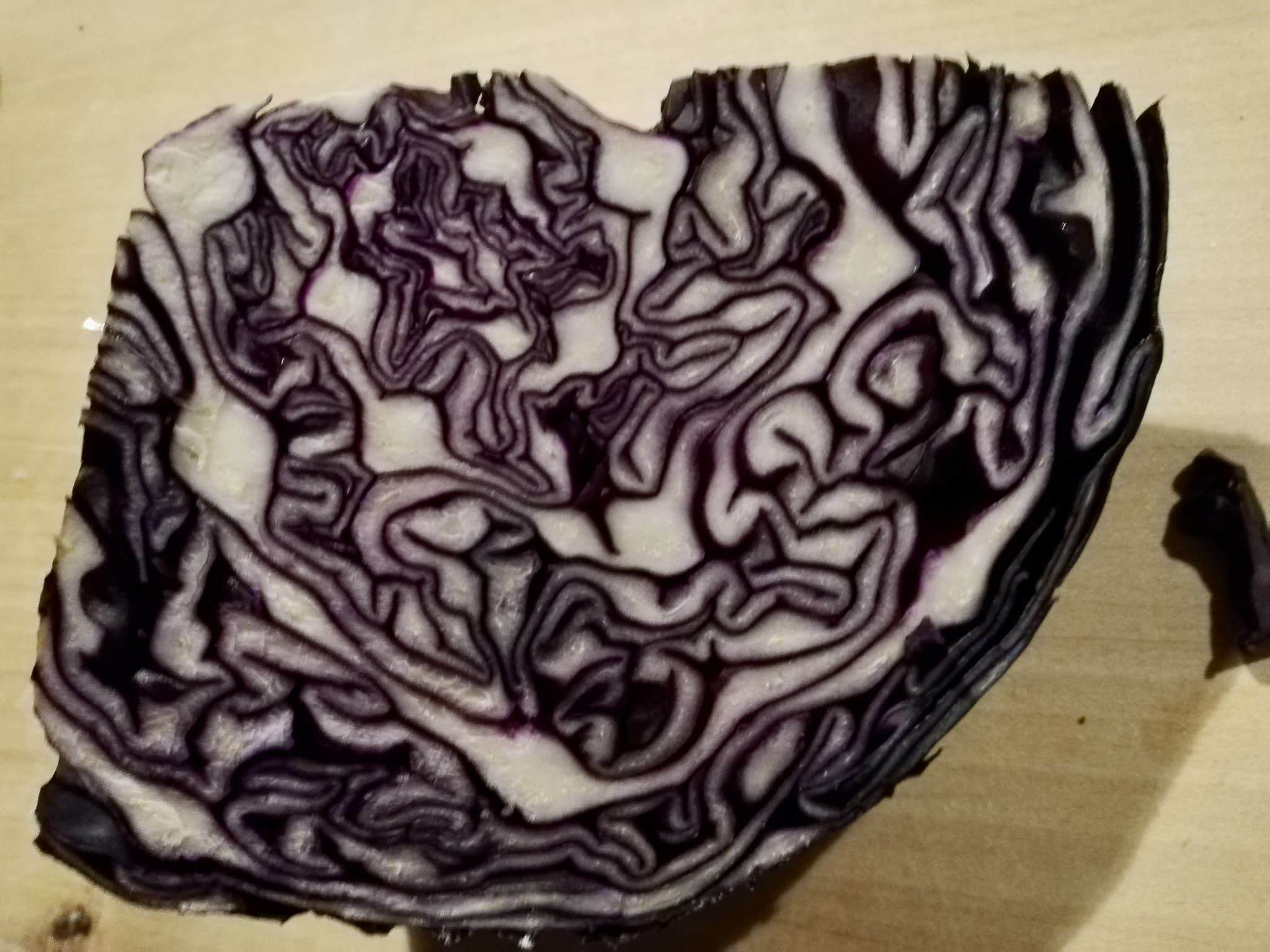
Red cabbage (or purple cabbage, if you prefer) is a versatile and flavorful vegetable, very attractive with its vibrant color. Furthermore, this red cabbage, like all cabbages, has many health benefits and very few calories.
Red cabbage is delicious raw when thinly sliced, but today I want to show you a different way: cooked and flavored with balsamic vinegar.
• Difficulty: Very Easy
• Cost: Economical
• Preparation Time: 10 Minutes
• Cooking Time: 10 Minutes
• Serves 2
• Cooking Method: Stovetop
Ingredients
300 g Red Cabbage =0.66 pounds (lbs). This amount is roughly equivalent to 4 cups of shredded cabbage.
1 clove Garlic
3 tablespoons Extra Virgin Olive Oil
2 tablespoons Balsamic Vinegar
2 tablespoons Water
Salt to taste
Tools
Knife
Cutting Board
Frying Pan
Spatula
Preparation
Wash the red cabbage and slice it, preferably very finely, and set it aside.
In a nonstick pan, heat the oil with the garlic clove and add the sliced red cabbage.
Briefly stir the vegetables and add the water. Cover and cook over low heat for about 10 minutes, stirring occasionally with a spatula to make sure it doesn’t stick.
If it dries out too much during cooking, add another tablespoon of water. Season to taste, but don’t overdo it, considering the balsamic vinegar you’ll be adding later.
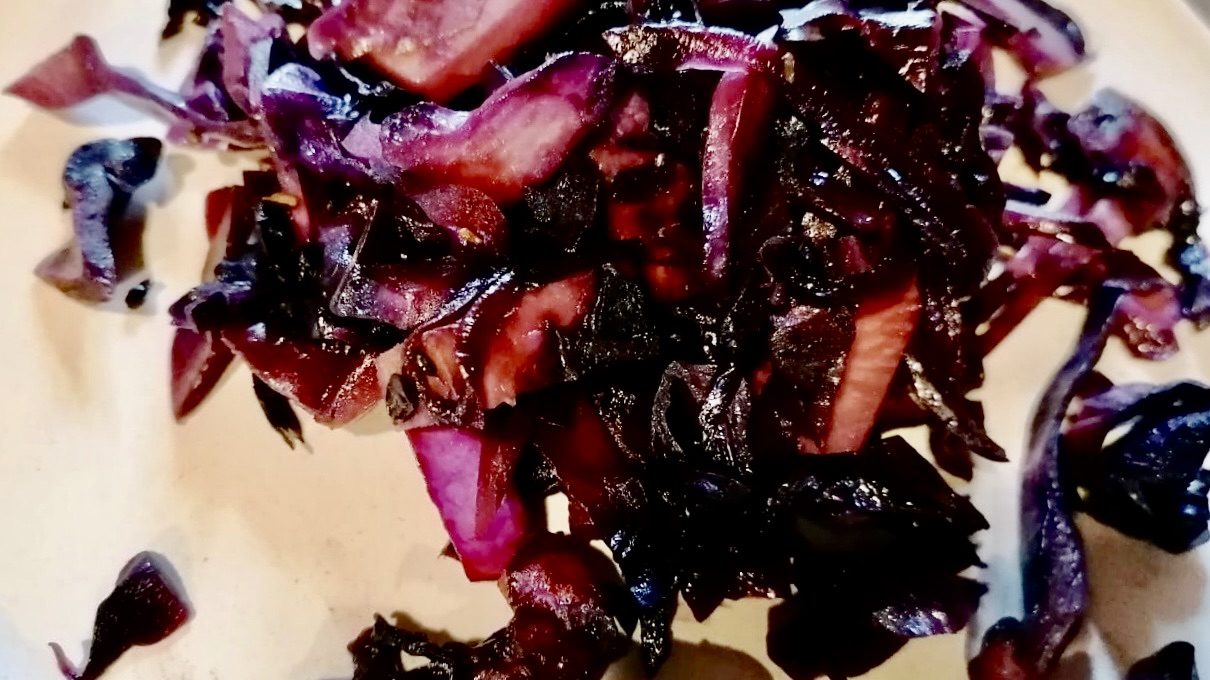
Once cooked, add the balsamic vinegar and raise the heat to evaporate.
Turn off the heat and serve the pan-fried red cabbage as a side dish for a delicious main course.
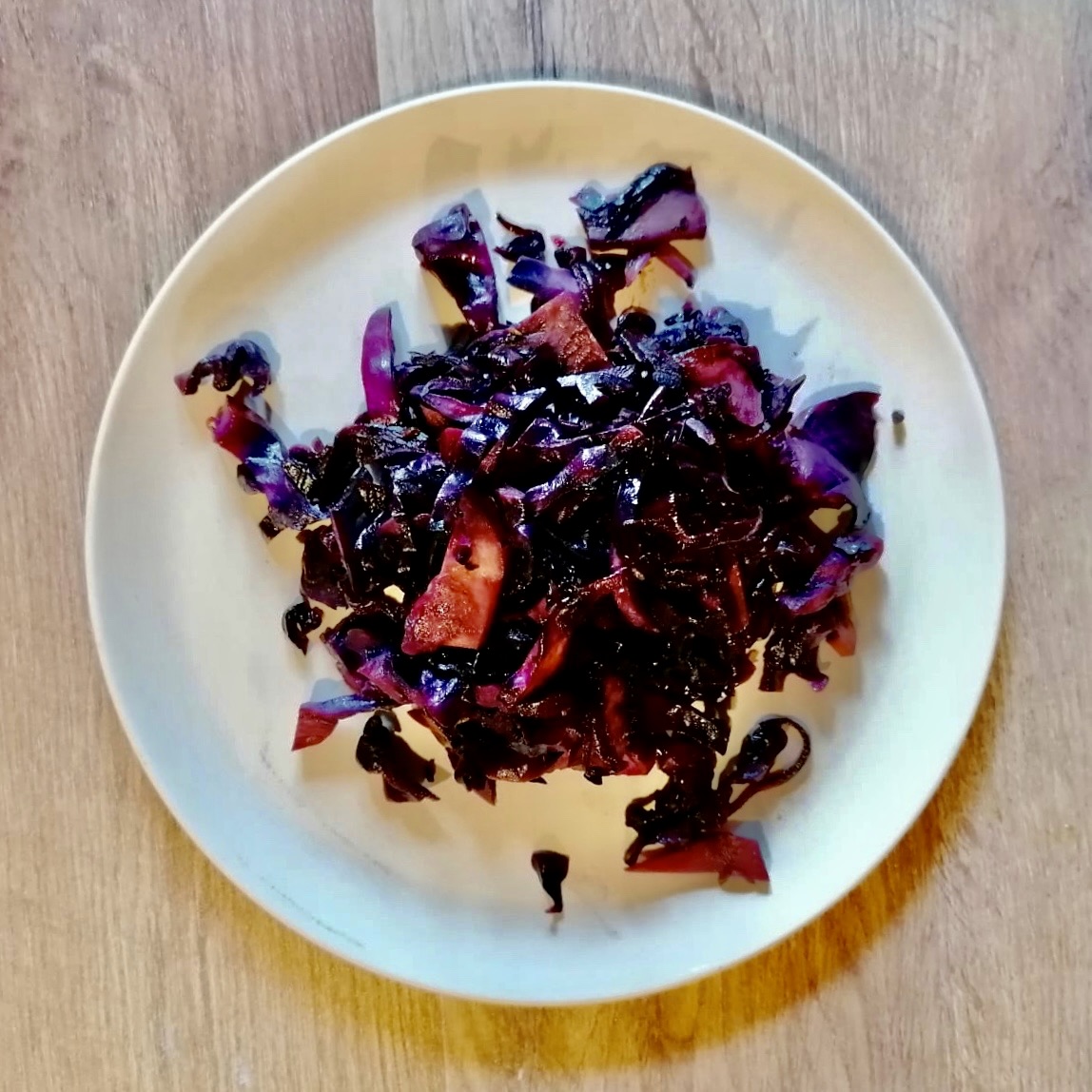
Here, it’s deglazed with balsamic vinegar, but if you prefer, you can opt for soy sauce, or leave it plain.
When slicing red cabbage, you may realize that it’s too much for you, it keeps very well in the refrigerator wrapped in a paper bag.
Red/purple cabbage is rich in vitamin C, making it a helpful addition to colder periods to combat and prevent seasonal ailments. It contains numerous antioxidants and therefore fights free radicals, which are responsible for premature cellular aging. It’s good for the heart and bones, is low in calories, and contains a large amount of an amino acid called glutamine, which reduces inflammation caused by gastrointestinal ulcers. It can be consumed frequently during the winter because its anthocyanins prevent circulation problems.
Can you imagine something that looks so nice and is also extremely healthy?
Perfect to be served together with a salad or fish or meat.
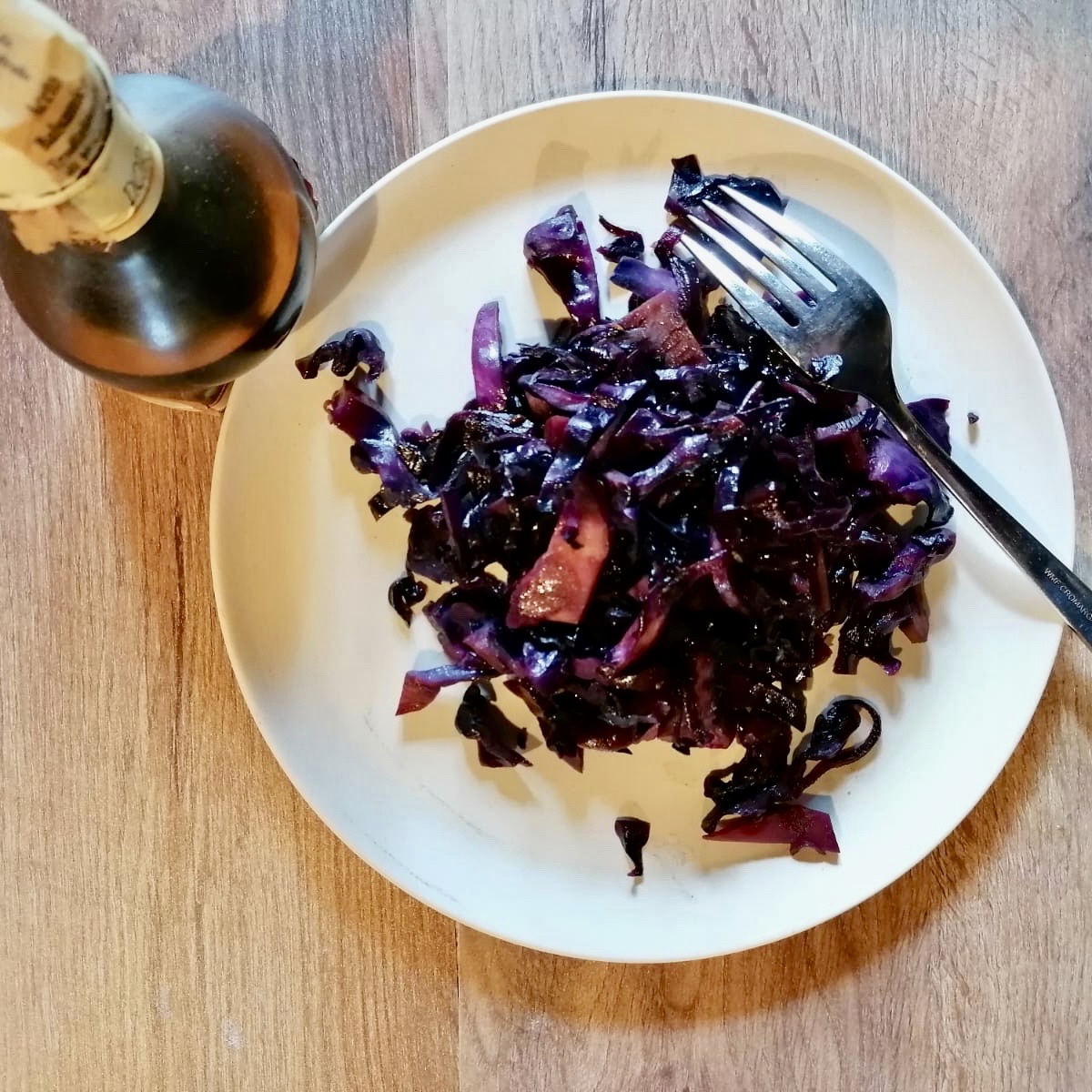


Here in North Carolina we are recovering from our 20 year snowfall. Here we got about 8 inches which in this state is a mountain. This recipe fits so well with that weather. Warm and soothing. light and very satisfying. Great, great job on this one my friend!
LikeLike
Sorry for sucha cold Winter. Enjoy soups. Here it rains a lot, but no damage in Tuscany. Thank you for being with us and enjoy s glass of good Red wine 🙂
LikeLike