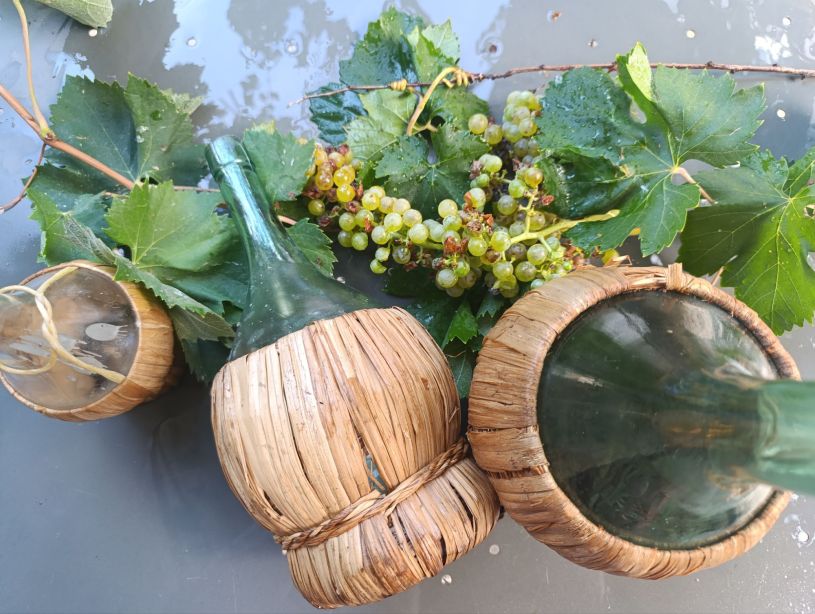
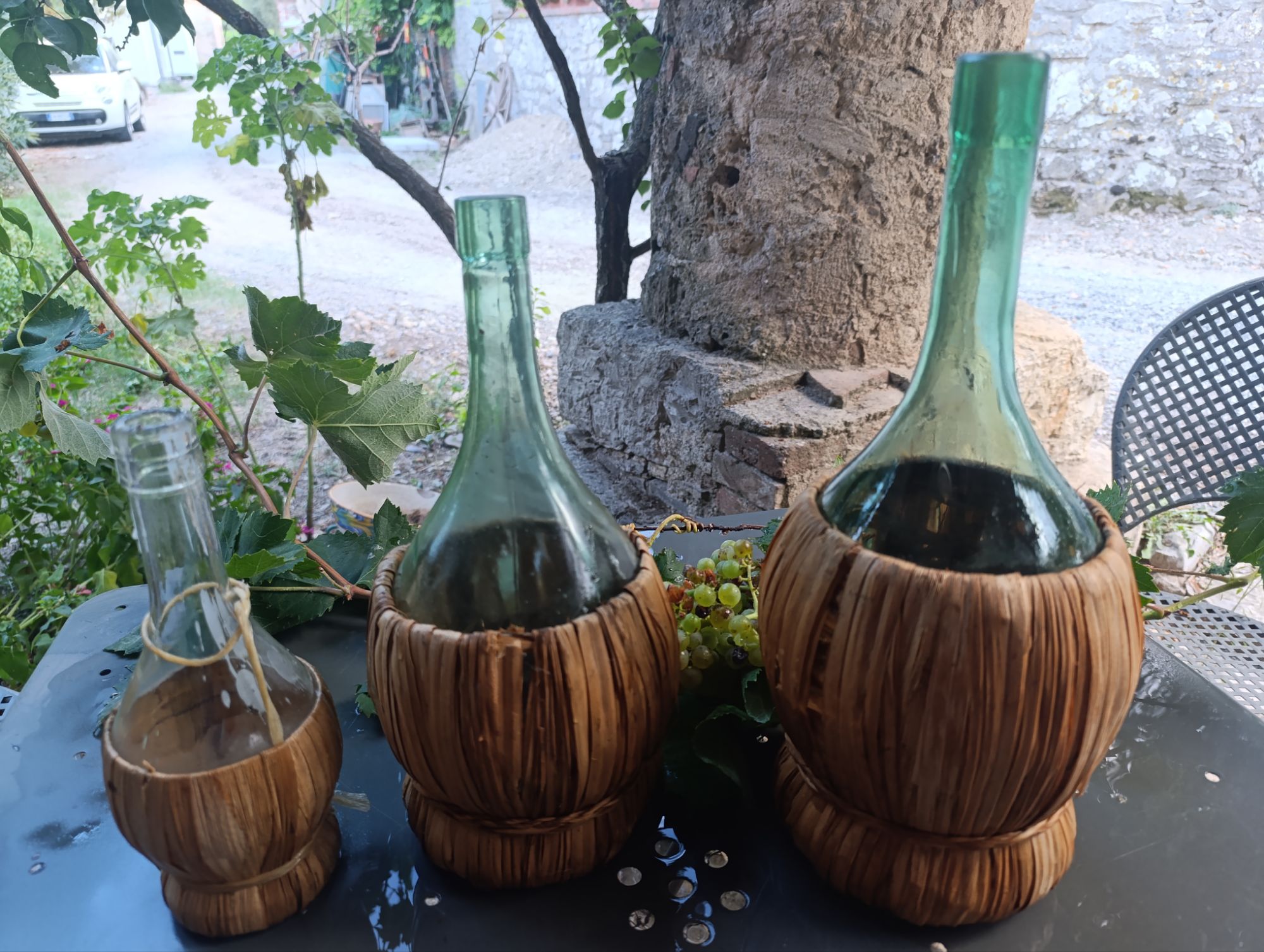
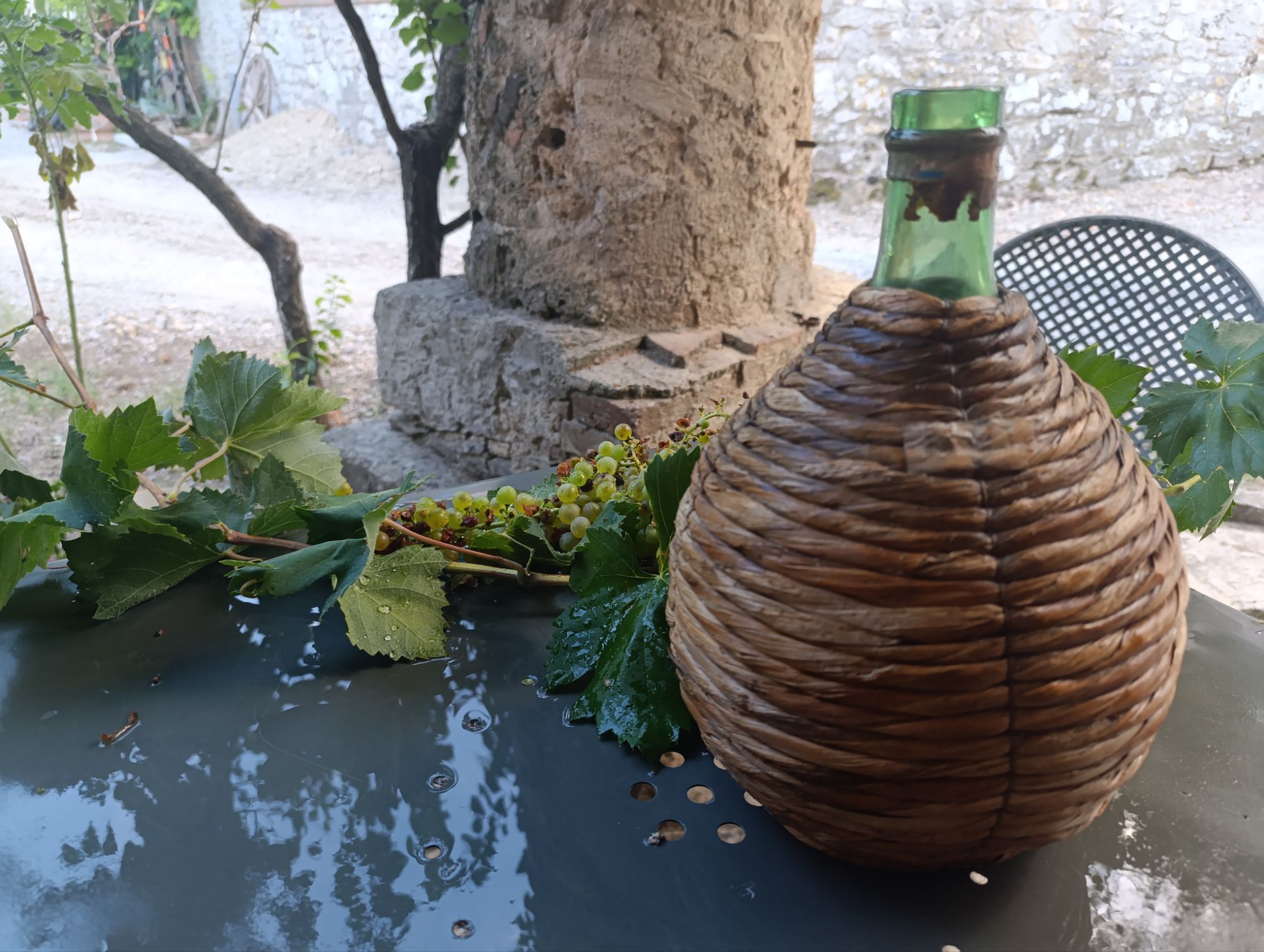
The fiasco is a typical Tuscan glass container, rounded and without a foot, lined with marsh grass
or straw, historically used to transport and store wine,such as Chianti.
History and Tradition of the Fiasco
The production of fiascos has its roots in the 13th century in Tuscany,where the art of glassmaking was flourishing.
The artisanal straw covering served not only as an aesthetic or iconic element, but also protected the fragile spherical glass bottle from impacts during transport and shielded the wine from sunlight.
The flask is a container for transporting and storing wine, also perfect for those working in the fields who wanted to leave the wine under a tree for lunch.
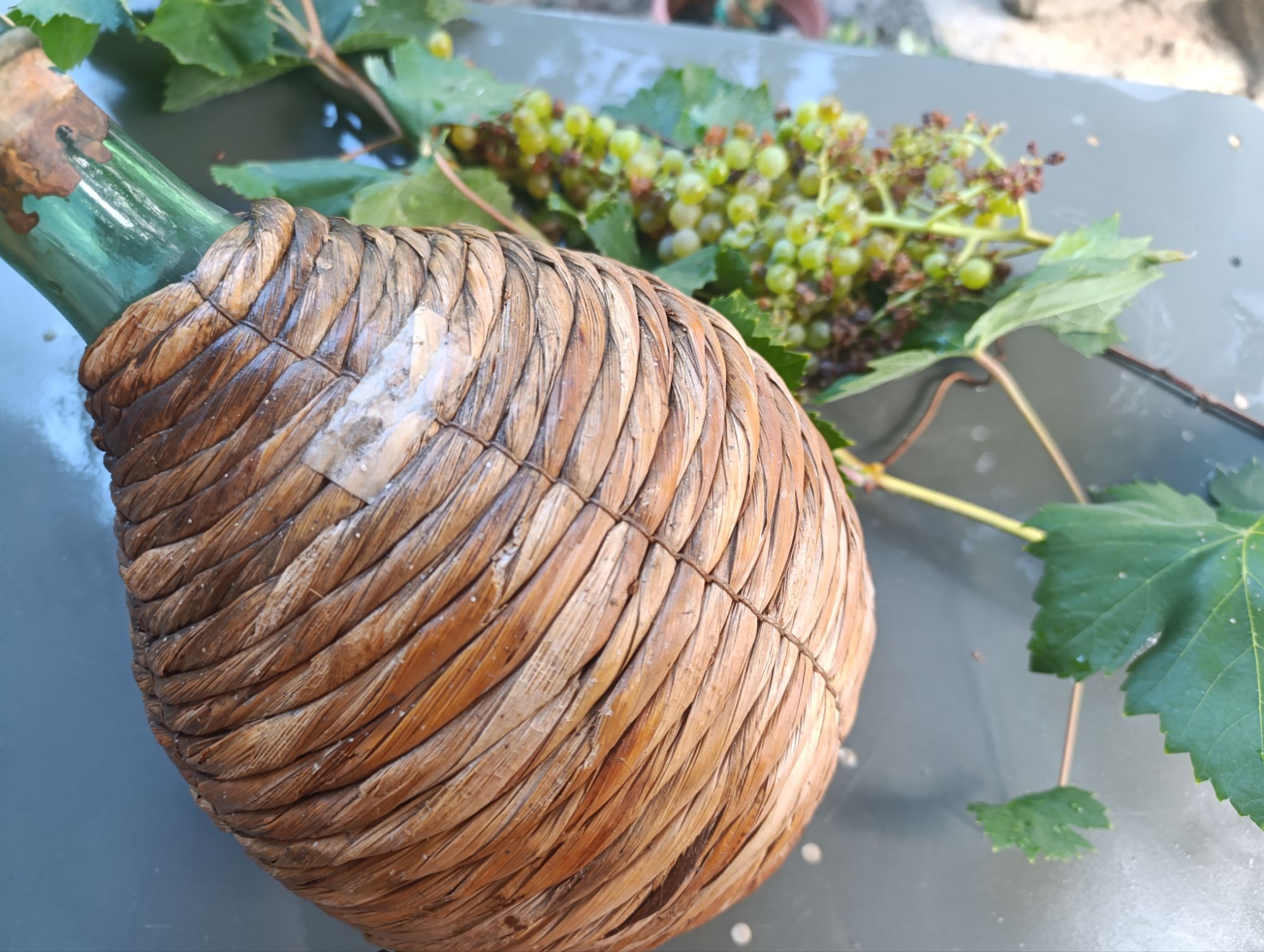
Made of thin white or green glass, it is almost spherical in shape with an elongated neck, and is typically footless, essentially to allow for easier and quicker blowing of the glass container. The bottom is covered with woven straw, with a ringed base that protects it from impacts and makes it self-supporting.
History
The glass flask almost certainly dates back to the 14th century. There are literary and iconographic sources that mention it.
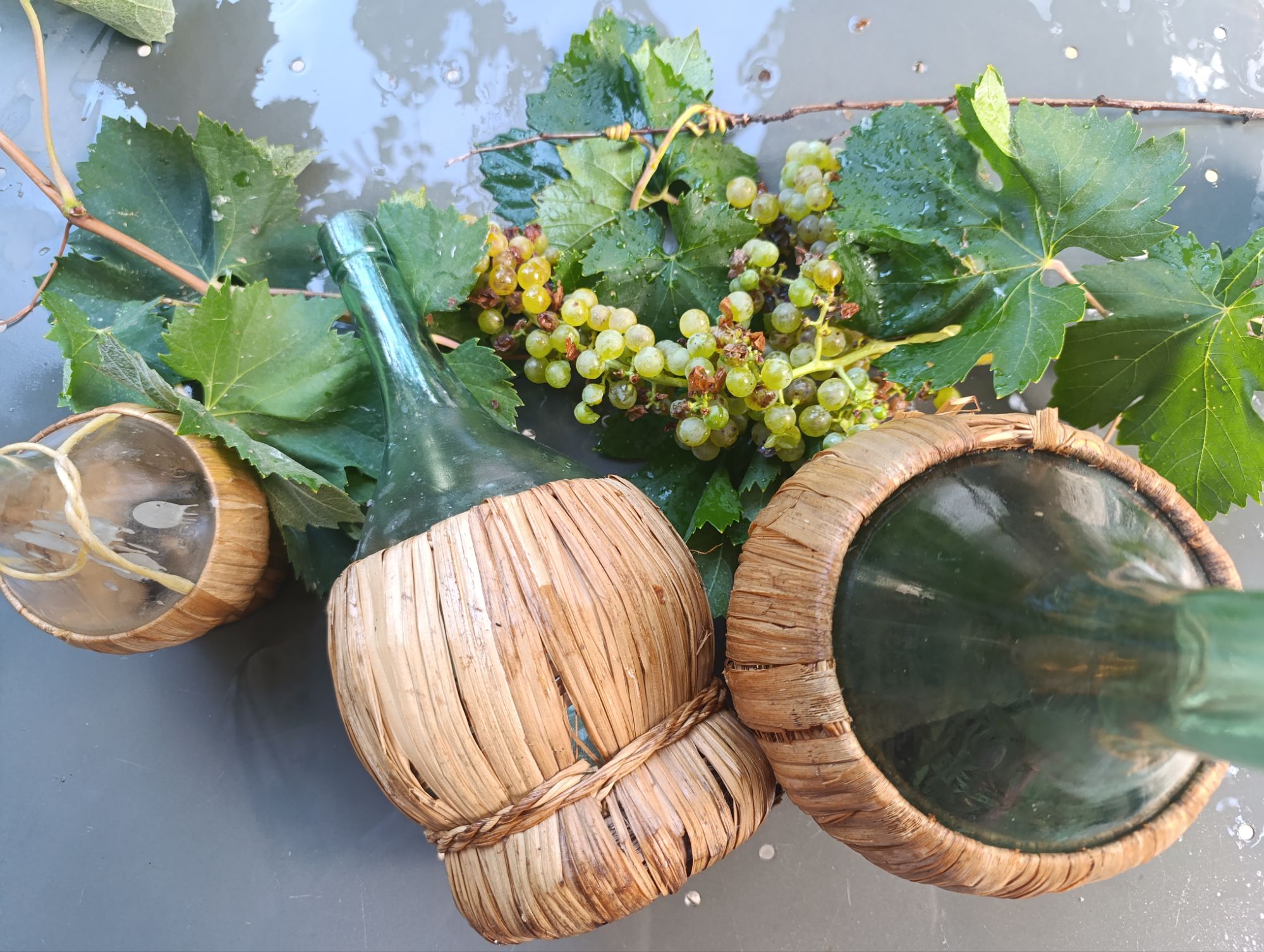
Visual evidence from the mid-14th century also depicts glass vessels similar to the flask, covered with woven marsh grass strings.
In the first half of the 20th century, flasks intended for exporting wine abroad, or displayed at wine shows, were widely used.
In some countries, however, poor quality wine was sold bottled in flasks, and many people began to associate the flask with poor wine quality.
In any case, the fiasco has always had its charm, also because it was often used with candles and then light bulbs on restaurant tables.
Connected to the fiasco is the very famous recipe for fagioli al Fiasco, when the beans were cooked in a wine flask. Check out the recipe on our blog page Traditional Tuscan Beans Cooked in a Fiasco
Fiasco Word
Peculiar is the use of the word fiasco which in many languages means to fail completely
It’s very interesting that in many languages it has the same meaning
Possible reasons of the use of the word fiasco
Theatrical Origin: According to tradition, the expression derives from a 17th-century anecdote about a comedian who, during a performance in which he improvised while holding a flask, failed to make the audience laugh and blamed the object.
Others say that when the audience was dissatisfied with the comedians in a theatre , they threw fruit, vegetables, and flasks at them.
Artisan Origin: Another theory traces the term back to the work of master glassmakers:when a more ambitious or complex blown glass object was defective during processing, it was reduced to a common, rounded shape, that is, a simple flask,declares the manufacturing error.
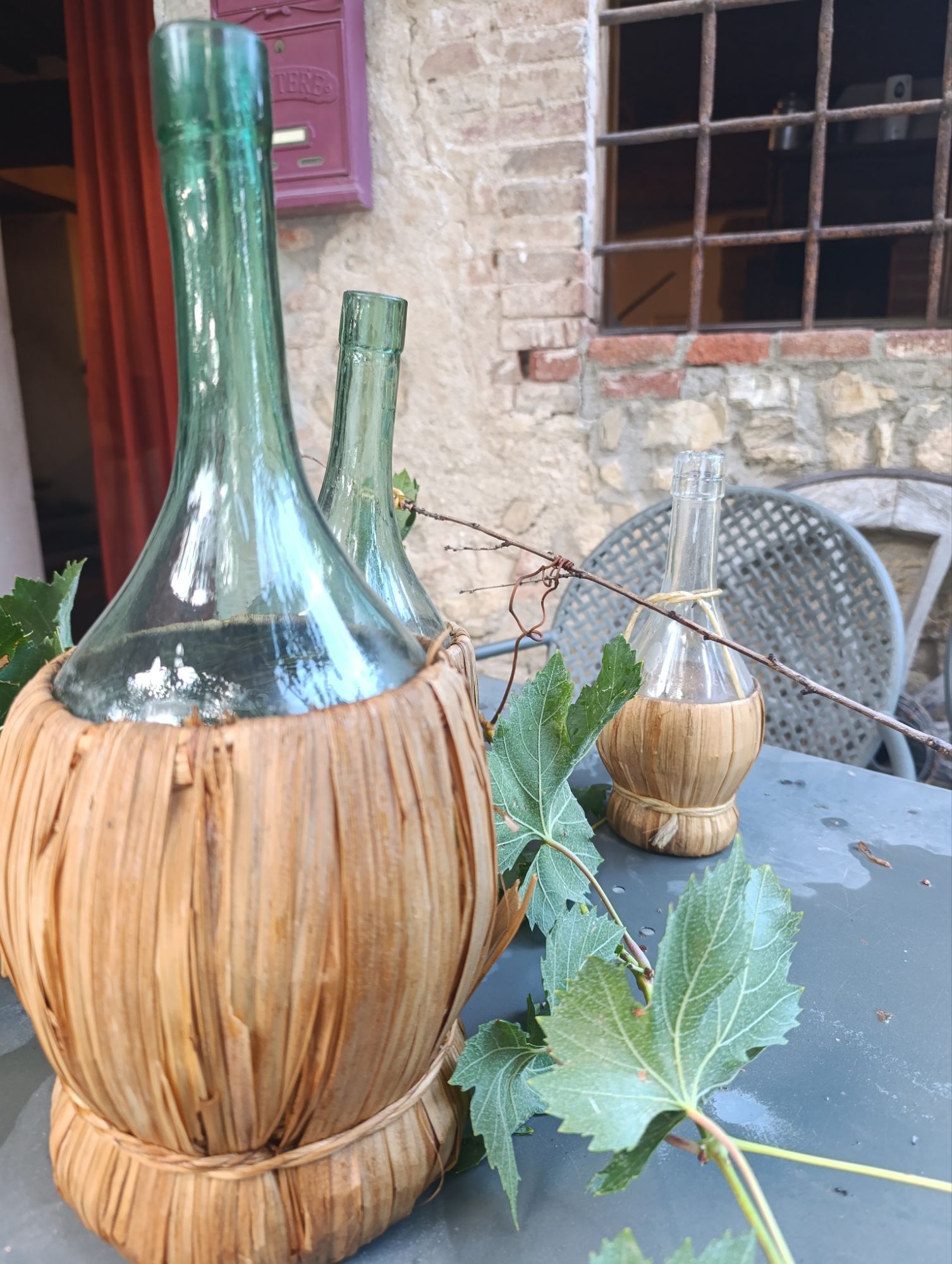
How many stories surround a simple object, which, however, still has its charm today .
A fiasco is not a fiasco.
And in Italian:
Il fiasco è il tipico contenitore di vetro toscano panciuto e senza piede, rivestito di erba palustre o paglia , storicamente usato per trasportare e conservare il vino come il Chianti.
Storia e Tradizione del Fiasco
La produzione dei fiaschi affonda le radici nel XIII secolo in Toscana dove l’arte della vetreria era molto fiorente.
L’impagliatura artigianale non serviva solo come elemento estetico o iconico, ma proteggeva la fragile bottiglia di vetro sferica dagli urti durante il trasporto e riparava il vino dalla luce solare.
Il fiasco è un contenitore per il trasporto e lo stoccaggio del vino,perfetto anche per chi lavorava nei campi e voleva lasciare il vino sotto un albero per il pranzo.
Prodotto in vetro sottile, bianco o verde, è di forma quasi sferica con il collo allungato, ed è tipicamente privo di piede, essenzialmente per consentire una più semplice e rapida soffiatura dell’involucro in vetro. Nella parte inferiore ha un rivestimento in sala o paglia intrecciata, con una base ad anello che lo protegge dagli urti e lo rende autoportante
Storia
Quasi sicuramente il fiasco in vetro risale al XIV secolo. Ci sono fonti letterarie e iconografiche che lo menzionano
Anche testimonianze figurative della metà del XIV secolo illustrano recipienti in vetro simili al fiasco, ricoperti con cordicelle di erba palustre intrecciata
Nella prima metà del 900, i fiaschi destinati all’ esportazione del vino all’ estero, o esposti in occasione di mostre vinicole
In alcuni paesi però venne venduto vino scarso imbottigliato nei fiaschi e quindi molte persone incominciarono a collegare il fiasco ad una cattiva qualità del vino.
A ogni modo il fiasco ha sempre avuto un suo fascino , anche perché è stato tanto utilizzato con candele e poi lampadine sui tavoli dei ristoranti.
Collegata al fiasco c’è la famosissima ricetta dei fagioli al Fiasco, quando i fagioli venivano cotti proprio in un fiasco di vino.Date un’occhiata alla ricetta nella ns. pagina blog Traditional Tuscan Beans Cooked in a Flask
La Parola Fiasco
E’ particolare l’uso della parola fiasco, che in molte lingue significa fallire completamente
E’ interessantissimo il fatto che in molte lingue abbia lo stesso significato
Possibili Ragioni dell’uso della parola fiasco
Origine teatrale: Secondo la tradizione, il modo di dire deriva da un aneddoto del XVII secolo legato ad un attore comico il quale, durante uno spettacolo in cui improvvisava tenendo in mano un fiasco, non riuscì a far ridere il pubblico e diede la colpa all’oggetto.
Altri dicono che , quando il pubblico a teatro non era contento dei commedianti ,tirava contro di loro frutta verdura e fiaschi
Origine artigianale: Un altra teoria fa risalire il termine al lavoro dei maestri vetrai quando un oggetto in vetro soffiato più ambizioso o complesso difettava durante la lavorazione, veniva ridotto a una forma comune e panciuta, cioè un semplice fiasco,decretando l’errore di lavorazione.
Quante storie intorno ad un semplice oggetto,che però ha ancora oggi il suo fascino .
Il fiasco non è un fiasco.


Enjoyed this history lesson.
LikeLike
Glad you liked, thank you for following🙏
LikeLike