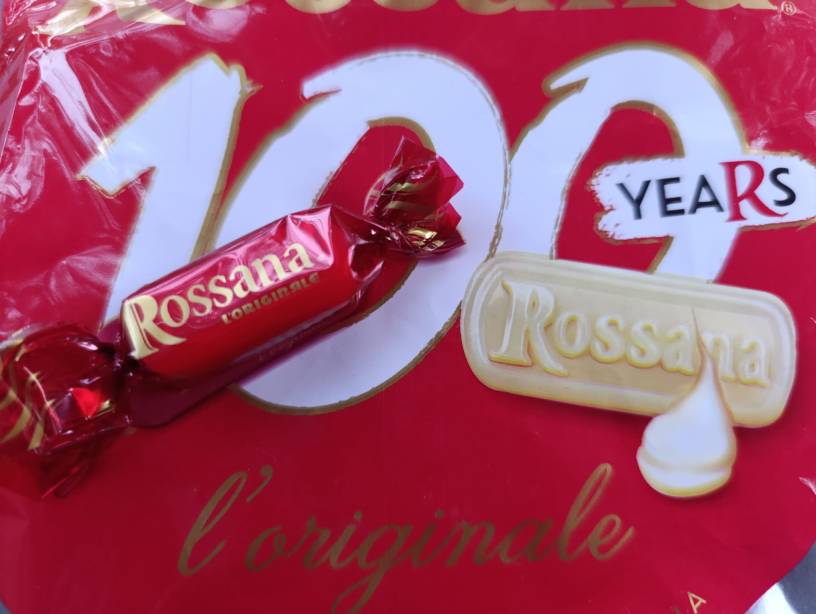
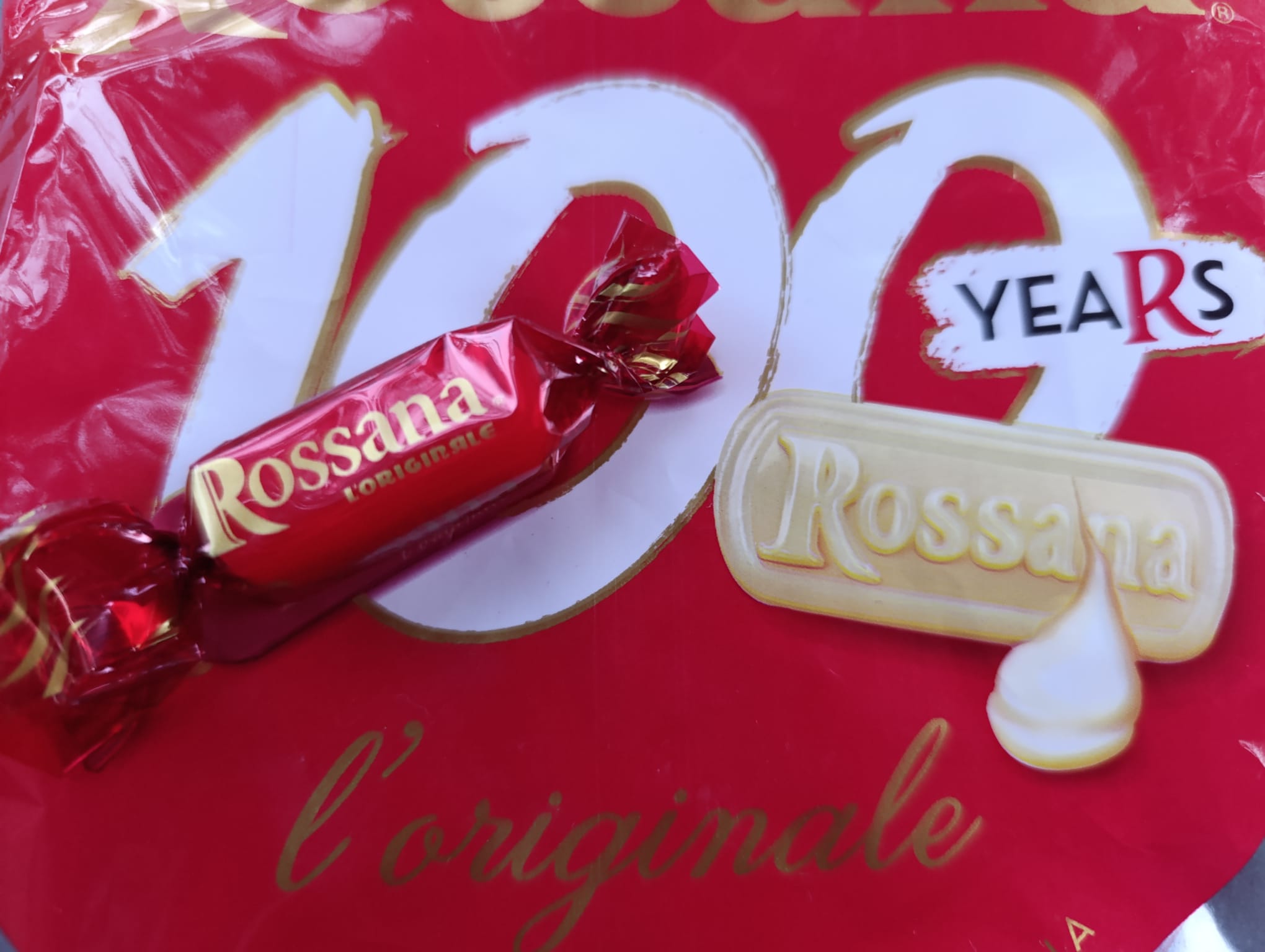
100 years of my favorite candy. Loved for its red and gold wrapping, for its hardness, which forces you to hold it in your mouth for a long time before breaking it, and for its unmistakable flavor: the Rossana candy. It is considered one of the most famous candies produced in Italy.
The grandmothers’ candy turns 100 years old.
History and name
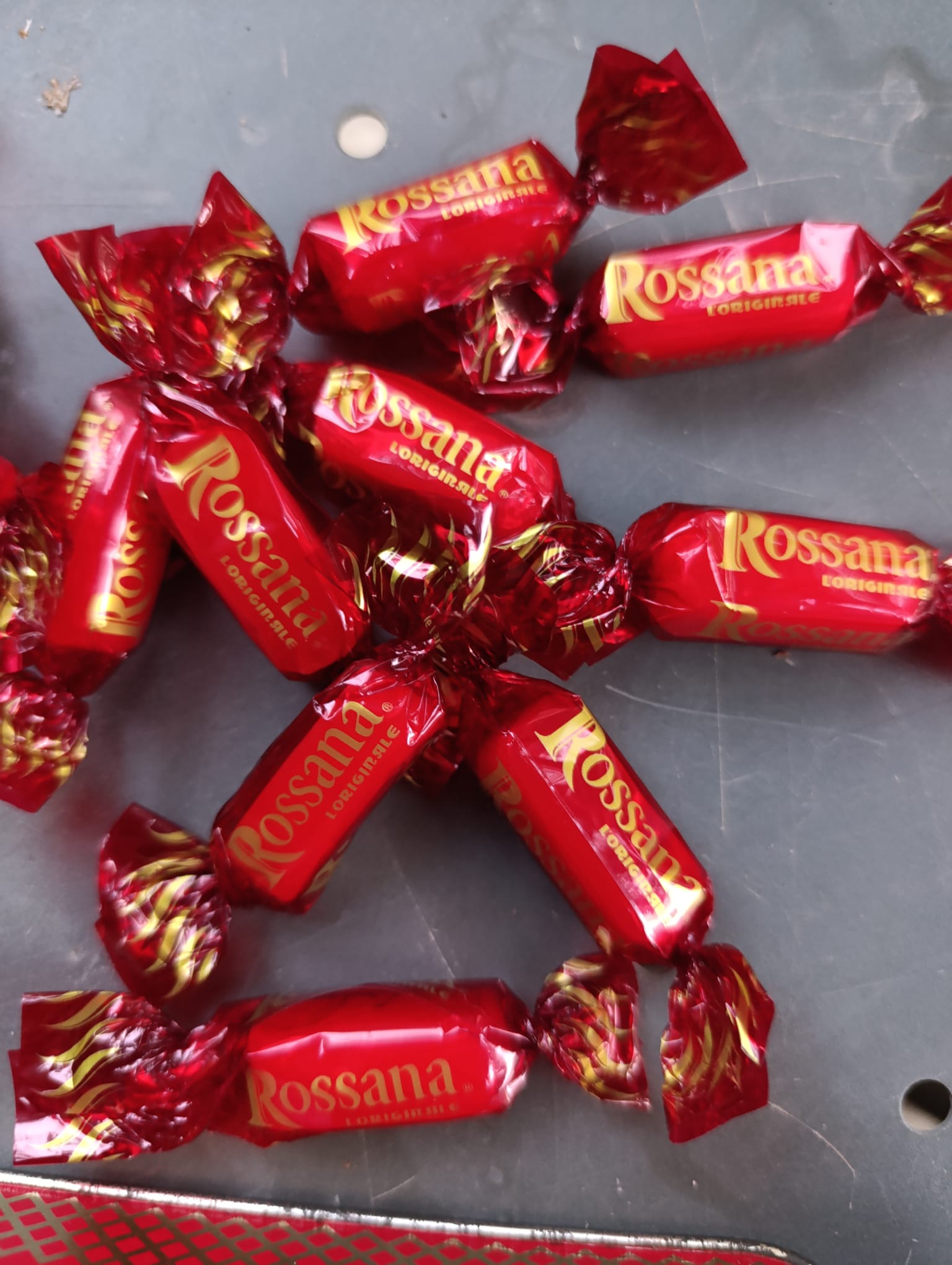
Created in 1926 by Perugina,, with its red wrapping and creamy milk and hazelnut center, it has been enjoyed by generations of Italians. Its name comes from Cyrano de Bergerac, and behind its image is also one of the great advertisers of the twentieth century.
Description
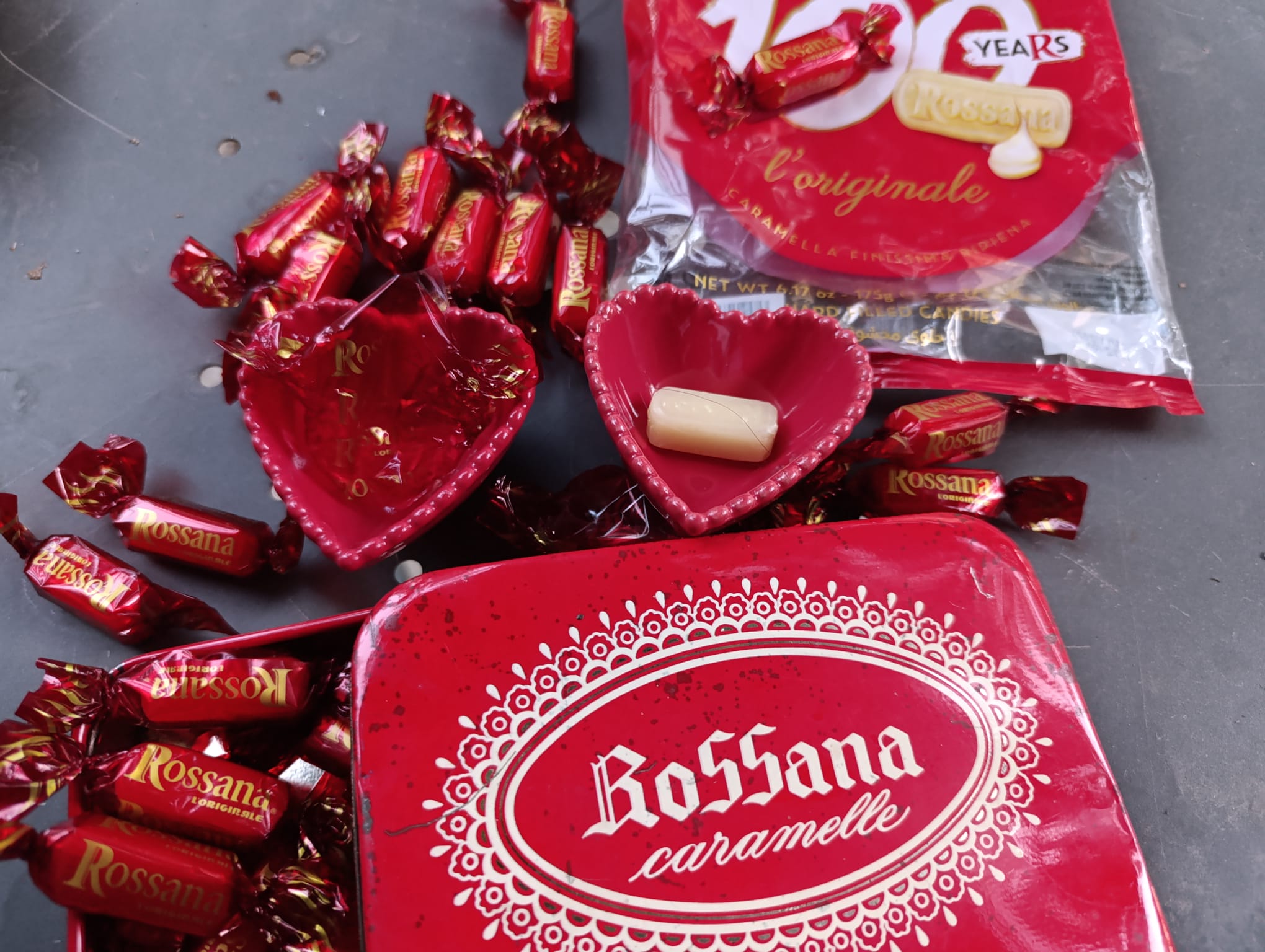
The candy is rectangular in shape, wrapped in a ruby-red wrapper bearing the name in gold. Hard on the outside, due to its caramelized coating, the Rossana has a soft center with a creamy milk filling. Its ingredients primarily include hazelnuts and almonds.
The Secret of the Creamy Center
Perugina’s goal was simple yet ambitious: to create an elegant and practical candy that could be carried in a purse or pocket without the risk of melting in the heat. Thus was born the Rossana, with its unmistakable red wrapper and characteristic creamy center. Almost a century later, the recipe remains unchanged. On the outside, there’s a hard shell; on the inside, a soft milk and hazelnut filling—the contrast of textures that has made it one of Italy’s most recognizable sweets.
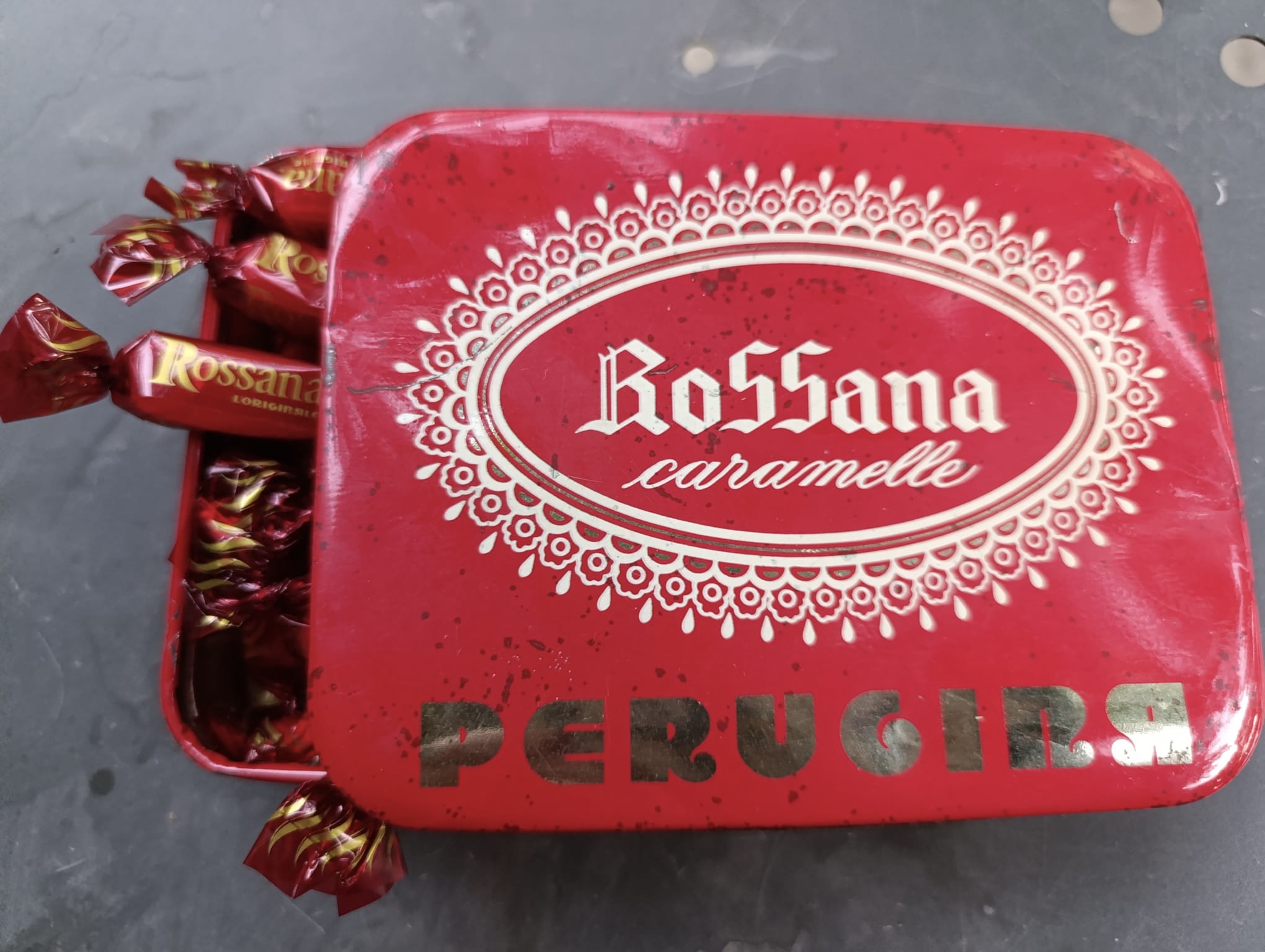
In 2016, Nestlé, which had owned Perugina since 1987, decided to sell the brand to another manufacturer, the Piedmontese company Fida. In 2019, the new owner launched a 200g jar of cream, made with the filling of the candies themselves.
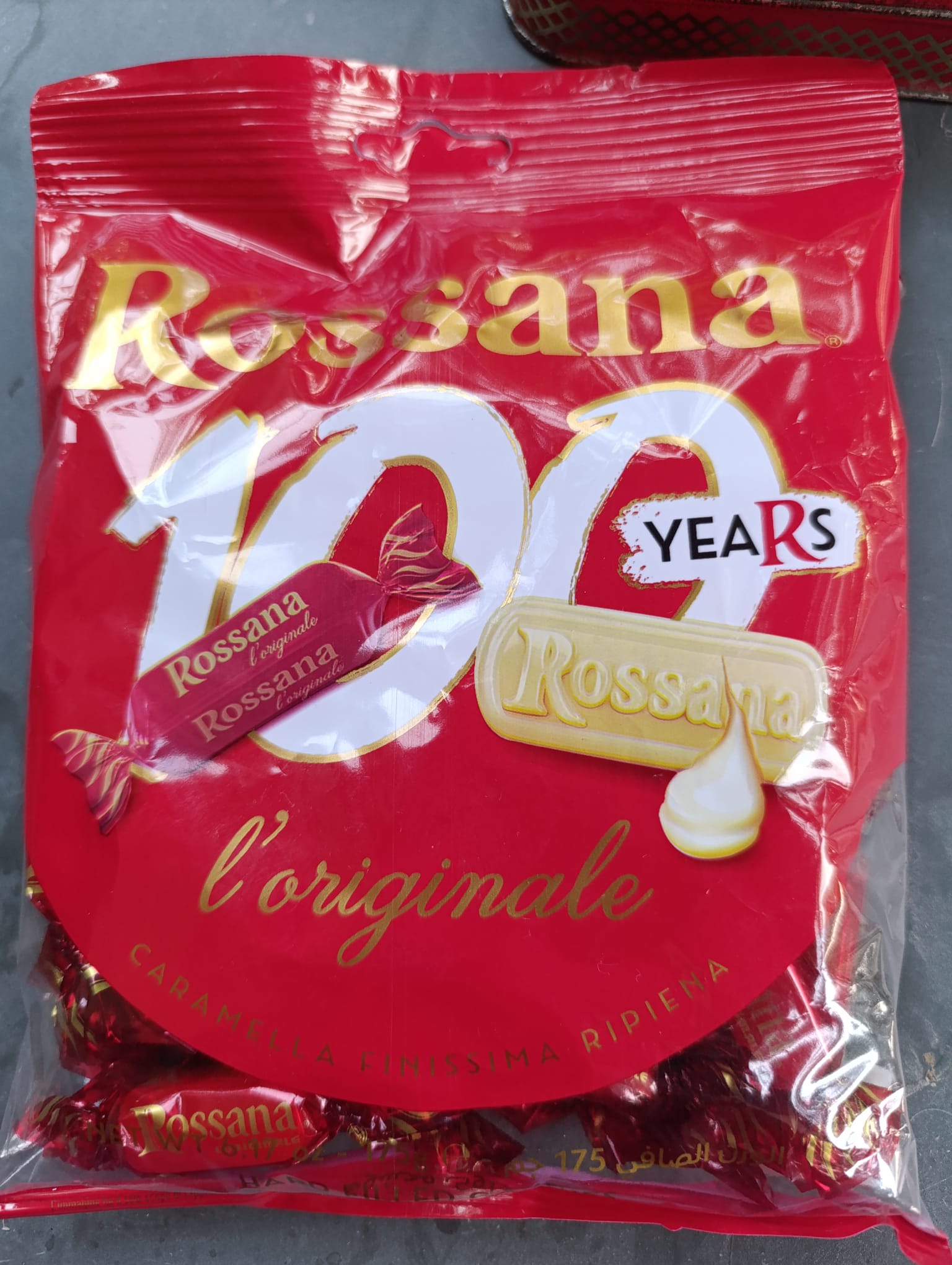
In 2018, Rossana Cioccolato was produced.
In May 2022, Rossana Pistacchio was launched, which is green and contains pistachios from Sicily. According to the manufacturer, it is the first pistachio-flavored candy ever produced.
In March 2023, Rossana Cocco was produced, which is white and contains coconut. This variant of the candy is gluten-free.
The history of this candy has been part of generations of Italians, so much so that it is even remembered with the beautiful red dress made of candy wrappers in Ozpetek’s film Diamonds.
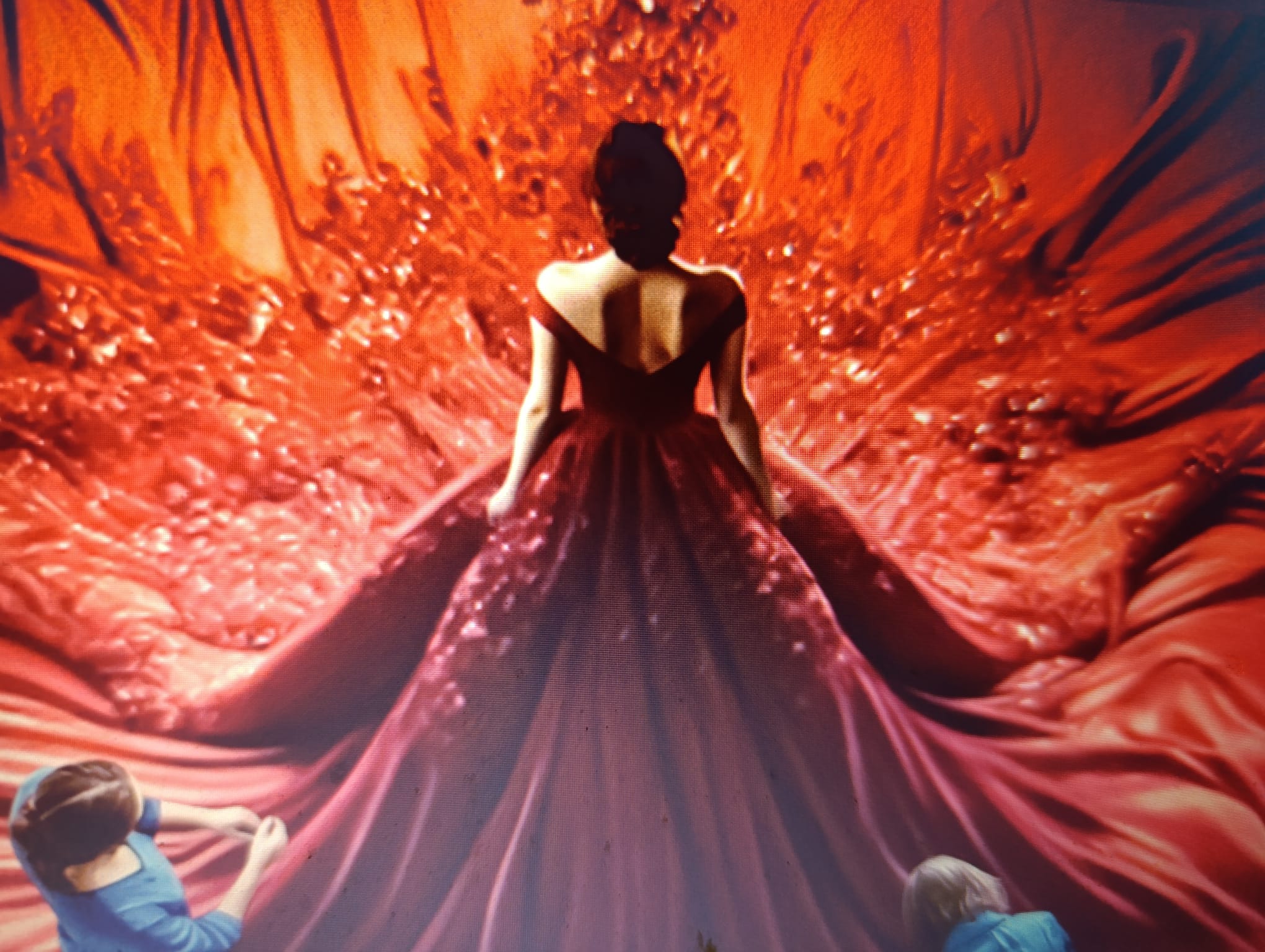
A simple candy, a story of generations.
Una semplice caramella, una storia di generazioni.


Veri capolavori di dolcezza! 😋😋😋
LikeLike
Verissimo 💐
LikeLiked by 1 person