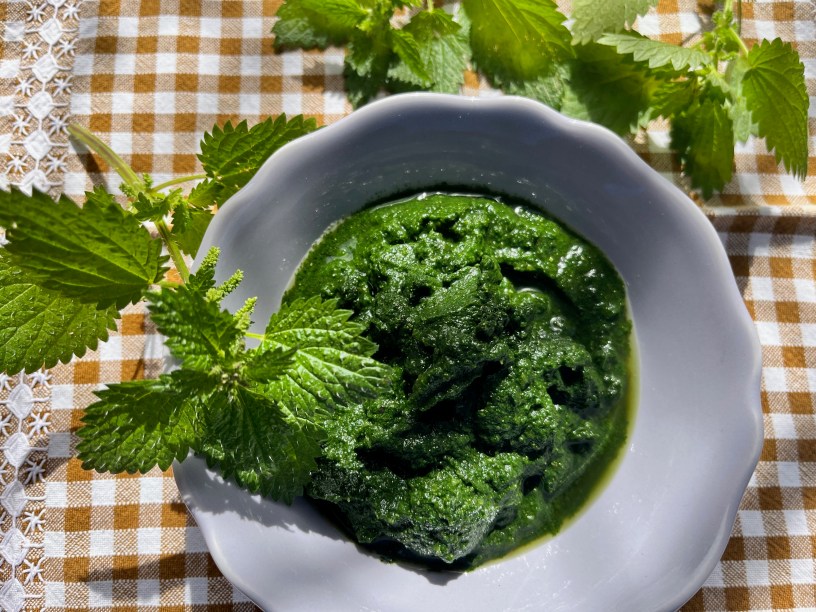
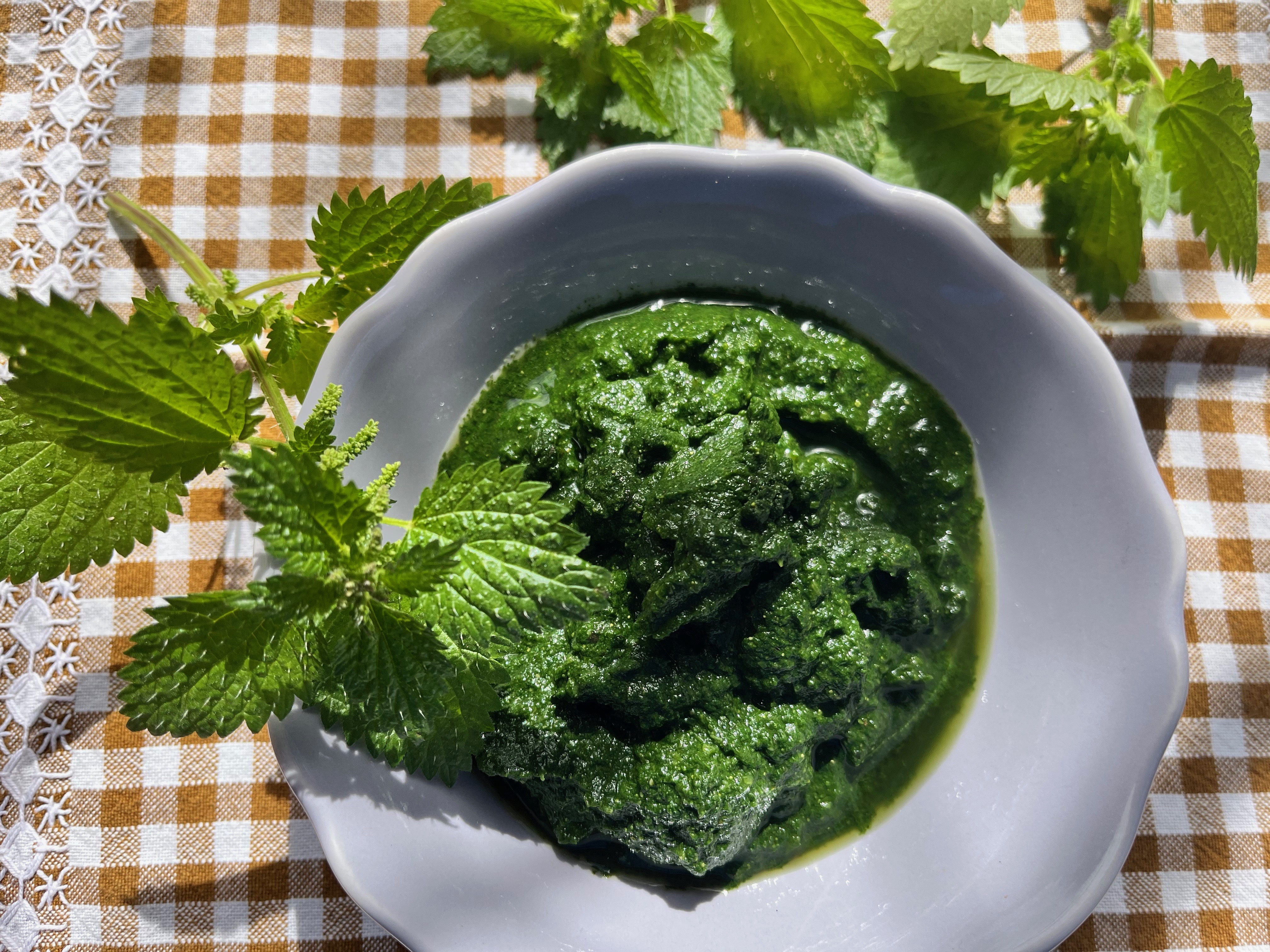
Nettle, this common herb, was used in ancient times for medicinal purposes and later also for making textiles.
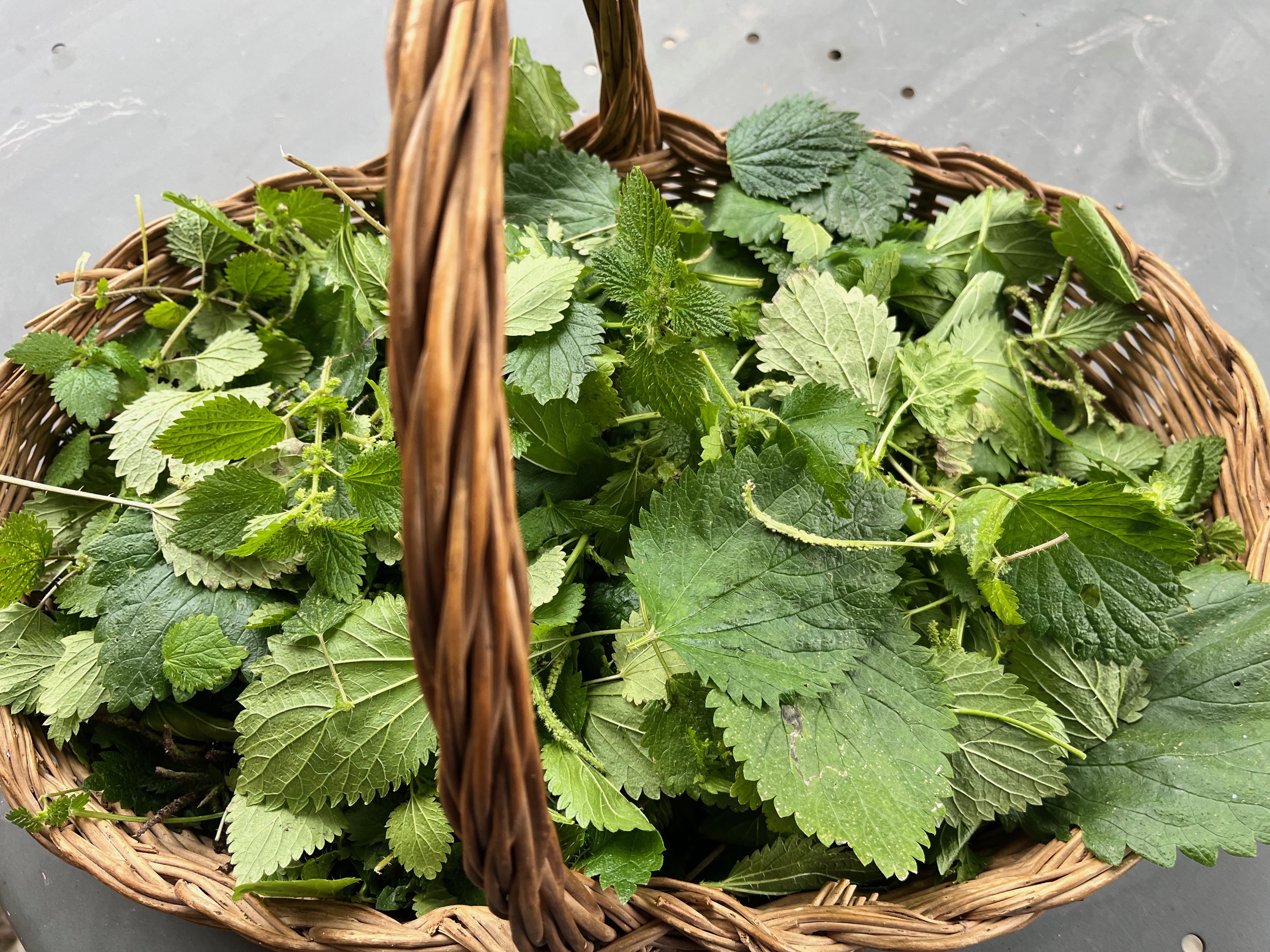
Due to its stinging properties, it is often frowned upon, but if you can harvest it yourself in a clean area, where pesticides have not been used, you have the opportunity to use this beautiful herb in many ways.
Before handling fresh nettle leaves, be sure to wear gardening gloves, as they will retain their stinging power until they are blanched in a pan or plunged into boiling water.
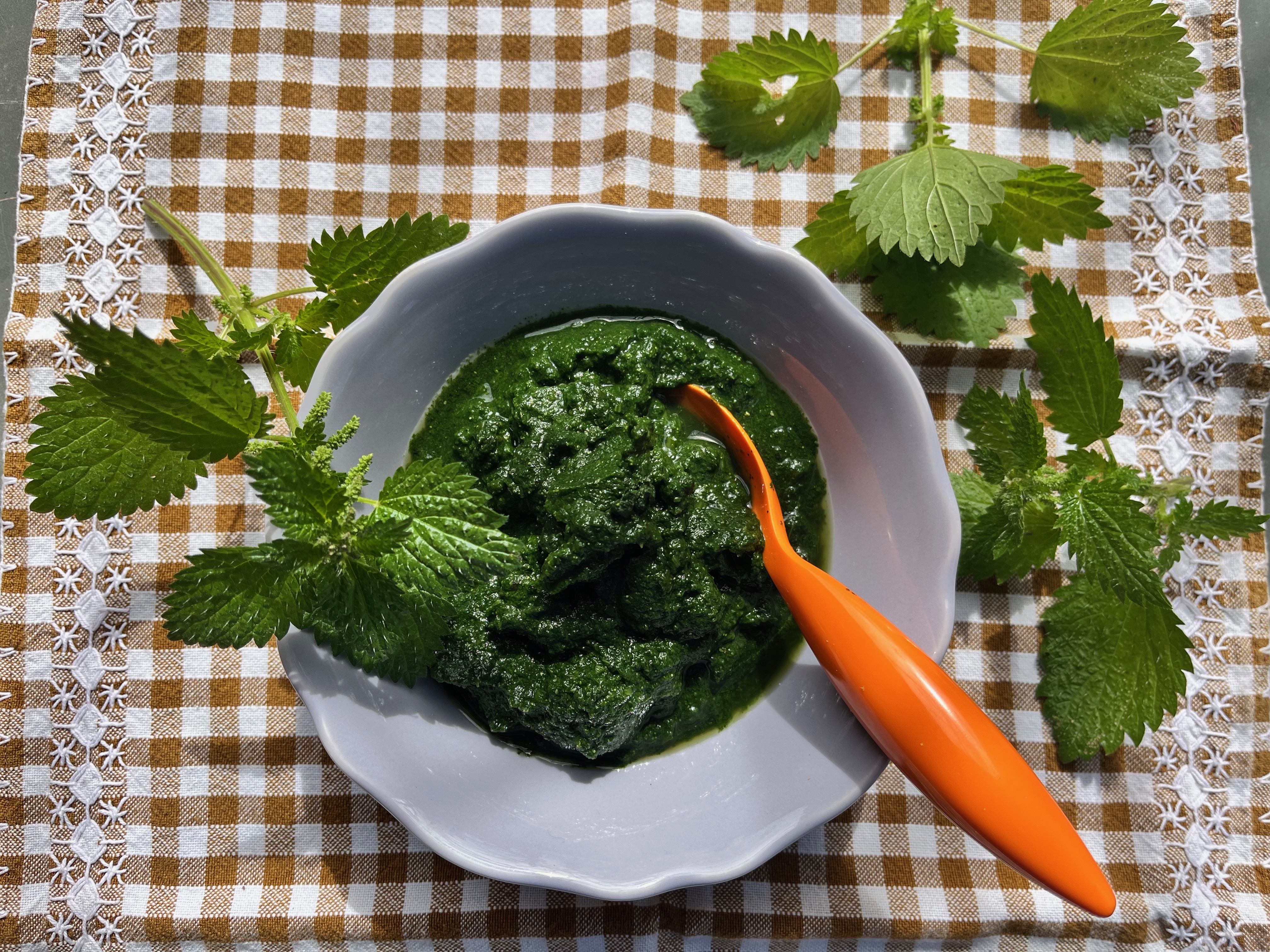
We’ve already seen the recipe for nettle risotto, and today we’re making a very simple nettle pesto.
Ingredients
Nettles 400 g=2.5 cups
Grated Parmigiano, pecorino, or nutritional yeast flakes. 40 g =2.5 cups
Pine Nuts , almonds, sunflower seeds, or cashews. 25 g=1/4 cup
Garlic 1/2 clove
EVOO to taste
Salt to taste
Nettle pesto is a fresh and flavorful condiment, a springtime variation of the famous Genoese pesto
Preparation
The leaves of this precious wild plant, which must be handled with gloves due to its notorious stinging properties, are blanched in a pan and then blended with pine nuts, Parmigiano cheese, garlic, and extra virgin olive oil—the classic ingredients of basil pesto. The end result is a creamy and quick preparation, perfect for seasoning both long and short pasta, or making delicious canapés.
How to make nettle pesto
Using protective gloves, separate the nettle leaves from the stems and gradually soak them in fresh water.
Coarsely drain the leaves, transfer a good portion to a pan, and sauté them over high heat.
As soon as they begin to soften, add the remaining nettles and let them wilt over the heat for a few minutes. Turn off the heat and let them cool.
Transfer the nettles to a food processor and add the cheese, pine nuts, a pinch of salt, garlic, and a generous drizzle of oil.
Blend until you obtain a thick cream, adding a drizzle of oil if necessary. Transfer the pesto to a clean jar.
Use the pesto as desired or store it in the refrigerator, covered with more oil.
For a stronger flavor, you can replace the Parmigiano with grated pecorino; if desired, you can also use other oily seeds, such as almonds, sunflower seeds, or cashews, in place of the pine nuts.
If you have vegan guests, you can omit the Parmigiano and add nutritional yeast flakes.
Versatile and flavorful, nettle pesto can be used to season dried bronze-drawn pasta, homemade lasagna, or potato gnocchi; you can also spread it on slices of toasted bread to make delicious canapés.
Storage
The nettle pesto can be stored in the refrigerator, in a suitable glass jar, for at least 3-4 days (be sure to cover the surface with a drizzle of oil). You can also prepare a large batch and freeze it, so you always have some on hand when needed.
Properties and health benefits of nettle
What does nettle contain that makes it so valuable for health? Nettle is particularly rich in antioxidants and minerals such as calcium, iron, sulfur, zinc, silica, and potassium.
The leaves therefore have remineralizing, anti-inflammatory, diuretic, purifying, and even anti-anemic properties. Nails and hair also benefit from nettle’s properties, with a strengthening effect.
Rediscover this always so mistreated herb, you’ll love it.
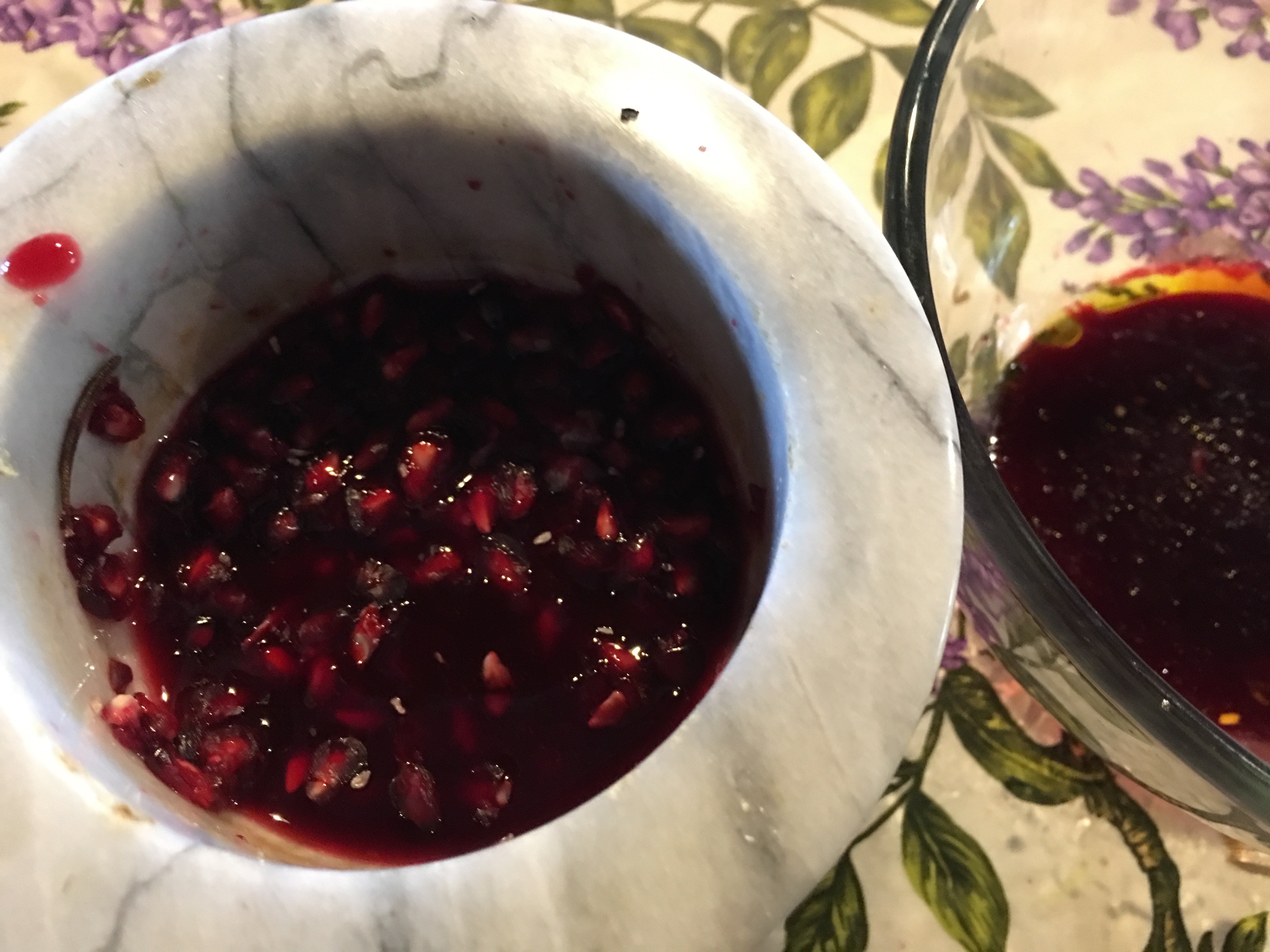
Dont’forget Black Cabbage Pesto and pomegranate pesto.


Interesting. Never had it.
LikeLike
So glad you find It interesting. If you have the possibility try the nettle and take a photo of them😀
LikeLiked by 1 person