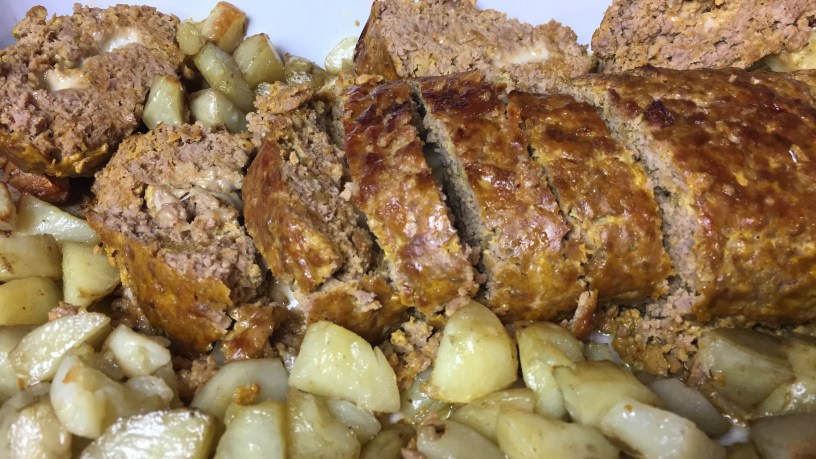
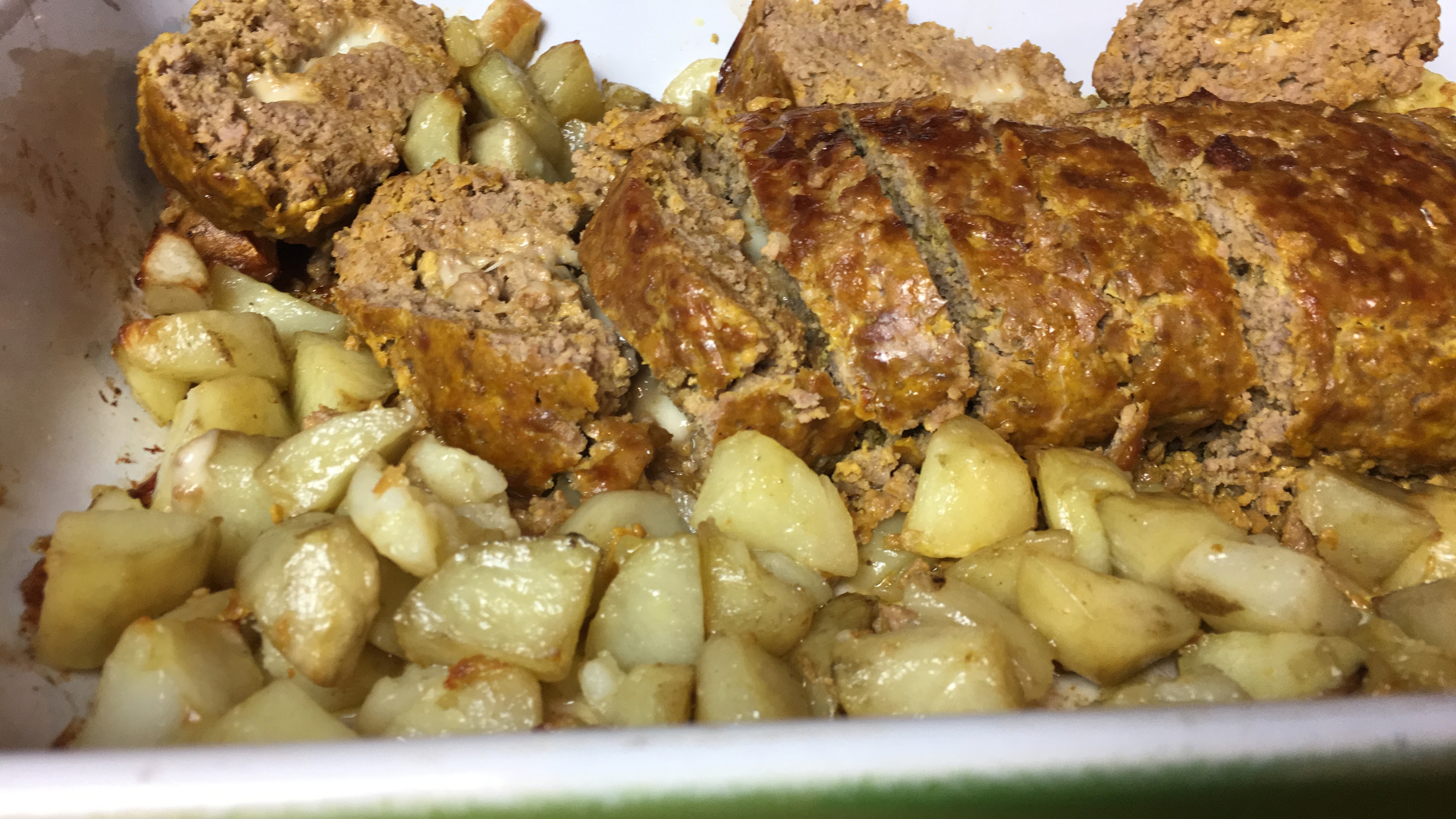
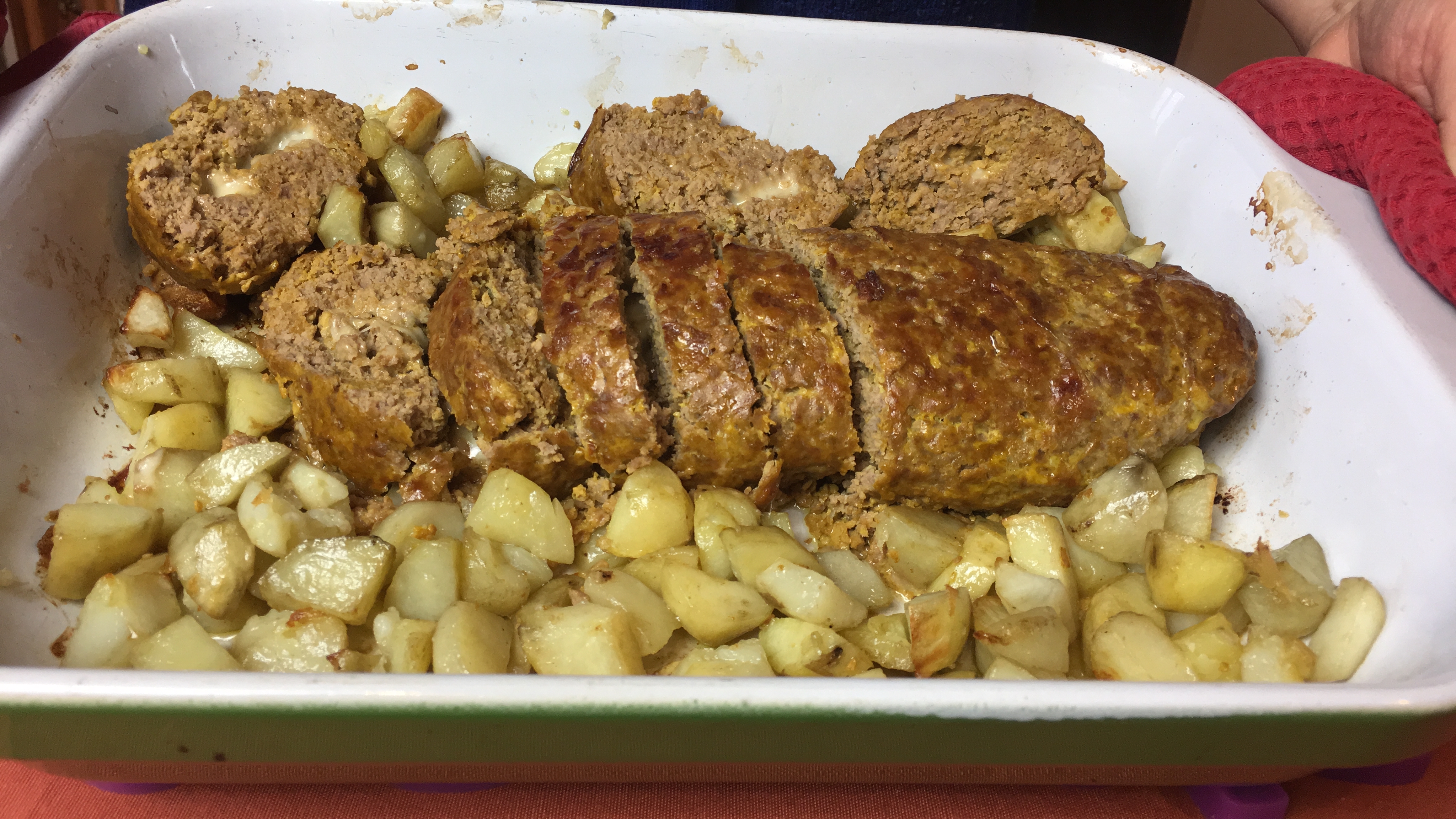
Polpettone ,Meatloaf is a cornerstone of Italian home cooking, a symbol of tradition, family, and creative recycling. It’s the king of holidays and Sundays, beloved by adults and children alike, and interpreted in a thousand different recipes. Meatloaf is always a special moment for the whole family when it’s on the table. Cutting a slice is like unwrapping a gift.
Originally a humble dish to showcase lesser-quality cuts of meat or leftovers, it has evolved into several regional variations, often filled with hard-boiled eggs, cheese, and cured meats.
Meatloaf is a dish typically made with minced meat, spices, herbs, and binding ingredients (such as egg, breadcrumbs, or flour), in Italy typically served as a second course or main dish.
Name
The word “polpettone” is the augmentative of “polpetta” (meatball). Despite the ingredients, which are roughly the same, minced or chopped, it is distinguished by being made from a single large piece, roughly cylindrical in shape. It is cooked by boiling, stewing, or baking. In some recipes, meatloaf can be stuffed with vegetables (especially spinach) and cheese, for example.
History and Origins of Meatloaf
Before becoming the large, tasty ground meatball we all know, meatloaf underwent a long evolution.
To better understand how we came to make meatloaf the quintessential Sunday family dish, we need to start from its origins, namely the “mini” version of our star dish: the meatball.
The transformation took place between the mid-17th and early 18th centuries, when recipe books listed “polpettoni” (meatloaves) alongside the small, delicious meatballs. These were elongated and larger in size, more similar to salami.
From this point on, chefs began to experiment, inventing different recipes to flavor the meat and prepare the perfect dough for meatballs and meatloaf.
From Parmigiano Reggiano to onion, from parsley to aromatic herbs, including eggs, milk, and breadcrumbs: Italy’s culinary heritage is filled with countless different versions of meatballs and meatloaf, each reinterpreted based on local ingredients typical of each region.
Cooking methods also vary from family to family: some cook them in a pan, some in the oven; some make stuffed meatloaf, some eat it dry, some with sauce.
Despite their different forms, meatballs and meatloaf became commonplace on every table, widespread far and wide, and can be prepared with leftover meat or boiled meat: from this perspective, meatloaf is therefore a perfect no-waste recipe.
This was probably another reason why meatloaf became a true institution in home kitchens.
Each family began to invent and then pass down their own meatloaf recipe, and it became the protagonist of the most special and important moments shared with family. Therefore, memories of moments spent together, especially during the holidays.
In any case, meatloaf has the great advantage that we can prepare it in advance, ready when lots of guests arrive or to cut a couple of slices for our lunchbox.
And then one of the many recipes
Traditional Italian Polpettone/Meat Loaf
It’s a very tasty dish usually stuffed and cooked in various ways.
In this case, baked polpettone/meatloaf to form a delicious au gratin surface and an irresistible melted heart.
Recipe
Ingredients for 4 people
- 600 gr =21.2 ounces =roughly 1 and 1/3 pounds)of ground beef for meat sauce not too lean
- 3 eggs
- 3/6 spoons of Parmigiano
- 3/6 tablespoons of milk or lactose free milk or oat milk
- 3/6 tablespoons of breadcrumbs (depends on how much the dough requires) or gluten free breadcrumbs
- 1/2 abundant teaspoon of nutmeg
- 80 – 90 gr = 3 oz of smoked scamorza or stringy cheese of your choice
- Salt
Procedure
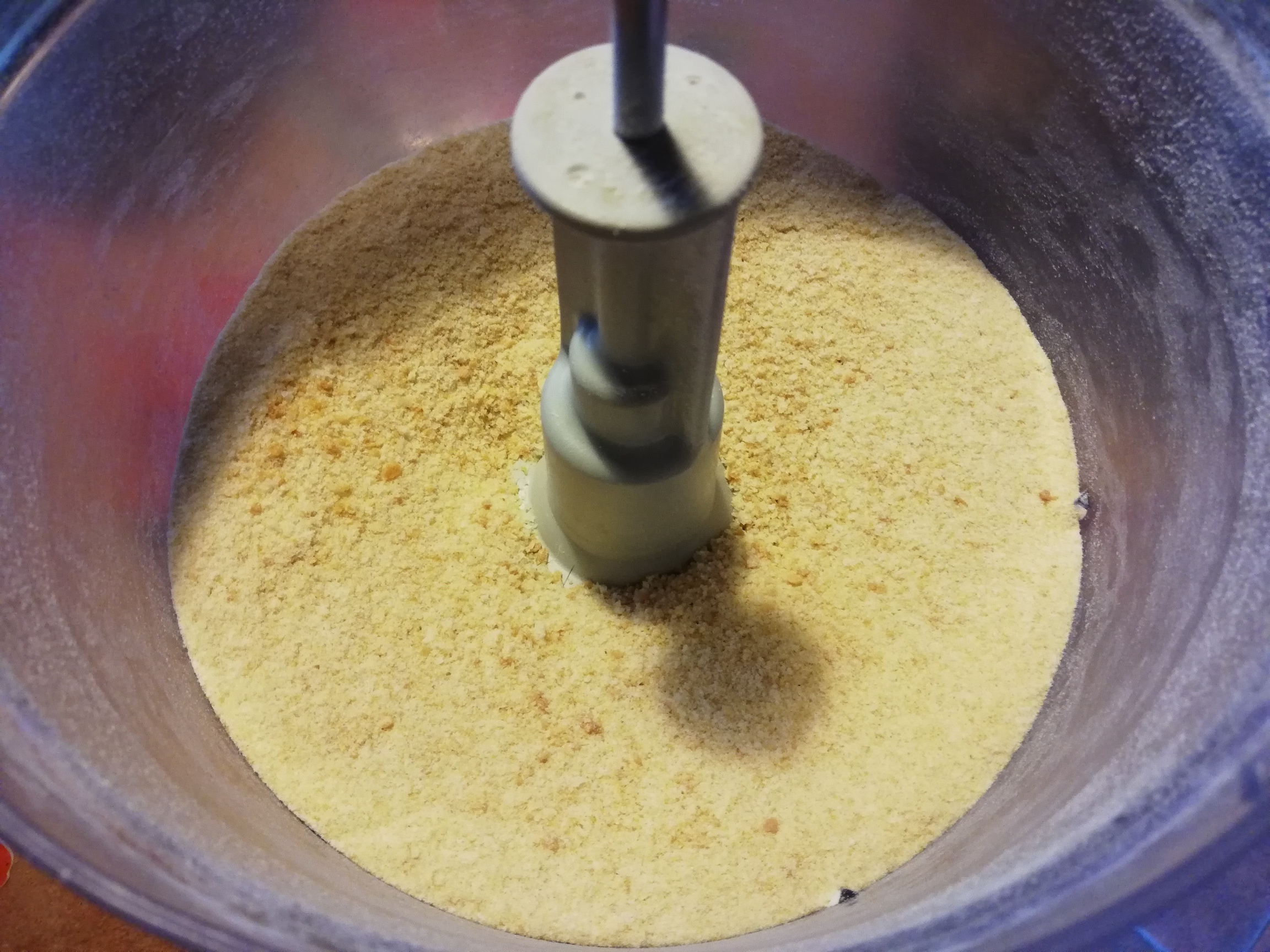
- First of all, prepare the dough by mixing the minced meat, eggs, Parmigiano, nutmeg, salt, 3 tablespoons of milk, and 3 tbsp.breadcrumbs in a bowl.Mix and evaluate the consistency, gradually adding the rest of the milk and the rest of the breadcrumbs if necessary.
- The result must be a soft, perfectly blended dough that detaches from the parts.
- Spread it on a sheet of baking paper.
- Cut the scamorza into cubes.
- Place the cheese on the meat.
- Recompose the shape, making sure that the filling is perfectly inside.
- Then seal in the parchment paper.
- Rolling up the sides tightly and rotating several times to give the round shape:
- Store in the fridge for about 20 minutes. Turn on the oven at 180 °C / 360 ° F.
- Bake the meatloaf in the middle part of the static oven for about 30 minutes.
- After the indicated time, completely delete the paper
- Add a drizzle of oil to the surface.
- Run the grill and raise the oven to 200 C° / 400 ° F
- Brown for about 10 minutes until golden brown and then turn it for another 10 minutes.
- Remove from the oven and let cool for about 10 minutes.
Once cooked, it keeps perfectly for 2 days in the fridge. You can heat it in the oven, in the microwave or a pan. Excellent also cold.
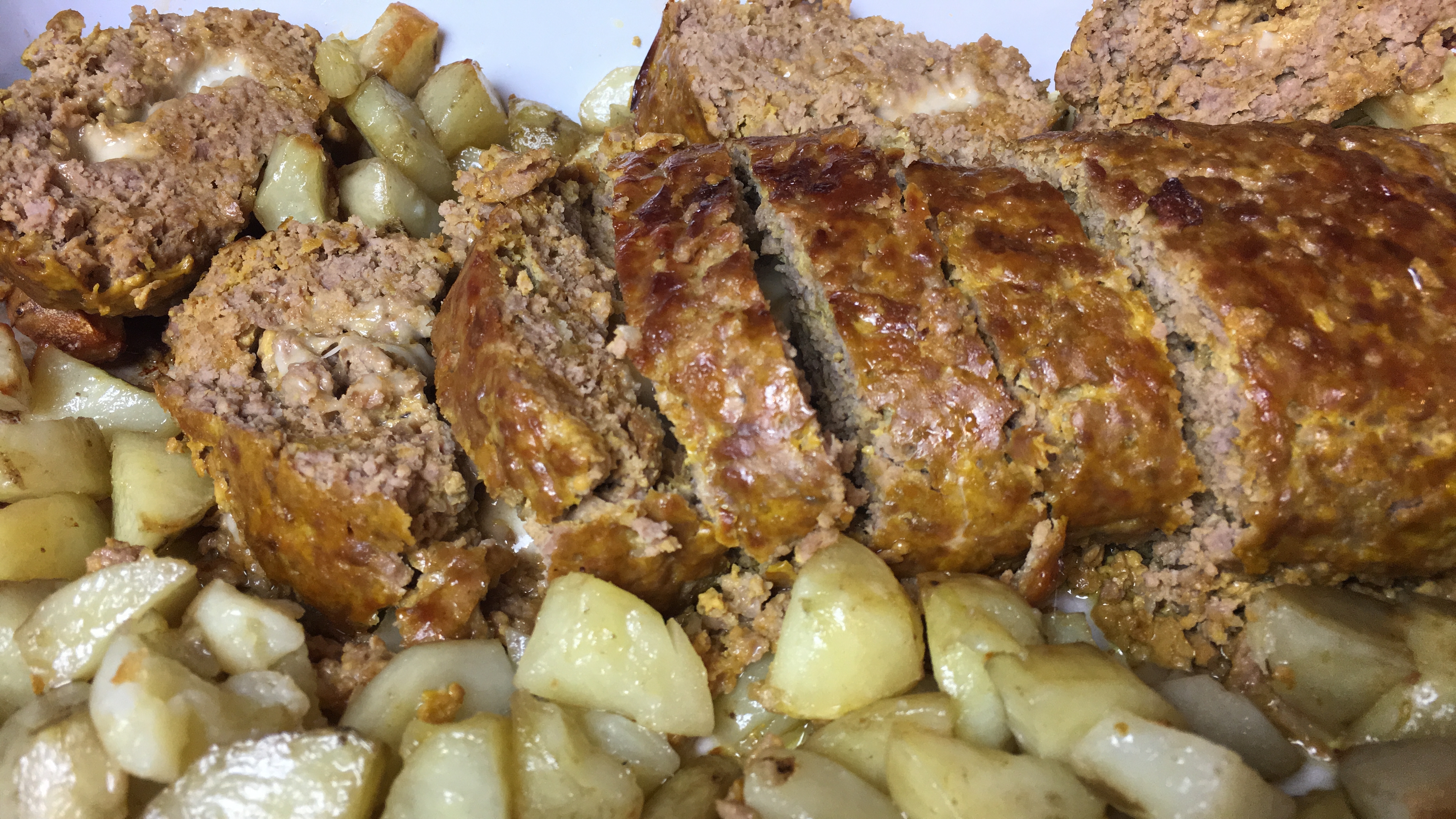
One last little curiosity about the word “polpettone” in Italian
The word “polpettone” is used disparagingly to indicate something particularly boring, heavy, and cumbersome—for example, a book, a film, a speaker, etc.—as it alludes to a real (or imagined) feeling of heaviness in the stomach when eating
Perhaps it depends on how it’s made.Buon appetito!